Wellness Routine: The Comprehensive Daily Guide (2026)

Build the ultimate wellness routine for students, working women, men, sportsmen, and postpartum moms. Get your free daily timetable now.
Only around one in four adults worldwide meets the World Health Organization’s minimum physical activity guidelines, and roughly 37% of American adults routinely fall short on sleep, according to CDC data cited by Healthline.
Those two numbers explain why so many people feel exhausted, wired, and off-balance by mid-afternoon. A strong wellness routine closes that gap. It isn’t a single workout or a green smoothie; it’s a repeatable system of small, evidence-based habits covering movement, sleep, nutrition, stress management, and connection, stacked into a daily and weekly rhythm you can actually sustain.
In this guide, you’ll learn how to build a wellness routine with a real morning-to-night timetable, how that routine should shift for students, women at every life stage, working women, housewives, postpartum mothers, men, sportsmen, and celebrities, how to design a wellness sleep routine (including fixes for recurring nightmares), how to pair workouts with nutrition and hormonal health, and how AI tools are reshaping everyday wellness tracking in 2026.
1. What Is a Wellness Routine and Why It Matters
Defining a Wellness Routine
A wellness routine is a structured, repeatable set of daily and weekly habits that support physical, mental, and emotional health together, rather than treating fitness, diet, sleep, and stress as separate side projects. It blends movement, nutrition, rest, mindfulness, and social connection into a rhythm anchored to your waking and sleeping hours.
Unlike a 30-day challenge or a diet, a true wellness routine has no end date; it flexes with your season of life, whether you’re a student cramming for finals, a new parent recovering from childbirth, or an athlete peaking for competition.
The strongest routines share three traits: they are specific (tied to a clock or a trigger, not “someday”), sustainable (built around your real schedule, not an idealized one), and measurable (you can tell within a week whether it’s working).
The Science Behind a Daily Routine for a Healthy Body and Mind
Routine works because the body runs on rhythm. The WHO’s updated physical activity guidelines recommend 150–300 minutes of moderate-intensity activity per week, or 75–150 minutes of vigorous activity, plus muscle-strengthening work at least two days a week, yet about one in four adults globally doesn’t meet even the lower bound.
On the sleep side, the CDC has found that adults need 7–9 hours nightly, and that as of 2022 roughly 36.8% of U.S. adults were falling short, with the 45–64 age group faring worst at 39%.
A consistent daily routine for a healthy body and mind same wake time, scheduled movement, protected wind-down window trains your circadian rhythm, stabilizes cortisol, and reduces the decision fatigue that causes most habits to collapse by Thursday.

Chronic stress compounds both problems. When cortisol stays elevated from poor sleep, under-eating, or constant low-grade work pressure, it interferes with the same hormonal signals that regulate appetite, blood sugar, and the menstrual cycle.
That is the biological reason a wellness routine treats stress management as a core pillar rather than an optional add-on: skipping it undermines the sleep, nutrition, and movement habits built around it.
Wellness Routine Daily Tips to Start Today
- Anchor one habit to an existing one: e.g., drink a glass of water immediately after brushing your teeth.
- Protect a 10-minute wind-down window before bed, free of screens.
- Move within the first hour of waking: even a 5-minute walk resets cortisol.
- Batch decisions: plan meals and workouts the night before so mornings run on autopilot.
- Track one metric only: at first (sleep, steps, or water) to avoid overwhelm.
2. How to Build the Best Daily Routine for a Healthy Life (With Timetable)
Daily Healthy Routine From Morning to Night (Sample Timetable)
There is no single best daily routine for a healthy life with a timetable; the right one depends on your work hours and body clock. The table below shows how a daily healthy routine from morning to night compares across four common lifestyles, so you can borrow the blocks that fit yours.
| Time Block | Student | Working Woman | Sportsman | Postpartum Mom |
|---|---|---|---|---|
| Wake / Early AM | 6:30 AM stretch + hydration | 6:00 AM movement + protein breakfast | 5:30 AM mobility + fasted cardio | Flexible wake, hydrate on first feed |
| Midday | Study block + walk break every 90 min | Standing desk stretch + outdoor lunch walk | Main training session + refuel meal | 10-min sunlight walk with baby |
| Afternoon | Light exercise or sport practice | Screen-break breathing exercise | Mobility/recovery work | Short nap when baby naps |
| Evening | Screen curfew 1 hr before bed | Family time, light dinner by 7:30 PM | Sleep-focused wind-down, magnesium-rich dinner | Gentle pelvic-floor exercises |
| Sleep Target | 8–10 hours | 7–9 hours | 8–10 hours | Sleep in fragments; prioritize any nap |
The 7 Healthy Habits in Wellness
Every version of a wellness routine, regardless of audience, is built from the same seven core habits:
- Consistent sleep: same wake and sleep window daily.
- Daily movement: a mix of cardio, strength, and mobility.
- Whole-food nutrition: protein, fiber, and hydration at every meal.
- Stress regulation: breathwork, journaling, or a short mindfulness practice.
- Social connection: even 10 minutes of real conversation daily.
- Sunlight and outdoor time: 10–20 minutes to anchor circadian rhythm.
- Preventive health checkups: routine screenings rather than reactive care.
How to Create a Wellness Routine Step-by-Step
Learning how to create a wellness routine that actually survives a busy week comes down to five steps:
- Audit your current day: track how you actually spend 24 hours for three days before changing anything.
- Pick one habit per pillar: one for sleep, one for movement, one for nutrition, instead of overhauling everything at once.
- Attach each habit to a fixed trigger: a time, a location, or an existing habit.
- Review weekly: adjust the timetable based on what actually happened, not what you planned.
- Add complexity only after 3–4 weeks of consistency with the basics.
3. Wellness Routine for Students and Teens
Wellness Routine for Students
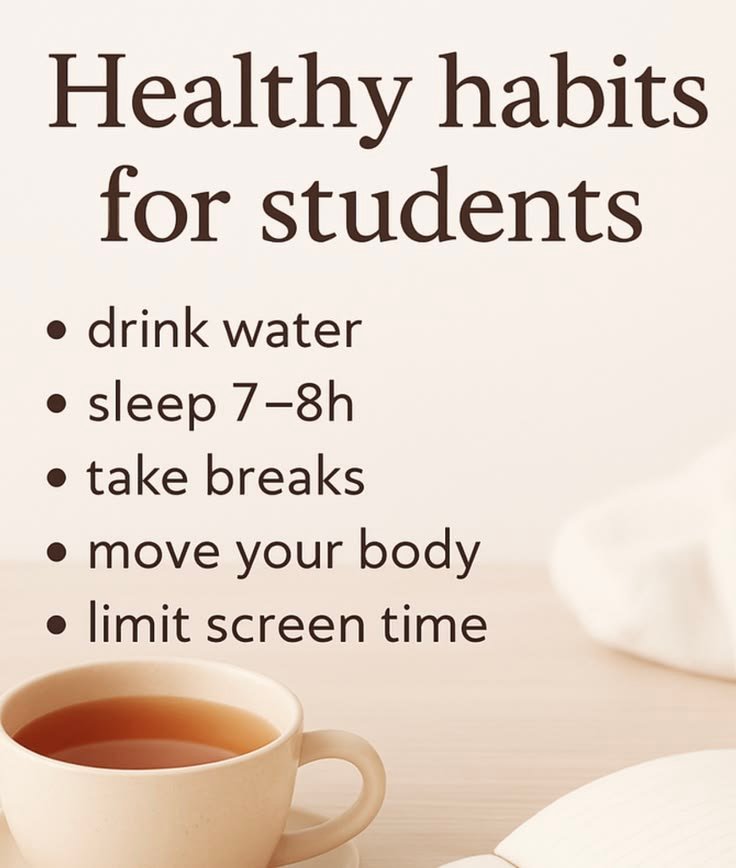
A wellness routine for students needs to work around lecture schedules, exams, and irregular sleep, the biggest derailers of academic performance.
The priority order should be: protect sleep first, schedule movement in short bursts between study blocks, and batch-cook simple meals on weekends so weekday nutrition doesn’t collapse into vending-machine food.
Study sessions capped at 45–90 minutes with a 5–10 minute walk break also improve retention more than marathon cramming.
Healthy Lifestyle Routine for Students
Beyond academics, a healthy lifestyle routine for students should include a fixed wind-down time even on nights before deadlines, a hydration target (roughly 2–3 liters daily, adjusted for activity and climate), and one screen-free social activity per week to offset the isolation that dorm or apartment life can bring. Students who keep a consistent wake time even on weekends report fewer “Sunday scaries” and better Monday focus.
Wellness Routine for Teens and Young Adults

Teenagers need more sleep than adults, not less: the CDC recommends 8–10 hours nightly for ages 13–17, yet national data shows a majority of teens fall short due to early school start times and delayed natural circadian rhythms.
A wellness routine for teens and young adults should prioritize a consistent lights-out time, phone-free bedrooms after a set curfew, and at least 60 minutes of daily movement per WHO guidance for adolescents; walking to school, sports practice, or dance all count.
WHO data also shows that more than 80% of adolescents worldwide don’t meet recommended activity levels, a far larger gap than adults face.
For young adults transitioning out of school sports, replacing structured practice with a self-directed routine, even two or three sessions a week, is the single biggest predictor of whether activity levels hold steady into the twenties or drop off.
4. Wellness Routine for Women at Every Life Stage
Healthy Lifestyle Wellness Routine for Women

A healthy lifestyle wellness routine for women should account for the hormonal cycle rather than ignore it. Energy, strength, and recovery capacity shift across the menstrual cycle, so the most sustainable routines cycle-sync intensity: higher-intensity training in the follicular phase, and more recovery-focused movement (walking, yoga, mobility) in the luteal phase and during menstruation.
Iron-rich foods, adequate protein, and consistent sleep matter more in the days before a period, when fatigue and cravings typically peak.
Fitness and Wellness Ideas at 30
By the early thirties, metabolism and bone density begin their slow decline, which is why women’s fitness and wellness ideas at 30 increasingly emphasize resistance training over pure cardio.
Two to three strength sessions a week, paired with the WHO’s recommended 150–300 minutes of moderate activity, help preserve muscle mass and bone density well before either becomes a visible concern. This decade is also the practical window to build the habit stack of sleep discipline, strength training, and stress management that carries into the more demanding decades ahead.
Women’s Wellness Checklist at 40

A women’s wellness checklist at 40 should include: annual bloodwork covering thyroid and iron levels, a bone-density conversation with a physician if there’s a family history of osteoporosis, strength training at least twice weekly to offset the natural muscle loss that accelerates after 40, a stress-management practice (many women in this decade are simultaneously managing careers, aging parents, and children), and a baseline skin and breast health check as part of routine preventive care.
Menopause Wellness Hacks
The average age of menopause in North America is 51, with the transition typically occurring between ages 40 and 58, according to the North American Menopause Society. The most effective menopause wellness hacks address the three symptoms women report most: sleep disruption, hot flashes, and mood shifts.
Practical fixes include keeping the bedroom cool, layering bedding rather than raising the thermostat, prioritizing resistance training to counter the accelerated bone and muscle loss that comes with declining estrogen, and increasing calcium- and protein-rich foods.
Hormone replacement therapy is a legitimate option for many women; that decision should be made with a physician, not a wellness blog.
5. Wellness Routine for Working Women, Housewives, and Postpartum Moms
Wellness Routine for Working Women
A realistic healthy lifestyle wellness routine for working women works in the margins of the day rather than requiring a two-hour morning. That means a 15–20 minute movement block before the workday starts, a genuine lunch break away from the desk, and a hard stop time in the evening that protects sleep. Batch-prepping breakfasts and lunches on Sunday removes the single biggest weekday failure point: decision fatigue at 7 a.m.
Meetings and screen time also crowd out the micro-movement that used to happen naturally in less desk-bound jobs. Setting a recurring calendar block, even 5 minutes every 90 minutes to stand, stretch, or walk to refill water offsets the metabolic cost of prolonged sitting, which research increasingly treats as an independent health risk separate from total weekly exercise volume.
Wellness Routine for Housewives
Because the day isn’t structured by an external schedule, a healthy lifestyle wellness routine for housewives benefits most from self-imposed time blocks: a fixed movement window (often mid-morning, once the household is running), a genuinely protected hour for a hobby or social contact, and a hard boundary between “household tasks” and “personal wellness” time so the latter doesn’t quietly disappear.
Isolation, not lack of time, is the most common wellness gap in this group, so weekly in-person social contact should be treated as non-negotiable as exercise.
Household labor is physical work, but it rarely covers the strength-training component of the WHO’s weekly guidelines, since most chores are repetitive, low-load movements rather than progressive resistance.
Adding two short bodyweight or resistance sessions a week, even 15–20 minutes, closes that gap without requiring a gym membership or extra childcare coordination.
Wellness Routine for Postpartum Recovery
WHO guidance recommends that postpartum women aim for at least 150 minutes of moderate activity weekly once cleared by a doctor, but a wellness routine for postpartum recovery in the first weeks is really about survival-level basics: hydration, protein at every meal to support healing and (if applicable) breastfeeding, sleeping whenever the baby sleeps rather than sticking to a rigid personal schedule, and 10 minutes of daylight exposure daily to support mood and circadian reset.
Pelvic-floor rehabilitation exercises, ideally guided by a pelvic-floor physiotherapist, should be part of the routine before returning to higher-impact training. Postpartum mood changes are common; persistent sadness, anxiety, or intrusive thoughts beyond the “baby blues” window warrant a conversation with a healthcare provider, not a routine adjustment.
6. Wellness Routine for Men, Sportsmen, and Celebrities
Wellness Routine for Men

A wellness routine for men most often fails on the stress and preventive-care side rather than fitness; men are statistically less likely to schedule routine checkups. The essentials: strength training 2–4x weekly, a consistent sleep window (men’s sleep needs are the same 7–9 hours as women’s, despite the myth otherwise), protein-forward meals, and an annual physical that includes blood pressure and cholesterol screening.
Mental health is the most commonly skipped pillar in a men’s wellness routine, often because stress shows up as irritability or withdrawal rather than the symptoms typically associated with anxiety or low mood.
Scheduling regular check-ins with friends or a therapist, the same way a physical checkup gets scheduled, closes a gap that fitness and nutrition habits alone don’t address.
Wellness Routine for Sportsmen

A wellness routine for sportsmen layers performance on top of the standard wellness pillars: periodized training that alternates high-intensity and recovery weeks, sleep extended to 9+ hours during heavy training blocks (elite athletes routinely sleep more than the general adult recommendation), carbohydrate and protein timing around training sessions rather than generic meal timing, and structured recovery mobility work, contrast therapy, or massage treated as part of training, not an optional extra.
The routines gym CEOs and performance coaches tend to emphasize most are the unglamorous ones: a fixed weekly deload or lighter-intensity week every 4–6 weeks, a consistent pre-competition sleep routine that isn’t left to the night before, and objective load tracking (session RPE, HRV, or resting heart rate) to catch overtraining before it causes injury rather than after.
Wellness Routine for Celebrities
Much of the healthy lifestyle wellness routine for celebrities reported in interviews and magazine profiles reflects the same fundamentals scaled up with more resources: a dedicated trainer for consistency, a nutritionist for meal timing around filming or tour schedules, and non-negotiable sleep protection built into contracts and call sheets.
The transferable lesson isn’t the resources; it’s the consistency: treating the routine as fixed infrastructure rather than something to skip when busy.
7. Wellness Sleep Routine: Fixing Nightmares and Improving Recovery
Building a Wellness Sleep Routine

A wellness sleep routine starts with consistency, not supplements. Go to bed and wake at the same time daily (within 30 minutes, even on weekends), get natural light exposure within an hour of waking, and stop caffeine at least 8 hours before bedtime.
For a women’s wellness and sleep routine specifically, tracking sleep alongside the menstrual cycle is useful; many women experience measurably worse sleep quality in the days immediately before menstruation, which is a hormonal pattern rather than a discipline failure.
Healthy Lifestyle and Sleep Traits
People who report the best sleep quality share identifiable healthy lifestyle and sleep traits: a cool, dark bedroom (60–67°F is the commonly cited optimal range), a screen curfew of 30–60 minutes before bed, and a consistent “shutdown ritual” the same 2–3 steps every night (brush teeth, dim lights, read) that cues the brain that sleep is coming.
Wellness and Nightmare Routine Fixes
Frequent nightmares are often linked to stress, irregular sleep timing, or late, heavy meals rather than anything more serious. A practical wellness and nightmare routine fix includes finishing dinner at least 2–3 hours before bed, avoiding alcohol close to bedtime (it fragments REM sleep, when most nightmares occur), and using a brief journaling practice before bed to “close out” stressful thoughts rather than carrying them into sleep.
Nightmares that are recurring, distressing, and tied to a specific past event can be a sign of a trauma-related sleep disorder; that pattern is worth raising with a doctor or therapist rather than managing alone.
8. Workout, Nutrition, and Hormonal Wellness
Wellness and Workout Routine Basics
A well-built wellness and workout routine follows the WHO framework: 150–300 minutes of moderate activity or 75–150 minutes of vigorous activity weekly, plus muscle-strengthening work covering all major muscle groups at least twice a week.
The specific activity matters less than consistency; walking, cycling, swimming, and structured gym sessions all count toward the same weekly target.
Exercise Routine and Nutrition Pairing

An exercise routine and nutrition plan work best when paired by timing, not just totals. A protein- and carbohydrate-containing meal or snack within 1–2 hours after training supports muscle repair; hydration should scale with sweat loss rather than a flat daily number.
For most moderately active adults, roughly 1.6–2.2g of protein per kilogram of bodyweight daily supports both training recovery and general healthy aging.
Meal timing around the workout itself matters more than most routines account for. A small carbohydrate-forward snack 30–60 minutes before training fuels performance without causing digestive discomfort, while waiting more than two hours after a hard session to eat blunts the muscle-repair window.
On rest days, total daily intake, not workout-day timing, is what should drive food choices; under-eating on rest days to “make up” for a lighter activity day is a common mistake that slows recovery and disrupts hormonal balance over time.
Hormones, Breast Health, and Sexual Wellness
Healthy hormones and a woman’s wellness routine are closely linked — chronic under-sleeping and under-eating both disrupt the hormones that regulate the menstrual cycle, mood, and metabolism, which is why crash dieting is one of the most common (and overlooked) causes of irregular cycles.
A woman’s wellness routine and breast health checklist should include a monthly self-exam to build familiarity with what’s normal, plus routine clinical screenings on the schedule a physician recommends by age and risk factors.
On women’s health and sexual wellness, open communication with a partner and a healthcare provider, rather than silence, is consistently linked to better outcomes across studies on sexual satisfaction and pelvic health. This is a legitimate wellness topic, not a taboo one.
Wellness Red Flags You Should Never Ignore
General wellness and red flags awareness matter as much as the routine itself. See a doctor promptly for: unexplained weight loss or gain, persistent fatigue that doesn’t improve with sleep, irregular or absent periods for several cycles, chest pain or shortness of breath during normal activity, and any new lump, skin change, or persistent pain. No wellness routine, however consistent, replaces a medical evaluation for these symptoms.

9. AI Wellness Routine: Everyday Tech Tools
AI Wellness Routine Everyday
An AI wellness routine everyday approach uses apps and wearables not to replace habits but to remove the friction of tracking them. Sleep-stage tracking, heart-rate variability, and step counts give objective feedback on whether a routine is actually working, rather than relying on how tired or motivated you feel on a given day — a notoriously unreliable measure.
Best Wellness Apps and Trackers in 2026

The most useful categories in 2026 are: sleep and recovery trackers (wearables that report HRV and sleep stages), habit-stacking apps that link a new habit to an existing routine, meditation and breathwork apps with short (under 10-minute) sessions for realistic daily use, and AI-driven meal-logging tools that estimate protein and hydration from a photo rather than manual entry. The best tool is still the one you’ll actually open daily; simplicity beats feature count for adherence.
One caution worth building into any AI wellness routine, an everyday practice: trackers are excellent at surfacing patterns (a week of shortened sleep before a stressful event, a training block where recovery scores keep dropping) but poor at replacing professional judgment.
Treat AI-generated wellness scores as a prompt to investigate, not a diagnosis. A low recovery score is a reason to ease up on training or check in with a doctor, not a verdict on its own.
10. FAQ: People Also Ask About Wellness Routines
What is a good daily schedule for everyday wellness?
A good daily wellness schedule includes a consistent wake time, movement within the first hour of waking, protein-forward meals spaced through the day, a midday break from screens, and a wind-down window before a fixed bedtime. The exact hours matter less than repeating the same structure daily.
How do you create a wellness routine?
Start by auditing how you actually spend a typical day for 2–3 days. Then pick one habit per pillar sleep, movement, nutrition and attach each to a fixed trigger or time. Review weekly and add complexity only after the basics feel automatic, usually after 3–4 weeks.
How do you focus on wellness and take proactive steps for better health?
Proactive wellness means scheduling preventive checkups before symptoms appear, tracking one or two health metrics consistently (sleep, steps, or blood pressure), and treating stress management and social connection as scheduled habits rather than afterthoughts, the same way you’d schedule a workout.
What are the 7 healthy habits in wellness?
The seven core habits are consistent sleep, daily movement, whole-food nutrition, stress regulation, social connection, daily sunlight or outdoor time, and preventive health checkups. Most sustainable wellness routines are simply these seven habits scheduled around a person’s specific life stage and job.
What is the 30-30-30 rule for women?
The 30-30-30 rule is a popular fitness framework: 30 grams of protein within 30 minutes of waking, followed by 30 minutes of low-intensity cardio (like walking) in a fasted state. Supporters cite better appetite control and steadier energy, though it isn’t a formally established medical guideline.
What are some good wellness activities for women?
Strength training 2–3 times weekly, brisk walking, yoga or mobility work timed to the menstrual cycle, journaling or breathwork for stress, and a consistent sleep schedule are among the most evidence-supported wellness activities for women across life stages, from students to postpartum recovery.
How long does it take to build a wellness routine that sticks?
Most people need 3–4 weeks of consistency with a small set of habits before a routine starts to feel automatic, and up to 8–10 weeks before it feels effortless. Adding too many habits at once is the most common reason routines collapse before they take hold.
What’s the difference between a wellness routine and a self-care routine?
A wellness routine is the full system of sleep, movement, nutrition, stress, and preventive health built for long-term physical and mental health. Self-care usually refers to shorter-term, feel-good practices (a bath, a rest day) that support the routine but aren’t a substitute for it.
Conclusion: Building Your Wellness Routine
Three takeaways:
- A sustainable wellness routine is built from seven repeatable habits: sleep, movement, nutrition, stress management, connection, sunlight, and preventive care not a single diet or workout plan.
- The routine should shift by life stage: what works for a student’s wellness routine won’t work for a postpartum recovery routine or a sportsman’s training block, and forcing a one-size-fits-all schedule is the most common reason routines fail.
- Start small: one habit per pillar, attached to a fixed trigger, and review weekly rather than overhauling everything at once.
Whatever stage of life you’re building for student, working woman, new parent, or athlete the fastest path to a routine that sticks is picking one time block from the sample timetable above and running it for a week before adding the next.
Start your wellness routine today with a single, non-negotiable habit, and build the rest around it.



Post Comment