Sleep Optimization: The Complete 2026 Guide to Better Rest
Master Sleep Optimization with science-backed tips, products, and routines for students, women, athletes & celebrities. Start sleeping smarter.
More than a third of U.S. adults routinely fall short of the sleep they need, and the CDC links that shortfall to obesity, depression, type 2 diabetes, and heart disease. Sleep Optimization is the deliberate practice of engineering your environment, timing, and habits so your body completes every stage of restorative sleep, not just logging hours in bed.
Whether you’re a student cramming for finals, a working woman juggling three roles before 9 a.m., a professional athlete chasing marginal gains, or a celebrity whose face is your business card, the science is the same: sleep is not downtime; it’s repair time.
In this guide, you’ll learn what Sleep Optimization actually means, the 15 measurable benefits of doing it well, the hidden costs of doing it badly, the exact daily rules top performers use, the products worth buying, and audience-specific routines for students, women, housewives, celebrities, and sportsmen.
1. What Is Sleep Optimization? Understanding the Science of Restorative Rest

Sleep optimization is the practice of aligning your sleep timing, environment, and pre-bed habits with your body’s natural sleep architecture so you spend adequate time in every sleep stage: light, deep, and REM.
It is different from simply “getting enough sleep.” You can spend eight hours in bed and still wake up exhausted if you never reach sufficient deep sleep, the stage responsible for tissue repair and immune strengthening.
Sleep optimization treats rest as a system with inputs (light, temperature, food, stress) and outputs (recovery, cognition, hormone balance), rather than a passive activity that happens to you.
The Deep Sleep Rule Explained

The deep sleep rule states that adults should aim to spend roughly 13-23% of total sleep time in deep (slow-wave) sleep, which typically concentrates in the first half of the night.
Deep sleep is when growth hormone is released, muscle tissue repairs, and the glymphatic system clears metabolic waste from the brain. Practically, this means protecting your first sleep cycle: going to bed at a consistent time and avoiding alcohol or late meals, both of which suppress deep sleep even if total sleep duration looks normal on a tracker.
What Does the 10-3-2-1-0 Sleep Rule Mean?
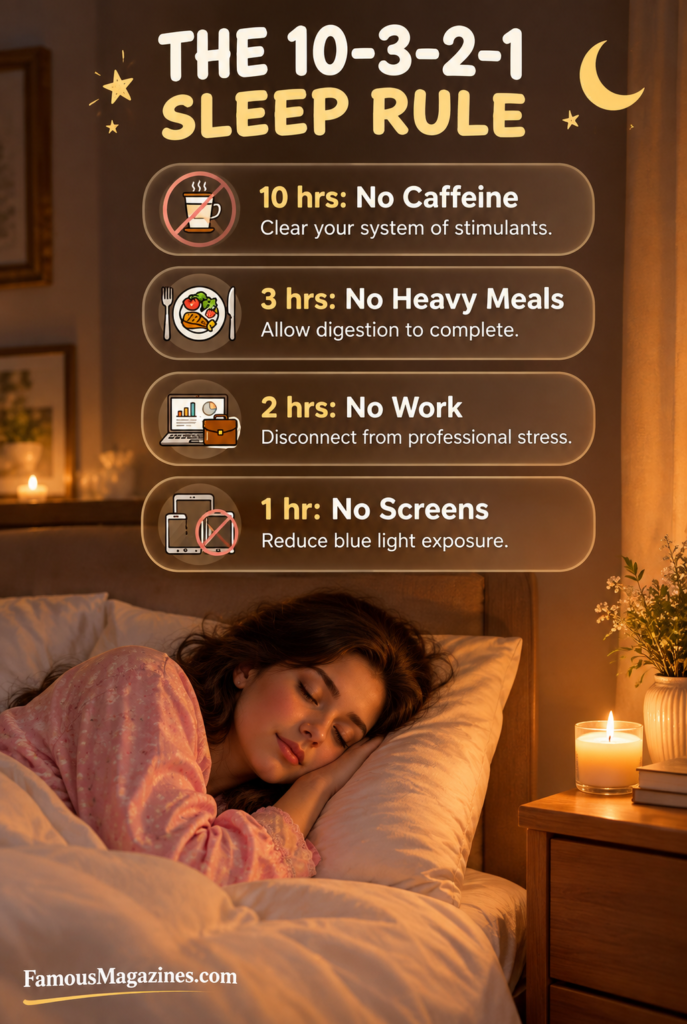
The 10-3-2-1-0 sleep rule, credited to fitness expert Craig Ballantyne and popularized widely on TikTok, is a five-step evening countdown built to protect sleep onset:
- 10 hours before bed: stop caffeine, since it has a half-life of 5-6 hours and residual amounts can still be in your bloodstream a full 10 hours later.
- 3 hours before bed: stop eating and drinking alcohol, giving digestion time to wind down before you lie flat.
- 2 hours before bed: stop working, so cortisol and adrenaline have time to taper.
- 1 hour before bed: stop screens, since blue light suppresses melatonin production.
- 0: zero snooze-button hits in the morning, which resets a consistent wake time and stabilizes your circadian rhythm.
Sleep as a Biological Necessity, Not a Luxury
Sleep is a biological necessity on par with food and water, not an optional wellness upgrade. During sleep, the body performs functions it cannot fully perform while awake: consolidating memory, regulating appetite hormones like leptin and ghrelin, repairing micro-damage in muscle and connective tissue, and running immune surveillance.
Treating sleep as negotiable, something to trade for one more hour of work or scrolling, is the single most common error behind chronic fatigue, weight gain, and burnout.
2. 15 Benefits of a Good Night’s Sleep, Backed by Research
Whether you’re counting 15 benefits of a good night’s sleep or stretching the list to 20 benefits of sleep, the research converges on the same core categories: physical repair, mental sharpness, and hormonal balance. Below is a comprehensive, research-grounded breakdown.
Physical Health Benefits
- Lower cardiovascular risk: consistent 7+ hours of sleep is associated with reduced rates of heart disease, per CDC chronic disease research.
- Stronger immune defense: deep sleep boosts cytokine production, which helps fight infection.
- Healthier body weight: adequate sleep regulates leptin and ghrelin, the hormones controlling hunger and satiety.
- Reduced type 2 diabetes risk: sleep supports insulin sensitivity; chronic short sleep is linked to elevated blood sugar.
- Faster athletic recovery: deep sleep is when muscle protein synthesis and tissue repair peak.
- Better skin and appearance: collagen production and cellular turnover both occur predominantly during sleep, which is why sleep is routinely cited in dermatology and celebrity wellness circles as a non-negotiable.
- Lower blood pressure: nocturnal dips in blood pressure during sleep support long-term cardiovascular health.
Mental and Cognitive Benefits
- Sharper memory consolidation: the hippocampus transfers short-term memories to long-term storage primarily during REM sleep.
- Improved focus and reaction time: well-rested individuals show measurably faster cognitive processing.
- Better emotional regulation: sleep loss amplifies amygdala reactivity, making emotional responses less controlled.
- Reduced anxiety and depression risk: sleep and mood share a bidirectional relationship; poor sleep worsens mood disorders and vice versa.
- Enhanced creativity and problem-solving: REM sleep supports the kind of loose associative thinking behind creative breakthroughs.
Hormonal and Repair Benefits
- Balanced hormones — sleep governs cortisol, growth hormone, insulin, and reproductive hormones, and disruption to sleep cascades into all four.
- Tissue repair and cellular regeneration — deep sleep is essentially the body’s nightly maintenance window for balancing hormones and repairing tissues damaged by daily wear, training, or stress.
- Improved longevity markers — population studies consistently associate 7-9 hours of nightly sleep with lower all-cause mortality compared to both short and excessively long sleepers.
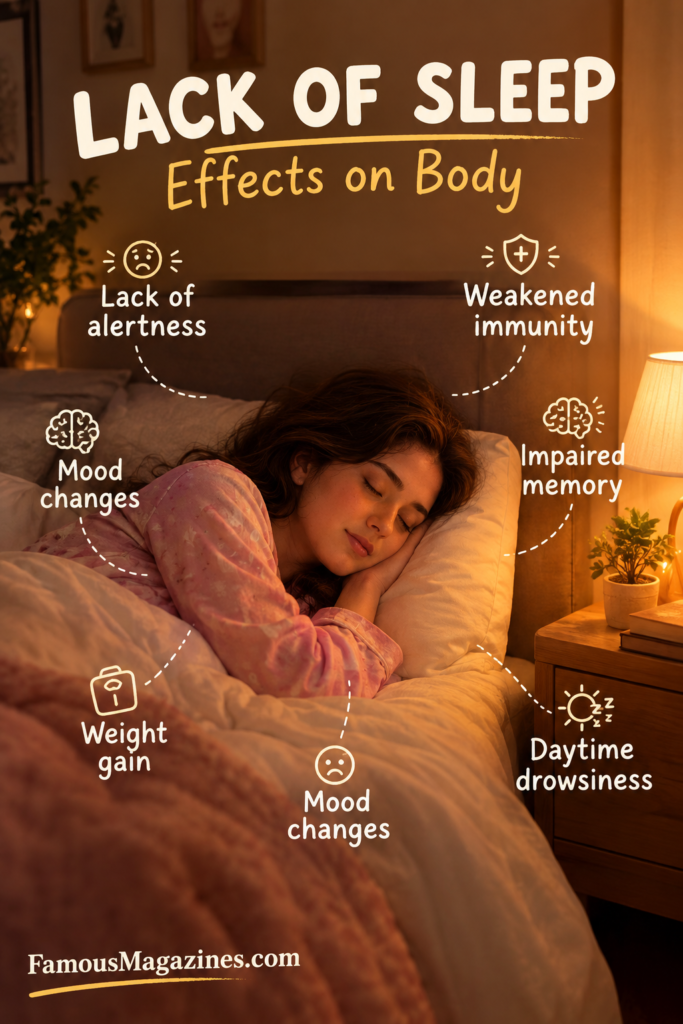
The side effects of lack of sleep extend well beyond feeling tired. Chronic sleep restriction quietly reshapes brain chemistry, immune function, and even sexual health.
Psychological Effects of Sleep Deprivation
The psychological effects of sleep deprivation include irritability, reduced impulse control, heightened anxiety, and, over time, a measurably higher risk of depression. Sleep-deprived individuals show exaggerated emotional reactivity, meaning small frustrations feel disproportionately large.
This isn’t a character flaw; it’s a measurable shift in amygdala and prefrontal cortex function when sleep debt accumulates.
Lack of Sleep Side Effects on the Brain
Poor sleep impairs the glymphatic system, the brain’s waste-clearance network that flushes out metabolic byproducts, including amyloid-beta, a protein linked to Alzheimer’s disease when it accumulates.
Short-term, lack of sleep side effects on the brain include slower reaction time (comparable to alcohol intoxication after roughly 18-24 hours without sleep), impaired decision-making, and reduced working memory capacity.
Systemic Inflammation and Disease
Chronic sleep restriction elevates inflammatory markers like C-reactive protein and interleukin-6. This low-grade systemic inflammation is a shared pathway behind cardiovascular disease, autoimmune flare-ups, and accelerated aging.
The CDC also links insufficient sleep to increased risk of stroke, obesity, and depression, underscoring that sleep loss isn’t an isolated symptom; it’s a systemic risk multiplier.
Sleep Deprivation and Sexual Wellness
Sleep deprivation and sexual wellness are more connected than most wellness content acknowledges. Poor sleep lowers testosterone in men and disrupts estrogen and progesterone balance in women, both of which reduce libido. Fatigue also reduces relationship satisfaction and emotional availability, compounding the physiological effect with a psychological one.
4. Bad Sleeping Habits and Their Consequences
Most sleep problems aren’t caused by insomnia disorders; they’re caused by ordinary, repeatable bad sleeping habits. Here are the three most damaging patterns and their consequences.
Late-Night Work and the Cortisol Trap
Late-night work keeps cortisol elevated at exactly the time it should be declining to allow melatonin to rise. This delays sleep onset and reduces the proportion of deep sleep even when total time in bed stays the same.
Professionals who answer emails or finish projects within two hours of bedtime routinely report longer sleep latency and more fragmented sleep, even if they don’t consciously feel “wired.”

Endless scrolling on social media combines two sleep disruptors at once: blue light suppressing melatonin, and dopamine-driven content keeping the brain in an alert, reward-seeking state.
Unlike reading a physical book, algorithmic feeds are engineered to extend engagement, which is precisely why “one more scroll” so reliably turns into 45 minutes and a delayed bedtime.
Poor Sleeping Position and Spinal Cord Health
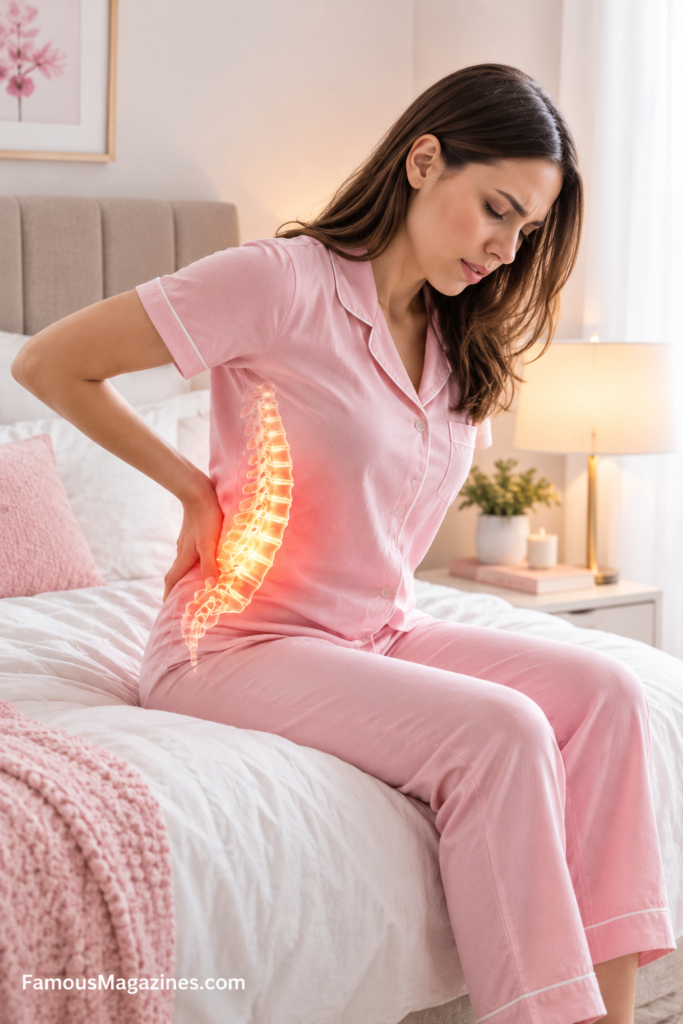
Your sleeping position and spinal cord alignment matter more than most people realize. Stomach sleeping forces prolonged neck rotation and flattens the lumbar spine’s natural curve, contributing to chronic neck and lower back pain.
Back and side sleeping, paired with a supportive pillow that keeps the cervical spine neutral, distribute weight more evenly and reduce the micro-strain that accumulates over thousands of nights.
5. 10 Tips for Better Sleep: A Complete Sleep Optimization Strategy
These 10 tips for better sleep cover environment, nutrition, and behavior, the three levers that matter most.
Environment & Routine Tips
- Keep your bedroom cool: 60-67°F (15-19°C) supports the natural core body temperature drop that triggers sleep onset.
- Block out light completely: blackout curtains or a sleep mask prevent light from suppressing melatonin.
- Go to bed at the same time nightly: a consistent schedule, even on weekends, is one of the strongest predictors of sleep quality.
- Reserve the bed for sleep only: working or watching TV in bed weakens the mental association between “bed” and “sleep.”
Nutrition Tips

The link between a balanced diet and deep sleep is well established: magnesium-rich foods (leafy greens, nuts, seeds) support muscle relaxation, while excess sugar and late caffeine both fragment deep sleep stages.
- Finish eating 3 hours before bed to give digestion time to settle.
- Limit caffeine after early afternoon, respecting its 5-6 hour half-life.
- Avoid alcohol close to bedtime: it fragments sleep architecture even though it can shorten sleep latency.
Technology & Behavior Tips
- Dim screens or switch to night mode 1-2 hours before bed.
- Get morning sunlight exposure within an hour of waking to anchor your circadian rhythm.
- Build a 20-minute wind-down ritual — reading, stretching, or breathwork signals the brain that sleep is next.
| Habit | Effect on Sleep | Optimization Fix |
|---|---|---|
| Late caffeine | Delays sleep onset, reduces deep sleep | Cut off caffeine 10 hours before bed |
| Screen use before bed | Suppresses melatonin | No screens in the final hour before bed |
| Irregular bedtime | Disrupts circadian rhythm | Fixed sleep/wake schedule, 7 days a week |
| Heavy late meals | Interrupts digestion, fragments sleep | Finish eating 3 hours before bed |
| Warm bedroom | Delays core temperature drop needed for sleep | Keep room at 60-67°F |
6. Sleep Optimization for Every Audience
Sleep optimization isn’t one-size-fits-all. Life stage, hormones, and daily schedule all shape what “better sleep” actually requires.
Sleep Optimization for Students
Sleep optimization for students centers on protecting sleep during exam periods, when the temptation to trade sleep for study time is highest. Ironically, this trade-off backfires: memory consolidation happens during sleep, so an all-nighter often reduces retention of exactly the material a student is trying to learn. Teens need 8-10 hours per the CDC, yet school start times and social schedules routinely push actual sleep well below that.
Sleep Optimization for Women and Working Women
Sleep optimization for women must account for hormonal cycles; estrogen and progesterone fluctuations across the menstrual cycle, pregnancy, and perimenopause all directly affect sleep quality. Research from the Sleep Foundation indicates women are roughly 40% more likely than men to experience insomnia in their lifetime.
For sleep optimization for working women, the added layer is role overload: managing a job, household logistics, and often caregiving simultaneously compresses the wind-down window most sleep advice assumes people have.
Sleep Optimization for Housewives
Sleep optimization for housewives in their 40s faces a distinct challenge: household responsibilities rarely have a fixed “off” switch, making it harder to signal the brain that the day is over.
Building a hard stop time for chores, delegating evening tasks, and protecting a wind-down ritual are especially important here, since the absence of a commute or office departure removes a natural boundary between “work mode” and “rest mode.”
Sleep Optimization for Celebrities and Sportsmen
Sleep optimization for celebrities increasingly appears in red-carpet interviews and wellness press as a performance and appearance strategy, tied directly to skin recovery, cognitive sharpness on camera, and stress resilience under public scrutiny.
Sleep optimization for sportsmen is even more quantified: elite athletes and their performance teams treat sleep as a trainable variable, often targeting 9+ hours nightly, because deep sleep is when muscle repair and reaction-time recovery peak. Many professional sports organizations now employ dedicated sleep coaches for exactly this reason.
7. Best Sleep Optimization Products for 2026
The right sleep optimization products remove friction from good habits rather than replacing them. Below is a category breakdown to guide smart buying decisions.
Wearables & Trackers
Sleep trackers (ring-style and wrist-style devices) estimate sleep stages, heart rate variability, and consistency, giving objective feedback on whether your habits are actually working. They’re most valuable for spotting patterns, like alcohol’s effect on your deep sleep, rather than as a substitute for good sleep hygiene.
Sleep Environment Products
Blackout curtains, white noise machines, cooling mattress toppers, and weighted blankets each target a specific environmental disruptor: light, sound, temperature, and nervous system arousal, respectively.
| Product Category | Solves For | Best For |
|---|---|---|
| Sleep tracking ring/wearable | Lack of visibility into sleep stages | Data-driven optimizers, athletes |
| Blackout curtains | Light-disrupted melatonin | City dwellers, shift workers |
| White noise machine | Sound disruption | Light sleepers, students in dorms |
| Cooling mattress topper | Overheating, night sweats | Perimenopausal women, hot sleepers |
| Weighted blanket | Nervous system arousal, anxiety | High-stress professionals |
8. Building Your Wellness Sleep Routine
A durable wellness sleep routine treats sleep as one pillar of a healthy lifestyle and sleep optimization strategy, alongside nutrition and movement, rather than an isolated habit.
Daily Sleep Optimization Tips
Anchor Sleep Optimization daily tips around two fixed points: a consistent wake time (the single most powerful circadian anchor) and a consistent wind-down start time. Everything else- the 10-3-2-1-0 countdown, room temperature, nutrition timing- builds around those two anchors.
Integrating Sleep into a Healthy Lifestyle
Sleep optimization has become a recognizable fitness trend precisely because performance-focused communities recognized that training and nutrition gains plateau without adequate recovery.
Morning routines like the 30-30-30 method (30g protein within 30 minutes of waking, followed by 30 minutes of low-intensity exercise) support this by reinforcing consistent wake times and morning light exposure, both of which strengthen the following night’s sleep pressure and timing.

FAQ: People Also Ask About Sleep Optimization
What are signs of good sleep?
Falling asleep within 10-20 minutes, staying asleep through the night, and waking refreshed without an alarm are the clearest signs. Stable daytime energy, sharp focus, and consistent mood round out the picture. If you consistently hit these markers, your current sleep optimization approach is working.
What are the benefits of getting 7 hours of sleep?
Seven hours meets the CDC’s minimum recommended threshold for adults and supports memory consolidation, immune defense, and cardiovascular health. It’s the floor, not necessarily the ideal, for most adults, many of whom perform better at 7-9 hours.
What will happen if I only get 7 hours of sleep?
For most healthy adults, 7 hours falls within the recommended range and won’t cause harm on its own. If your personal need is closer to 8-9 hours, however, consistently capping at 7 can produce mild cognitive fog and gradual sleep debt over time.
Can you function on 7 hours of sleep?
Yes, most adults can function on 7 hours since it’s the CDC’s minimum recommendation for ages 18-60. Functioning isn’t the same as optimal performance, though; athletes and anyone under high cognitive load often perform better closer to 8-9 hours.
What is the 30-30-30 rule for women?
It’s a morning wellness trend, not a sleep rule: 30 grams of protein within 30 minutes of waking, followed by 30 minutes of low-intensity exercise. It supports sleep optimization indirectly by reinforcing consistent wake times and morning light exposure.
Why is sleep important for children?
Sleep drives physical growth, brain development, and immune function in children, who need 9-12 hours at school age and 8-10 as teens, per CDC guidelines. Insufficient sleep is linked to poorer academic performance and behavioral issues.
What is the best sleep position for spinal health?
Back or side sleeping with proper pillow support keeps the spine neutral and reduces pressure on the neck and lower back. Stomach sleeping is generally discouraged because it forces prolonged neck rotation.
What is the 10-3-2-1-0 sleep rule?
It’s a five-step evening countdown: no caffeine 10 hours before bed, no food or alcohol 3 hours before, no work 2 hours before, no screens 1 hour before, and zero snooze-button hits in the morning.
Conclusion: Make Sleep Optimization Your Highest-Leverage Habit
Sleep optimization isn’t a luxury reserved for elite athletes or wellness influencers; it’s a biological necessity with measurable returns on health, cognition, and appearance.
Three takeaways to act on tonight: protect your first sleep cycle by avoiding late meals and alcohol, follow the 10-3-2-1-0 countdown to remove decision fatigue from your evening routine, and anchor a consistent wake time, since it’s the single strongest lever for circadian stability.
Whether you’re a student, a working parent, or a professional athlete, the path to better performance runs through better sleep. Start with one habit tonight, and let Sleep Optimization compound from there.


Post Comment