Fitness Technology 2026: The Complete Wearables Guide
Fitness technology in 2026 explained: the best fitness trackers, smartwatches, smart rings & AI workout planners for women. Read the full guide now.
Fitness technology has quietly become one of the fastest-growing product categories on the planet — the global wearable fitness trackers market is on pace to hit roughly $70–85 billion in 2026 alone, according to multiple market-research houses including The Business Research Company and Towards Healthcare. That is not a niche gadget trend; it is a full-scale reshaping of how people train, sleep, eat, and recover. If you have ever wondered whether a smartwatch, a smart ring, or a simple fitness band actually makes a measurable difference in your results, you are asking the right question at the right time.
This guide breaks down modern fitness technology—from mainstream fitness trackers and AI workout planners to the specific ways women’s fitness technology is evolving across the 30s, 40s, and 50s, including hormonal health, cycle tracking, protein needs, and osteoporosis prevention.
In this guide, you’ll learn how fitness tracker accuracy actually compares across device types, which fitness apps for beginners are worth downloading, what happens at the 2026 Fitness Technology Summit, and how to choose gear that matches your body and your goals rather than a marketing headline.
1. What Is Fitness Technology in 2026?
Fitness technology is the umbrella term for any connected device, sensor, or software platform that measures, interprets, or guides physical activity and recovery. In 2026, that umbrella covers wrist-worn smartwatches, minimalist fitness trackers, finger-worn smart rings, bathroom-floor smart scales, chest-strap heart-rate monitors, and an entire layer of fitness apps and AI workout planners sitting on top of the hardware. What used to be a step counter is now a miniature health lab.
The Fitness Technology Boom: Market Size and Growth
Market analysts differ slightly on exact figures, but the direction is unanimous. The Business Research Company puts the wearable fitness trackers market at roughly $70.3 billion in 2026, growing to $130.9 billion by 2030 at a 16.8% compound annual growth rate.
Towards Healthcare estimates the broader fitness tracker category at approximately $84.9 billion in 2026, en route to $377.8 billion by 2035 — an 18% annual growth rate. Expert Market Research and Fortune Business Insights place 2026 figures in a similar $77–85 billion range. (Sources: The Business Research Company, Towards Healthcare, Expert Market Research, 2026 reports)
Behind those numbers: global smartwatch users have surpassed 640 million in 2026, and wrist-worn fitness tracker users passed roughly 434 million in 2025, per industry tracking site BusinessDay. Smartwatches now hold close to 45% of the wearables category, with fitness bands around 30% and the remainder split between rings, smart clothing, and specialty sensors.
Core Categories Inside the Fitness Technology Ecosystem
Every device in this space fits into one of five functional buckets:
- Fitness trackers — lightweight bands focused on steps, heart rate, and sleep, built for simplicity and long battery life.
- Smartwatches — full-featured wrist computers combining fitness tracking, notifications, apps, GPS, and payments.
- Smart rings — screenless finger-worn sensors prioritizing passive recovery and sleep data.
- Smart scales — connected scales that estimate body composition (fat mass, lean mass, water percentage) and sync to an app.
- Fitness apps and AI workout planners — the software layer that turns raw sensor data into a training plan.
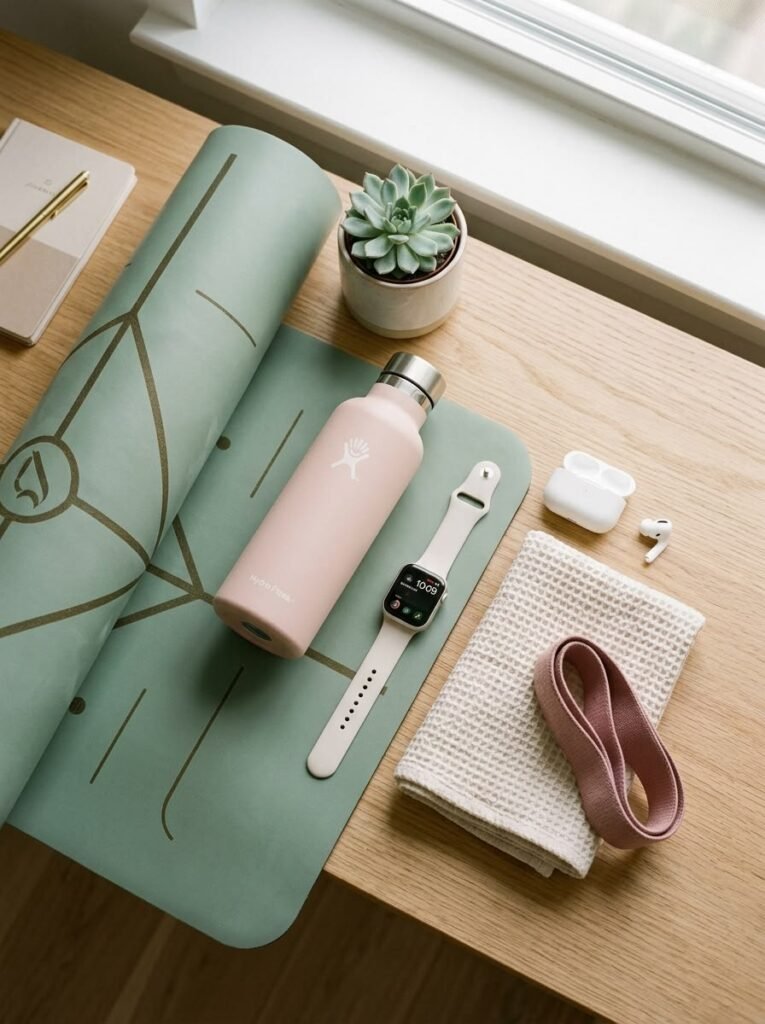
2. Wearable Fitness Technology Compared: Smartwatches vs. Fitness Trackers vs. Smart Rings
Choosing between wearable fitness technology categories comes down to three questions: how much screen and app access do you want, how discreet do you need the device to be, and how much do you trust each sensor’s placement on your body.
Smartwatch vs. Fitness Tracker: Key Differences
A smartwatch vs fitness tracker decision is really a decision about how much functionality you want strapped to your wrist. Smartwatches (Apple Watch, Garmin, Samsung Galaxy Watch) add full app ecosystems, cellular connectivity, contactless payments, and multi-day GPS mapping, but usually trade away battery life — most last one to three days.
Fitness trackers (Fitbit Charge, Amazfit Band, Xiaomi Smart Band) strip away the extras to focus on steps, heart rate, and sleep, often running seven to fourteen days between charges at a fraction of the price.
Smart Ring vs. Smartwatch: Which Wins for Accuracy?
The smart ring vs smartwatch debate has intensified through 2026. Manufacturers and several independent test panels report that finger-worn sensors sit closer to digital arteries and under thinner skin than wrist sensors, which can translate into steadier heart-rate and temperature readings during rest and sleep — a claim highlighted by outlets covering World Health Day 2026 coverage of the category.
Oura’s sleep-staging algorithm has reportedly been benchmarked against clinical polysomnography with strong agreement on deep-sleep and sleep-efficiency metrics. Rings also tend to run five to eight days on a charge, since there is no screen to power.
IDC projects smart ring shipments will reach roughly 3.2 million units by 2028, up from about 800,000 in 2023 — explosive growth, though still a fraction of the more than 160 million smartwatches sold annually.
Fitness Tracker Accuracy: What the Data Actually Shows
Fitness tracker accuracy varies by metric, not just by brand. Step counts and general activity trends are reasonably reliable across most modern devices. Heart-rate accuracy during steady-state cardio is generally strong for both wrist and finger wearables, but accuracy drops for all wrist-based devices during high-intensity interval work with rapid arm movement — chest-strap heart-rate monitors remain the gold standard for competitive athletes for this reason.
Sleep staging (light, deep, REM) is the metric with the widest variance between devices, which is why sleep trackers validated against lab-grade polysomnography, like Oura’s, are worth paying attention to if sleep is your primary goal.
| Feature | Fitness Tracker | Smartwatch | Smart Ring |
|---|---|---|---|
| Typical battery life | 7–14 days | 1–3 days (up to 7 in battery-saver mode) | 5–8 days |
| Screen / notifications | Basic or none | Full color touchscreen | None (app-only) |
| Best for | Budget-conscious activity tracking | All-in-one fitness + productivity | Passive recovery, sleep, discretion |
| Heart-rate accuracy (rest) | Good | Good | Very good |
| Heart-rate accuracy (HIIT) | Moderate | Moderate | Moderate |
| Typical starting price (2026) | $40–$130 | $200–$800 | $280–$550 (some with subscription) |
3. Home Fitness Technology and AI Workout Planners
Home fitness technology has closed most of the gap between a living room and a full gym. Smart mirrors, app-connected resistance bands, and streaming platforms now pair directly with the data from your fitness tracker or smartwatch, adjusting a session in real time based on your heart-rate zone or recovery score.
AI Workout Planners: How They Personalize Training
AI workout planners pull from your historical training load, sleep data, and recovery metrics to generate a session that fits where your body actually is that day — not just a static calendar plan.
Whoop’s coaching layer, for example, adjusts recommended strain based on the previous night’s recovery score, while several newer platforms use large language models to explain the reasoning behind a workout swap in plain language.
The core value of AI workout planning is adaptability: instead of forcing you to follow a rigid twelve-week PDF, the plan changes when your data changes.
Best Fitness Apps for Beginners
The strongest fitness apps for beginners in 2026 share three traits: they explain form before adding load, they build in deload weeks automatically, and they sync with whatever fitness trackers or smartwatches you already own rather than locking you into new hardware. Look for an app with a video-demonstration library, a beginner-specific onboarding quiz, and clear weekly progress summaries — features that separate a genuinely beginner-friendly fitness app from a repackaged advanced program.
Sleep Trackers, Heart-Rate Monitors, and Smart Scales at Home
Sleep trackers built into rings and watches now estimate sleep stages, overnight heart-rate variability (HRV), and respiratory rate, feeding a “readiness” or “recovery” score each morning. Pair that with a chest-strap or wrist heart-rate monitor during training and a smart scale for weekly body-composition trends, and you have a home data set that used to require a sports-science lab. The key is consistency: weigh in at the same time of day, and treat a single scale reading as noise — the seven-day trend line is what matters.
4. Women’s Fitness Technology at 30, 40, and 50
Women’s fitness technology has moved well past generic step-counting. Devices and apps now account for menstrual-cycle phase, perimenopause, and menopause — three physiological realities that most first-generation trackers simply ignored.
Women’s Fitness Technology at 30: Building the Foundation
In your 30s, women’s fitness technology at 30 is largely about building measurable habits: consistent step counts, strength-training frequency, and early cycle-syncing so you understand how your own energy, strength, and recovery shift across a typical 28-day cycle. This is also the decade to start a baseline bone-density and resting-heart-rate record, since both become more clinically relevant a decade later.
Women’s Fitness Technology at 40: Hormonal Health in Focus
Women’s fitness technology at 40 increasingly centers on hormonal health, because this is typically when perimenopause begins. Estrogen starts to decline, which affects insulin sensitivity, fat storage patterns, and how efficiently muscle rebuilds after a workout.
Devices with continuous skin-temperature sensors (common in smart rings) can flag the temperature shifts associated with hormonal fluctuation, while HRV trends can highlight when training load needs to drop rather than increase.
Women’s Fitness Technology at 50: Menopause and Beyond
By 50, women’s fitness technology shifts further toward recovery quality, bone health, and fall-risk reduction alongside strength. Post-menopausal women see the sharpest acceleration in bone-mineral-density loss due to falling estrogen, making resistance-training consistency — not just cardio minutes — the priority metric a tracker should help you hit.
5. Fitness Technology, Hormonal Health, and Nutrition for Women
Does Fitness Technology Work on Your Period? Cycle Tracking Explained
A common question — does fitness technology work on your periods — has a nuanced answer. Cycle-tracking features (built into Oura, Apple Watch, WHOOP, and most major fitness apps) use skin temperature, HRV, and self-logged symptoms to estimate which phase of your cycle you’re in and to retrospectively confirm ovulation.
They are genuinely useful for spotting patterns in energy, strength, and sleep across a cycle, but they are estimates, not diagnostic tools, and accuracy drops for anyone with irregular cycles, PCOS, or during perimenopause when cycles naturally become inconsistent.
How Much Protein Does a Woman Need in Her 40s?
Nutrition guidance has shifted meaningfully here. The classic RDA of 0.8 grams of protein per kilogram of body weight was designed to prevent deficiency in a sedentary population, not to preserve muscle. Multiple nutrition reviews now suggest how much protein does a woman need at 40s is closer to 1.2–1.6 grams per kilogram of body weight per day for physically active women, with some clinical nutrition groups such as ESPEN recommending up to 1.6–1.8 g/kg during the menopausal transition specifically because muscle becomes more resistant to protein signaling with age — a phenomenon researchers call anabolic resistance.
For a 150-lb (68 kg) woman, that works out to roughly 82–110 grams of protein daily, well above the 55 grams the outdated RDA would suggest. (Sources: ESPEN Expert Group guidance; 2025 Nutrients review, as cited by multiple midlife-nutrition publications, 2026)
High-Protein Meals for Women’s Fitness Goals
Hitting that target is easier when protein is distributed across the day rather than loaded into one meal. Practical high-protein meal building blocks for women’s fitness goals include Greek yogurt with a scoop of collagen or whey and berries for breakfast (25–30g), a grilled-chicken or tofu grain bowl with beans for lunch (35–40g), and salmon or lean beef with a side of lentils for dinner (35–40g) — a pattern that comfortably clears 100 grams without relying on protein shakes for every meal. Aiming for 20–30 grams of high-quality protein per meal supports muscle protein synthesis more consistently than one large end-of-day serving.
Women’s Fitness Technology and Osteoporosis Prevention
The clinical research on women’s fitness technology and osteoporosis prevention is consistent: weight-bearing and resistance exercise are the two interventions with the strongest evidence for maintaining bone mineral density after menopause. Guidance from sports-medicine consensus statements recommends 30–60 minutes of moderate-to-high-intensity weight-bearing activity three times per week, plus resistance training two to three times weekly, targeting major muscle groups with progressively heavier loads. A tracker’s role here is to log training consistency and flag when resistance sessions drop off — the discipline matters more than any single device feature, since bone-density gains reverse if training stops.
6. Lower-Body Workouts, Gym Equipment, and AI Planning for Women
AI Workout Planner for Women: Lower-Body Focus
An effective AI workout planner for women built around lower-body strength typically sequences a squat or hinge pattern, a single-leg movement, and a hip-focused accessory exercise across each week, auto-adjusting load based on logged HRV and recovery scores rather than a fixed percentage chart. This matters most for women managing hormonal fluctuation, since recovery capacity genuinely changes week to week.
Best Lower-Body Fitness Workouts to Pair With Trackers
Effective lower-body fitness workouts for bone and muscle health combine compound lifts with unilateral work: back squats or goblet squats, Romanian deadlifts, walking lunges, step-ups, and hip thrusts form the backbone of most evidence-based programs. Logging these sessions through a connected app lets you track progressive overload over months rather than guessing whether last month’s weights are still appropriate.
Fitness Tracker for Women: Gym Equipment and Sports Bra Fit
Choosing a fitness tracker for women also means thinking about how it interacts with gym equipment and apparel — wrist trackers can catch on barbell knurling during heavy pulls, which is one reason smart rings have gained traction among strength-focused users. There is also a genuine, if under-discussed, women’s fitness technology and gym bra relationship: chest-strap heart-rate monitors and bra-integrated sensors need a snug, low-movement fit to read accurately, so a compression-style sports bra generally produces more reliable heart-rate data than a looser style during high-impact training.
Women Fitness Influencers to Follow
For programming ideas and accountability, a growing number of women fitness influencers to follow now build content specifically around strength training over 40, cycle-informed programming, and honest reviews of wearable accuracy rather than generic transformation content — a shift that mirrors the broader industry move toward data-literate, longevity-focused fitness content.
7. Fitness Technology Summit 2026 and Where the Industry Is Headed
Fitness Technology Summit 2026 Agenda Highlights
The Fitness Technology Summit 2026 is scheduled for October 12–14, 2026, in Washington, D.C., following its 2025 edition in Chicago hosted by ALTA Technology Group. The event is invite-only and brings together executives from major fitness, healthcare, and hospitality brands to focus on AI-driven personalization, member-retention data, and connected-device integration.
Past fitness technology agenda themes have centered on turning behavioral data into business decisions — panels on digital personalization tools, longevity-focused programming, and AI-assisted coaching have anchored recent editions, with speakers drawn from brands including Equinox, EOS Fitness, and EGYM. (Source: Fitness Technology Summit event listings and Athletech News coverage, 2025–2026)
What’s Next for Fitness Technology Products
Several fitness technology products signal where 2027 is headed: continuous glucose monitoring is expanding beyond diabetics into general wellness tracking, smart rings are adding blood-pressure trend estimation, and AI coaching layers are becoming conversational rather than dashboard-based. The American College of Sports Medicine’s 2026 trends survey ranked wearable technology the #1 fitness trend overall, with mobile exercise applications ranked fourth — a strong signal that the software layer, not just the hardware, is where competitive differentiation is heading next.
The Next Big Fitness Craze
Industry analysts point to “recovery as a service” — sleep optimization, HRV-guided training, and longevity coaching bundled into a single subscription — as the most likely next mainstream fitness technology wave, building on the momentum already visible at WHOOP, Oura, and Eight Sleep.
FAQ:
What are the main fitness companies?
The main players spanning hardware and software include Apple, Garmin, Fitbit (Google), Samsung, Oura, WHOOP, Ultrahuman, and Technogym, alongside app-first platforms like Strava and EGYM. Each competes across a different slice of the fitness technology stack, from wrist hardware to gym-floor connected equipment.
What is the future of the fitness industry?
The fitness industry is shifting from generic activity tracking toward personalized, AI-driven coaching and preventive-health integration. Expect deeper ties between wearables and healthcare providers, more longevity-focused programming, and subscription-based recovery services replacing one-time hardware purchases as the primary revenue model.
What are the top fitness trends for 2027?
Early signals point to wearable-integrated continuous glucose monitoring, AI coaching that explains its reasoning conversationally, smart-ring blood-pressure estimation, hybrid in-person/AI-coached training, and a continued rise in longevity- and menopause-specific programming for women.
What will be the next fitness craze?
“Recovery as a service” is the leading candidate bundled sleep optimization, HRV-guided training load, and longevity coaching delivered through a single subscription, following the model WHOOP and Oura have already popularized.
Will hormonal changes after 40 make it harder to see fitness results?
Declining estrogen after 40 does slow muscle protein synthesis and shifts fat storage patterns, which can make progress feel slower. Results are still very achievable with adequate protein intake (roughly 1.2–1.6 g/kg body weight) and consistent resistance training, which directly counteracts much of that hormonal effect.
What are examples of fitness technology products?
Common fitness technology products include smartwatches, fitness trackers, smart rings, smart scales, chest-strap heart-rate monitors, connected resistance equipment, and AI-driven fitness apps that automatically generate and adjust training plans.
What is the next big thing in fitness technology?
Conversational AI coaching layered on top of existing wearable data is emerging as the next major shift, moving beyond static dashboards toward tools that explain training decisions in plain language and adjust programming in real time based on recovery data.
Conclusion
Fitness technology in 2026 is no longer a single gadget decision — it’s a layered ecosystem of trackers, AI coaching, and nutrition data working together. Three takeaways matter most: first, device choice should follow your primary goal (screen and app access favor smartwatches, passive accuracy and discretion favor smart rings); second, women’s fitness technology now genuinely accounts for cycle phase, perimenopause, and bone health rather than treating every user the same; and third, the data is only as useful as the consistency behind it — protein intake, resistance training frequency, and sleep habits still do the heavy lifting that no algorithm can replace.


Post Comment