Anti-Aging Skincare: 9 Proven Strategies (2026 Guide)

9 proven anti-aging skincare strategies, from sunscreen and retinoids to in-office treatments, with routines by age, skin tone, and profession.
Most anti-aging skin care advice is a generic morning and evening checklist. This guide ranks nine strategies by how well the evidence supports them, shows you exactly how to do each one, compares your options side by side, and adapts the advice for your age, skin tone, and profession.
It is written for beauty enthusiasts, models and actors whose faces are their livelihood, women over 60 refining a lifelong routine, magazine editors vetting product claims, content creators, and beauty business owners building or choosing products. You will not need a 12-step routine or a four-figure budget. You will need consistency.
New to skincare basics? Start with our complete daily skincare routine guide, then come back here to layer on the anti-aging steps.
How Does Skin Age, and What Can Anti-Aging Skincare Really Change?
Skin ages through two overlapping processes, and only one of them is largely in your hands.
Intrinsic aging is the genetic, time-driven process. Collagen and elastin production slow, cell turnover drops, the outer layer thins, and the skin barrier holds water less effectively. For women, the fall in estrogen around menopause speeds this up, which is why skin often feels thinner and drier after 50.
Extrinsic aging comes from the environment and lifestyle. Ultraviolet (UV) radiation is the largest modifiable cause, and the damage it creates is called photoaging: wrinkles, rough texture, sagging, and dark spots. Smoking, air pollution, chronic sleep loss, and a high-sugar diet add oxidative stress and break down collagen faster.
What skin care can do: prevent new damage, soften fine lines, even out tone, improve texture, and keep skin hydrated. What it cannot do: replace lost facial volume, lift deep sagging, or erase deep wrinkles. Those concerns are where the professional treatments in strategy 8 come in.
The 9 Best Anti-Aging Skincare Strategies at a Glance
Here is the full list ranked by how much evidence supports each strategy and how much difference it typically makes. Strategies 1 and 2 do most of the heavy lifting.
| # | Strategy | Main benefit | Evidence | Start with |
|---|---|---|---|---|
| 1 | Daily broad-spectrum sunscreen | Prevents new photoaging | Very strong | SPF 30+, every morning |
| 2 | Retinoid at night | Softens fine lines, smooths texture, fades dark spots | Very strong | Low-strength retinol, 2 nights a week |
| 3 | Vitamin C serum | Antioxidant protection, brighter tone | Strong | 10 to 15% L-ascorbic acid, mornings |
| 4 | Niacinamide and ceramides | Barrier repair, calmer and more even skin | Moderate to strong | 2 to 5% niacinamide plus a ceramide cream |
| 5 | Hyaluronic acid, moisturizer, eye cream | Plumper, more hydrated skin | Strong for hydration | Apply on damp skin, then seal |
| 6 | Gentle exfoliation and cleansing | Smoother, brighter skin | Moderate | Lactic or glycolic acid, 1 to 2 nights a week |
| 7 | Peptides and collagen support | Firmer-looking skin | Modest, varies | Peptide serum or cream |
| 8 | Professional treatments | Wrinkles, laxity, deeper pigmentation | Strong, varies by treatment | Consultation with a board-certified dermatologist |
| 9 | Lifestyle habits | Slower collagen loss, better repair | Moderate | Sleep, no smoking, balanced diet |
1. Anti-Aging Skincare Starts With Broad-Spectrum Sunscreen Every Day
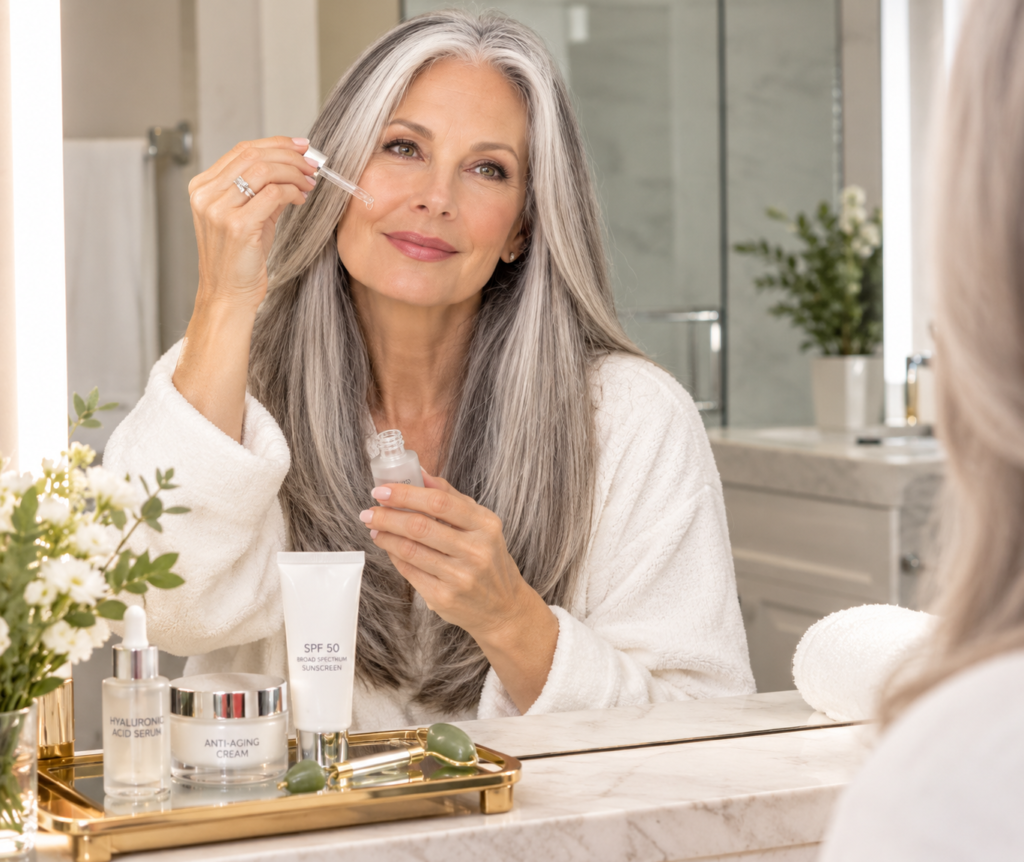
Sunscreen is the most effective anti-aging product you can use, because UV exposure drives most visible skin aging. In a randomized trial of adults in Nambour, Australia, published in 2013, people assigned to daily sunscreen showed about 24% less skin aging over four and a half years than people who used it only when they chose to. No serum has a result that clean.
How to do it right:
- Choose a broad-spectrum, water-resistant formula with SPF 30 or higher, the standard the American Academy of Dermatology (AAD) recommends.
- Apply about half a teaspoon to the face and neck as the last step of your morning routine.
- Reapply every two hours outdoors, and after sweating or swimming.
- Wear it on cloudy days and near windows, since UVA rays pass through both.
Mineral or chemical? Mineral filters (zinc oxide, titanium dioxide) sit on the skin and suit sensitive or reactive skin. Modern tinted versions reduce the white cast that bothers deeper skin tones. Chemical filters feel lighter and usually blend in invisibly. The best sunscreen is the one you will wear every day.
2. Add a Retinoid to Your Anti-Aging Skincare Routine (and Start Slowly)
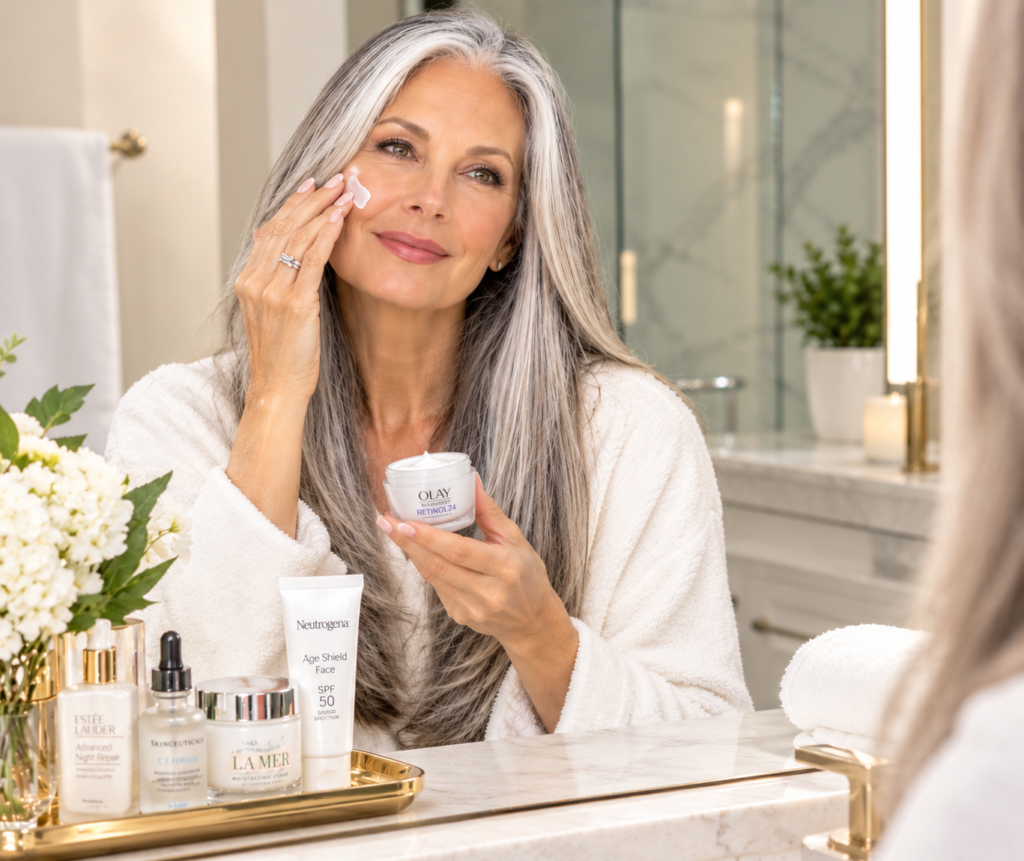
Retinoids are vitamin A derivatives that speed up cell turnover and stimulate collagen production. They are the best-studied topical treatment for fine lines, rough texture, and uneven tone, and prescription tretinoin is FDA-approved for photoaging. Over-the-counter options are gentler and work more slowly.
| Type | Strength | Availability | Best for |
|---|---|---|---|
| Retinol | Mild to moderate | Over the counter | Beginners and maintenance |
| Retinaldehyde (retinal) | Moderate | Over the counter | Faster results with less irritation than stronger forms |
| Adapalene | Moderate | Over the counter in the US | Rough texture and breakouts |
| Tretinoin | Strong | Prescription | Established wrinkles and sun damage |
A 12-week start plan:
- Weeks 1 to 2: use it two nights a week.
- Weeks 3 to 4: increase to three nights a week.
- Weeks 5 to 8: use it every other night.
- Weeks 9 to 12: use it nightly if your skin tolerates it.
Apply a pea-sized amount to dry skin, then layer moisturizer over it. Some dryness and flaking in the first weeks is common and usually settles. Skip a night if skin stings or turns red, and never skip sunscreen the next morning.
If you also deal with breakouts, read our complete guide to skincare with acne before you add a new active.
Pregnancy warning: avoid retinoids during pregnancy and while trying to conceive, and ask your doctor about use while breastfeeding. Bakuchiol is a plant-derived alternative with early, smaller-scale evidence.
Case study (illustrative, not a real patient): Picture a 48-year-old with mild sun damage who adds SPF 30+ every morning, then follows the plan above with a low-strength retinol and a ceramide moisturizer. In weeks 1 to 4 she gets dryness and light peeling, pauses for two nights, and resumes.
By week 12, her texture is smoother, tone looks more even, and fine lines around the eyes look softer. Deep forehead lines are unchanged, which is the realistic ceiling of topical products. This is a typical pattern, not a promise.
3. Add a Vitamin C Serum to Your Morning Anti-Aging Skincare
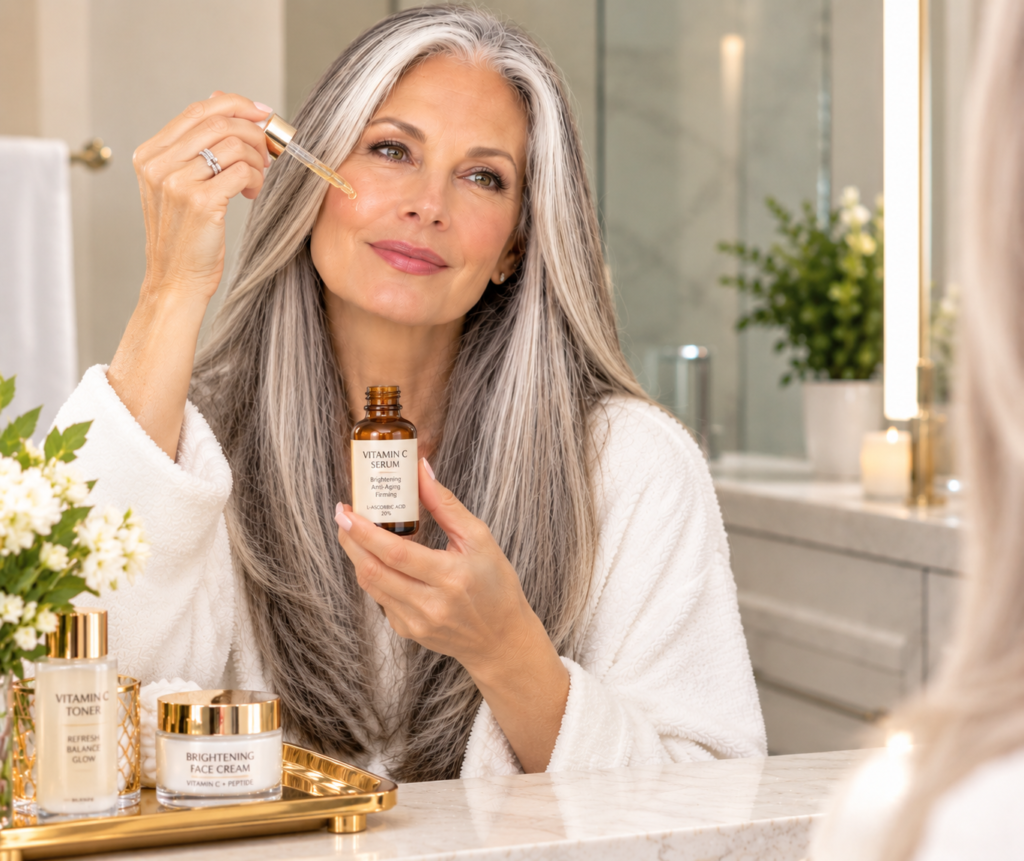
Vitamin C (L-ascorbic acid) is a potent antioxidant. It helps neutralize free radicals generated by UV and pollution, supports collagen production, and can brighten dull tone and fade dark spots over time.
Under sunscreen, it adds a second layer of defense against environmental damage, but it never replaces sunscreen.
How to choose and use it:
- Look for 10 to 20% L-ascorbic acid in an opaque, airtight bottle, because it breaks down with light and air. If the serum turns dark orange or brown, replace it.
- Gentler derivatives, such as magnesium ascorbyl phosphate or ascorbyl glucoside, suit sensitive skin but are generally less potent.
- Formulas that pair vitamin C with vitamin E and ferulic acid are more stable and offer stronger antioxidant protection.
- Apply to clean, dry skin before moisturizer and sunscreen. Patch test first, and start every other day if your skin is reactive.
4. Rebuild Your Barrier With Niacinamide and Ceramides
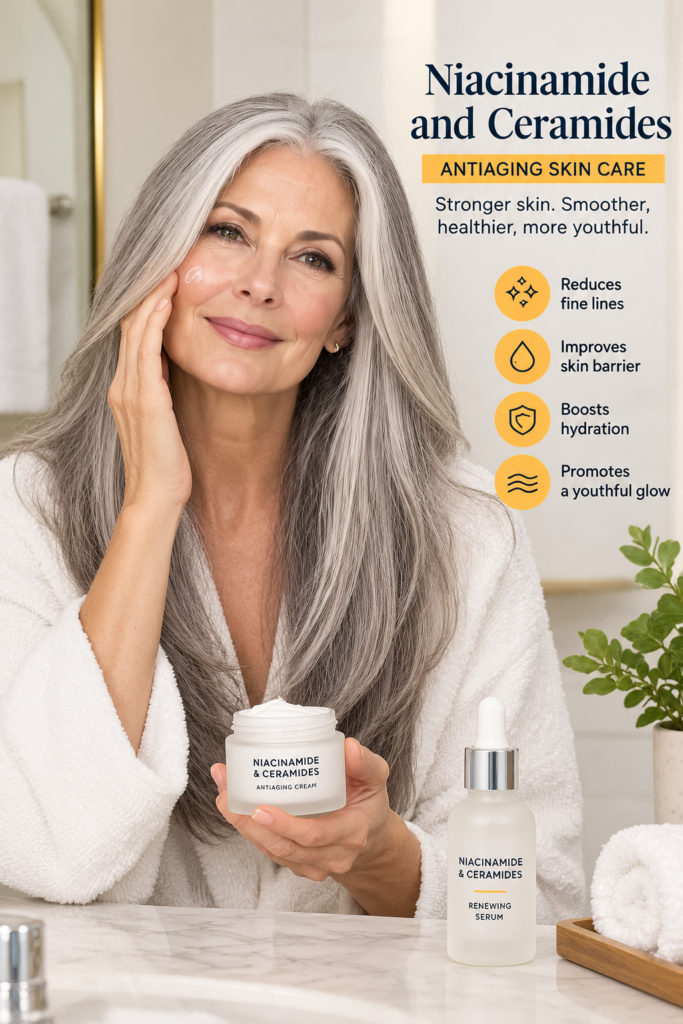
As skin ages, it makes fewer barrier lipids, so it loses water faster and reacts more easily. Niacinamide (vitamin B3) supports the barrier, calms redness, and helps even out tone; most studies use concentrations of 2 to 5%.
Ceramides are lipids your skin produces naturally and in smaller amounts with age. Creams that contain them, ideally alongside cholesterol and fatty acids, help skin hold moisture.
This step also makes the rest of your routine easier to tolerate. A healthy barrier handles retinoids and exfoliating acids with less stinging and flaking.
How to use it:
- Apply a niacinamide serum or moisturizer morning or night, after cleansing.
- Use a ceramide cream at night to seal everything in.
- If your skin feels tight, stings, or flakes, pause retinoids and acids for one to two weeks. Use only a gentle cleanser, a ceramide moisturizer, and sunscreen until it settles.
5. Hydrate With Hyaluronic Acid, Moisturizer, and Eye Cream
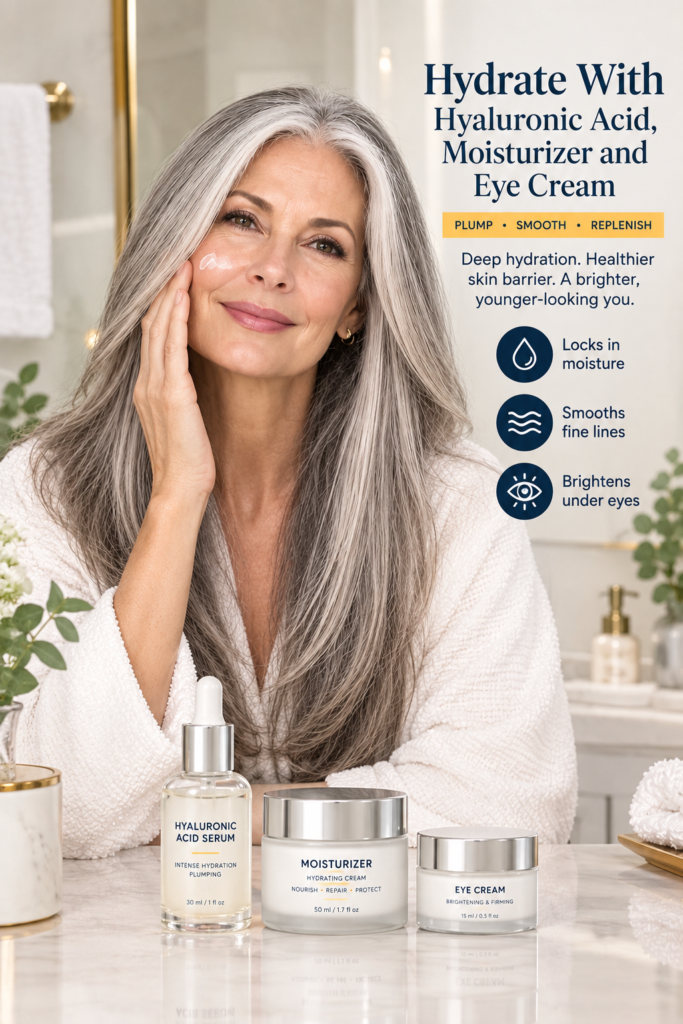
Dehydrated skin makes fine lines look deeper. Hydration will not remove wrinkles, but it plumps the surface so lines look softer and makeup sits more smoothly.
- Hyaluronic acid is a humectant that pulls water into the outer layer of skin. Apply it to damp skin so it has water to bind, then seal it with a moisturizer.
- Moisturizer works best when it combines humectants (glycerin, hyaluronic acid), emollients (ceramides, squalane), and occlusives (petrolatum, dimethicone, shea butter). Mature or dry skin usually needs a richer cream at night.
- Eye cream is useful because the skin around the eyes is thinner and dries out first. A fragrance-free formula with hydrating ingredients is enough. Caffeine may briefly reduce puffiness, and a gentle facial moisturizer often works just as well.
Do not forget the neck and chest. They show sun damage and dryness early, and they respond to the same routine as your face.
6. Exfoliate Gently and Cleanse Smartly
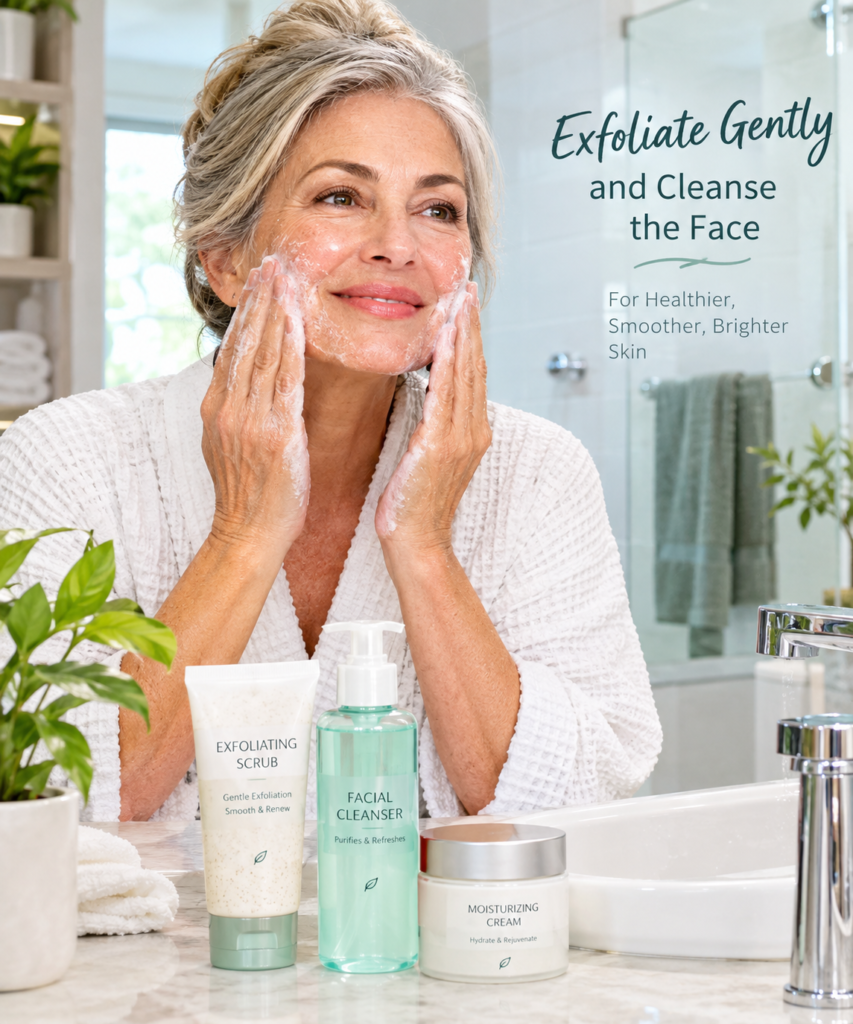
Cell turnover slows with age, so dead cells linger, and skin looks dull and rough. Chemical exfoliants loosen the bonds holding those cells together, and they are gentler than physical scrubs.
- Alpha hydroxy acids (AHAs) such as glycolic, lactic, and mandelic acid work on the surface to brighten and smooth. Lactic and mandelic acid are milder and suit dry or sensitive skin.
- Beta hydroxy acid (BHA), or salicylic acid, clears pores and suits oily or breakout-prone skin.
- Polyhydroxy acids (PHAs) are the mildest option for reactive skin.
Use one exfoliant once or twice a week at night, and keep it off your retinoid nights at first. Skip scrubs with rough particles, which can cause tiny tears in the skin.
Cleansing: wash morning and night with a gentle, fragrance-free cleanser that does not leave skin tight. If you wear sunscreen or makeup, double cleanse with a balm or oil first.
A rotation popularized on social media as skin cycling (an exfoliation night, a retinoid night, then two recovery nights) is one simple way to schedule these actives without overloading your skin.
Have an oily T-zone and drier cheeks? Our combination skincare routine for 2026 can help you balance both.
7. Support Collagen With Peptides and Smart Supplements

Peptides are short chains of amino acids that can signal skin to make more collagen. The evidence for individual peptides is more modest than for retinoids, and results depend heavily on the formula. Still, serums and night creams with peptides can improve firmness and hydration over several months.
Common examples include palmitoyl peptides and copper peptides. Some formulators advise using copper peptides at a different time of day from strong vitamin C.
What about collagen supplements? Some small trials suggest oral hydrolyzed collagen may modestly improve skin elasticity and hydration. But many studies are funded by supplement makers, and results are mixed. Treat supplements as an optional extra, never a replacement for sunscreen or a retinoid.
The nutrient that matters most for collagen production is vitamin C, so a diet rich in fruits and vegetables supports the same goal as your serum.
8. Consider Professional Anti-Aging Skincare Treatments
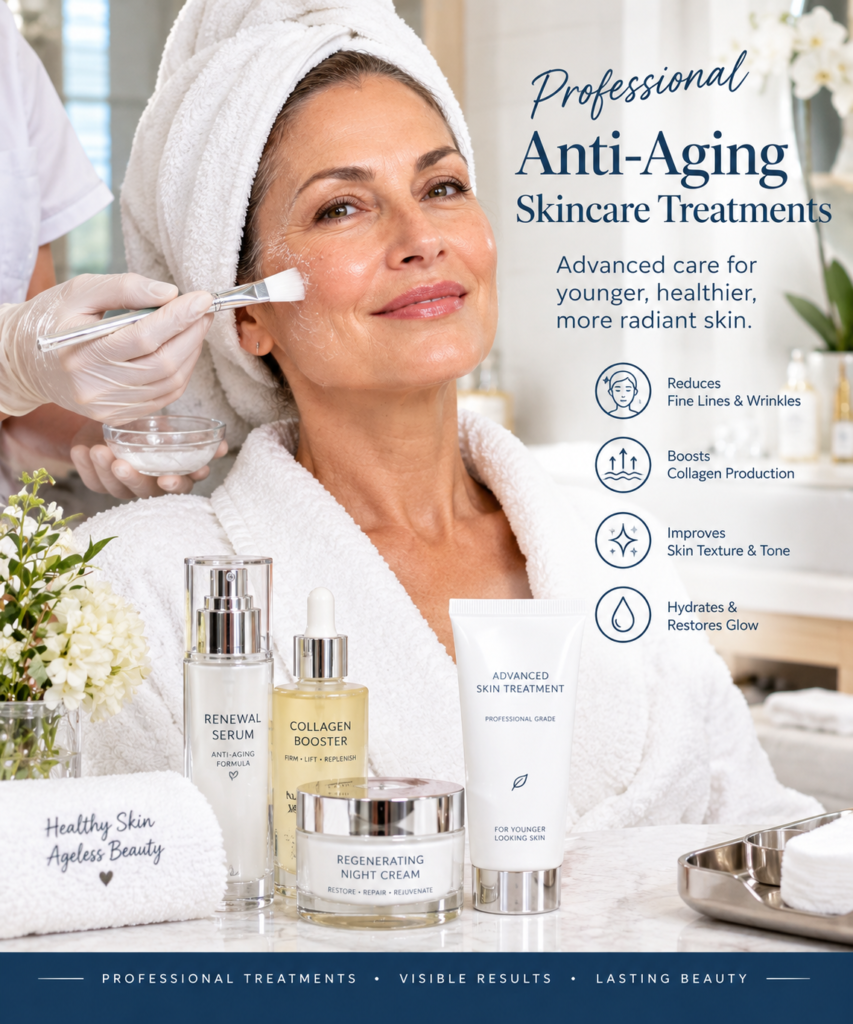
Topical products have limits. Deep wrinkles, volume loss, and sagging usually need in-office treatment, and some options also speed up the results of your home routine. Here is how the main choices compare.
| Treatment | Targets | Typical downtime | Good to know |
|---|---|---|---|
| Chemical peels | Texture, tone, fine lines, sun spots | None to several days of peeling | Light peels are repeated in a series; deeper peels need more recovery |
| Microneedling | Texture, scarring, fine lines | One to three days of redness | Stimulates collagen through controlled micro-injuries |
| Fractional laser resurfacing | Wrinkles, sun damage, texture | Days to about two weeks | Stronger results, higher risk of pigment changes in deeper skin tones |
| Neuromodulators (botulinum toxin) | Expression lines on the forehead and around the eyes | Minimal | Relaxes the muscles that create the lines; effects wear off over months |
| Dermal fillers | Volume loss, folds, contour | Minimal to a few days of swelling or bruising | Restores volume; does not treat skin quality |
| LED light therapy | Mild texture and tone concerns | None | Gentle and low-risk, with subtler results |
| Radiofrequency devices | Mild skin laxity | Minimal | Tightening effect is modest and varies |
Choose a board-certified dermatologist or plastic surgeon, and ask how often they treat your skin tone. Lasers and peels carry a higher risk of dark marks (post-inflammatory hyperpigmentation) in deeper skin tones when settings are wrong. Costs and results vary widely, so ask for a written plan before you book.
9. Protect Your Skin From the Inside Out

Products only go so far if daily habits work against them. These five matter most:
- Sleep. Skin repairs itself overnight, and research links poor sleep with more visible signs of aging and slower barrier recovery. Aim for seven or more hours.
- Do not smoke. Smoking is strongly associated with earlier and deeper wrinkling, and quitting helps skin as well as overall health.
- Eat for your skin. A diet rich in fruits, vegetables, healthy fats, and adequate protein supports repair. Diets high in sugar and highly processed foods are associated with glycation, a process that stiffens collagen.
- Manage stress. Chronic stress raises cortisol, which is linked to inflammation and slower barrier repair.
- Limit alcohol. Heavy drinking dehydrates skin and disrupts sleep.
None of these replaces sunscreen or a retinoid, but together they slow the loss of collagen and help your routine work better.
Anti-Aging Skincare by Age and Skin Tone
The nine strategies stay the same at every age. What changes is the emphasis.
| Decade | Main focus | Core routine | Add when ready |
|---|---|---|---|
| 20s | Prevention | SPF, gentle cleanser, moisturizer, vitamin C | A low-strength retinoid in the late 20s |
| 30s | First fine lines and uneven tone | Retinoid, niacinamide, SPF | Eye cream and a weekly exfoliant |
| 40s | Firmness and pigmentation | Consistent retinoid, peptides, richer moisturizer | Peels, neuromodulators, or other in-office care |
| 50s | Dryness and thinner skin after menopause | Ceramide-rich cream, retinoid at a gentle frequency, SPF | A conversation about prescription tretinoin |
| 60s+ | Barrier strength, hydration, skin checks | Gentle cleanser, rich moisturizer, SPF | Annual skin exam; fillers or lasers if desired |
Skin tone matters too. The Fitzpatrick scale classifies skin by how it responds to sun. Deeper skin tones have more natural melanin protection, but not complete protection. They tend to show aging as uneven tone and dark spots before deep wrinkles, and they are more prone to post-inflammatory hyperpigmentation after irritation. If that describes you, introduce actives slowly, avoid harsh scrubs, and choose a tinted mineral or well-blended sunscreen. Fair skin wrinkles earlier and carries a higher skin cancer risk. Every skin tone needs daily sunscreen and an annual skin exam.
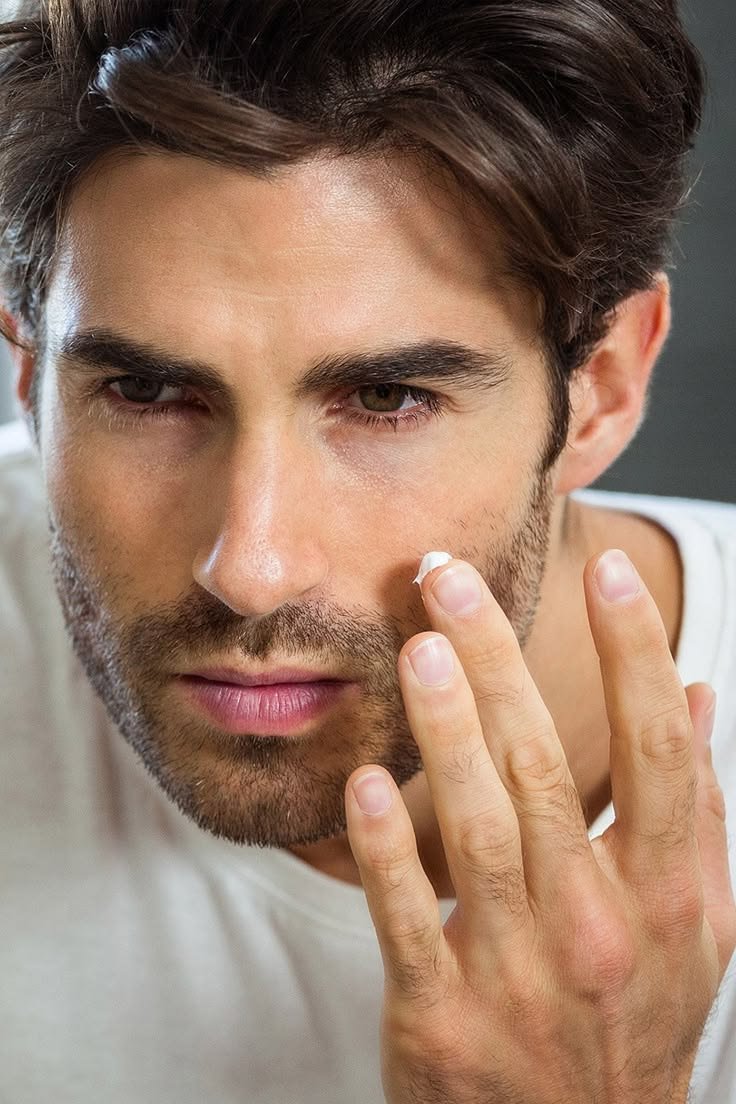
Men can follow the same nine strategies. Our skincare routine for men is a good starting point for keeping it simple.
Anti-Aging Skincare for Models, Actors, Older Women, and Beauty Professionals
The same fundamentals apply to everyone, but your situation changes how you apply them.
For models and actors
Your skin is photographed in high definition, under hot lights, often under heavy makeup.
- Remove makeup fully every night with a balm or oil, then a gentle cleanser.
- Hydrate before makeup, and wear sunscreen under it. Some mineral sunscreens can look pale in flash photography, so test yours before a shoot.
- Do not try new actives, peels, or lasers in the days before a shoot or premiere. Schedule procedures weeks ahead so skin can recover.
For women over 60
Skin is thinner, drier, and more fragile, so gentle and consistent beats aggressive.
- Build the routine around a mild cleanser, a rich ceramide moisturizer, and daily sunscreen.
- Retinoids can still help at a lower strength or frequency. Ask your doctor about prescription options if over-the-counter products are not enough.
- Get an annual skin exam, and have any new or changing spot checked promptly.
Filters and editing set unrealistic expectations, and viral trends are not always backed by evidence.
- Show results in consistent, unedited lighting, and disclose sponsorships.
- Avoid promising to “reverse” aging. Say what a product visibly improves and how long that took.
- Check any trending ingredient or routine against dermatology sources before you share it.
What magazine editors and beauty business owners Claim
Claims are where credibility is won or lost.
- Ask for the ingredient concentration, and ask whether results came from lab tests or human clinical trials, how many participants, and whether there was a control group.
- “Dermatologist-tested” describes testing, not effectiveness.
- In the US, a cosmetic that claims to change the structure or function of skin can be treated as a drug, so keep claims to what products visibly improve. Check local rules in each market you sell in.
- Prioritize stable formulas, protective packaging, transparent labels, and sunscreens that work across skin tones.
Common Anti-Aging Skincare Mistakes to Avoid
- Skipping or underapplying sunscreen. Use enough, and reapply.
- Starting too many actives at once. Add one new product every two to three weeks so you can tell what helps and what irritates.
- Over-exfoliating. Redness, tightness, and stinging mean you need to pull back.
- Expecting overnight results. Most active ingredients need 8 to 12 weeks.
- Ignoring the neck, chest, and hands. They show age too.
- Chasing price tags. Effective formulas exist at every price. Judge a product by its ingredients and concentrations, not its packaging.
- Mixing strong actives carelessly. Keep retinoids, strong acids, and high-strength vitamin C on separate nights or times of day until your skin is used to them.
- Skipping the patch test. Test new products on a small area for several days first.
Anti-Aging Skincare FAQs
At what age should you start anti-aging skin care?
Prevention can start in your 20s, and daily sunscreen is the foundation at any age. Many dermatologists suggest adding a retinoid in your late 20s or 30s. Since sun damage accumulates, the best time to start protecting your skin is now.
What is the most effective anti-aging ingredient?
It depends on the goal. To prevent new damage, broad-spectrum sunscreen is the most effective step. To improve fine lines, texture, and uneven tone you already have, retinoids have the strongest evidence.
How long does anti-aging skin care take to work?
Hydration benefits can appear within days. Retinoids and vitamin C usually need 8 to 12 weeks of consistent use before you can judge them, and collagen-related improvements keep building over several months.
Can skin care reverse wrinkles?
Topical products can soften the look of fine lines and improve texture and tone, but they cannot erase deep wrinkles. Professional treatments such as neuromodulators, lasers, and fillers can offer additional improvement.
Should I use retinol or vitamin C?
They do different jobs, and many people use both. Vitamin C goes on in the morning under sunscreen for antioxidant protection. Retinol goes on at night to support renewal.
Are expensive anti-aging skincare creams worth it?
Not necessarily. Price does not predict results. Look for proven ingredients at effective concentrations in a stable, well-packaged formula that your skin tolerates.
Do anti-aging skincare products work differently on mature skin and darker skin tones?
The core ingredients work across skin tones and ages. Mature skin usually needs gentler frequency and richer moisturizers, and deeper skin tones need slower introduction of actives to avoid dark marks. Patch test new products, and choose providers experienced with your skin tone for any procedure.
The Bottom Line on Anti-Aging Skincare
Good anti-aging skin care is not about owning more products. Protect your skin with sunscreen every day, add a retinoid at night, support your barrier with hydration, and stay consistent for at least 12 weeks. Layer in antioxidants, gentle exfoliation, and professional treatments as your goals and budget allow, and let age, skin tone, and lifestyle shape the details.
If you have persistent pigmentation, sensitivity, or a skin condition, a board-certified dermatologist can tailor a plan to your skin.
This article is for educational purposes and is not a substitute for professional medical advice. Consult a qualified healthcare provider before starting new treatments, especially if you are pregnant, nursing, or have a skin condition.


Post Comment