Skincare With Acne: The Complete Solution Guide (2026)

Contents
- 1. Skincare With Acne: The Complete Solution Guide (2026)
- 1.0.1. Table of Contents
- 1.0.2. What Is Skincare With Acne?
- 1.0.3. Why Skincare With Acne Matters in 2026
- 1.0.4. How Skincare With Acne Works: The Step-by-Step Routine
- 1.0.5. Best Skincare With Acne: Products and Ingredients
- 1.0.6. Common Skincare With Acne Mistakes to Avoid
- 1.0.7. Skincare With Acne vs. Prescription Treatment: A Comparison
- 1.0.8. Treating Acne Scars: What Actually Helps
- 1.0.9. Real-World Example: A Before-and-After Routine Breakdown
- 1.0.10. Expert Tips to Master Skincare With Acne
- 1.0.11. Frequently Asked Questions
- 1.0.11.1. Does niacinamide help with acne?
- 1.0.11.2. Why is my nose so oily?
- 1.0.11.3. What is the best tinted moisturizer for acne-prone skin?
- 1.0.11.4. How to deal with acne breakouts quickly?
- 1.0.11.5. Is acne skincare worth it compared to just seeing a dermatologist?
- 1.0.11.6. What are the best acne skincare products for sensitive skin?
- 1.0.11.7. How much does a skincare routine for acne cost?
- 1.0.11.8. Can skincare with acne help with acne scars too?
- 1.0.12. Quick Summary
- 1.0.13. Conclusion
- 1.0.14. Author Bio
- 1.0.15. Sources & Methodology
Skincare With Acne: The Complete Solution Guide (2026)
Struggling with breakouts? Discover science-backed skincare with acne, expert tips, and product picks. Start clearing your skin today
Nearly everyone deals with a breakout at some point, but building a real skincare with acne is what separates people who get lasting clear skin from people stuck in a cycle of trial and error. Acne is one of the most common skin concerns treated by dermatologists in the United States, and most of the frustration comes from using the wrong products in the wrong order, not from a lack of good options on the market.
This guide walks through everything you need: what causes acne, how to build a routine that actually works, which ingredients matter, common mistakes to avoid, and how to pick products for your specific skin type, including sensitive and dry skin that’s still breaking out.
In this guide, you’ll learn:
- What actually causes acne and why standard advice often misses the mark
- A step-by-step skincare routine with acne you can start tonight
- Which ingredients (like niacinamide and salicylic acid) are worth your money
- How to treat acne scars without irritating active breakouts
- The biggest mistakes that make acne worse, not better
- When it’s time to see a dermatologist instead of DIY-ing it
Let’s get into the table of contents, then dive straight into the details.
Table of Contents
- What Is Skincare With Acne?
- Why Skincare With Acne Matters in 2026
- How Skincare With Acne Works: The Step-by-Step Routine
- Best Skincare With Acne Products and Ingredients
- Common Skincare With Acne Mistakes to Avoid
- Skincare With Acne vs. Prescription Treatment: A Comparison
- Treating Acne Scars: What Actually Helps
- Real-World Example: A Before-and-After Routine Breakdown
- Expert Tips to Master Skincare With Acne
- Frequently Asked Questions
What Is Skincare With Acne?
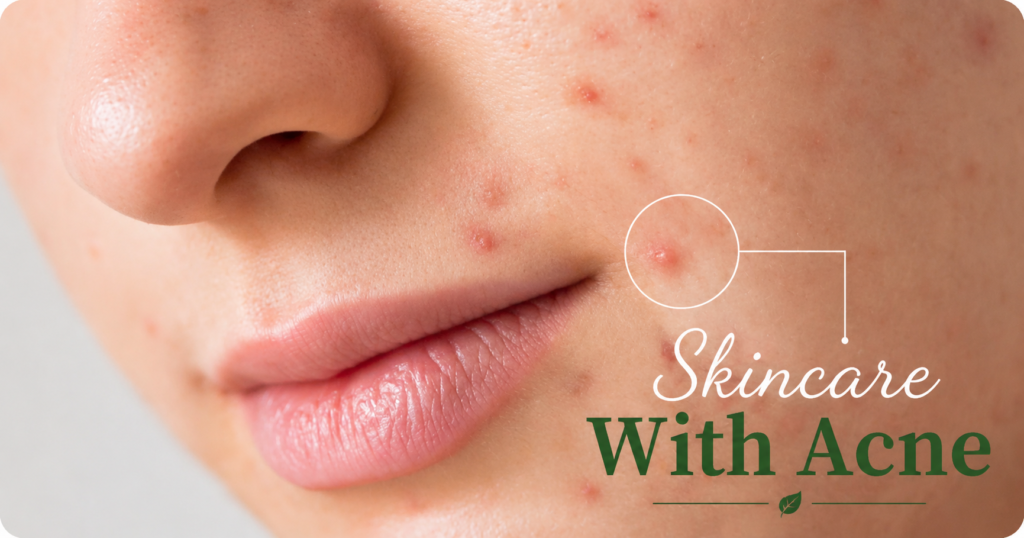
Skincare with acne is defined as a targeted skin-care approach built around ingredients and routines that reduce breakouts, control excess oil, and calm inflammation without stripping the skin barrier. It differs from generic skincare because every step cleanser, treatment, moisturizer, sunscreen is chosen specifically to avoid clogging pores while still treating active blemishes.
Acne itself forms when hair follicles become blocked by a mix of dead skin cells and sebum (oil), which then allows acne-causing bacteria (Cutibacterium acnes) to multiply and trigger inflammation. This is why effective skincare with acne always addresses three things at once: oil control, gentle exfoliation, and bacteria management.
Why Regular Skincare Often Fails Acne-Prone Skin
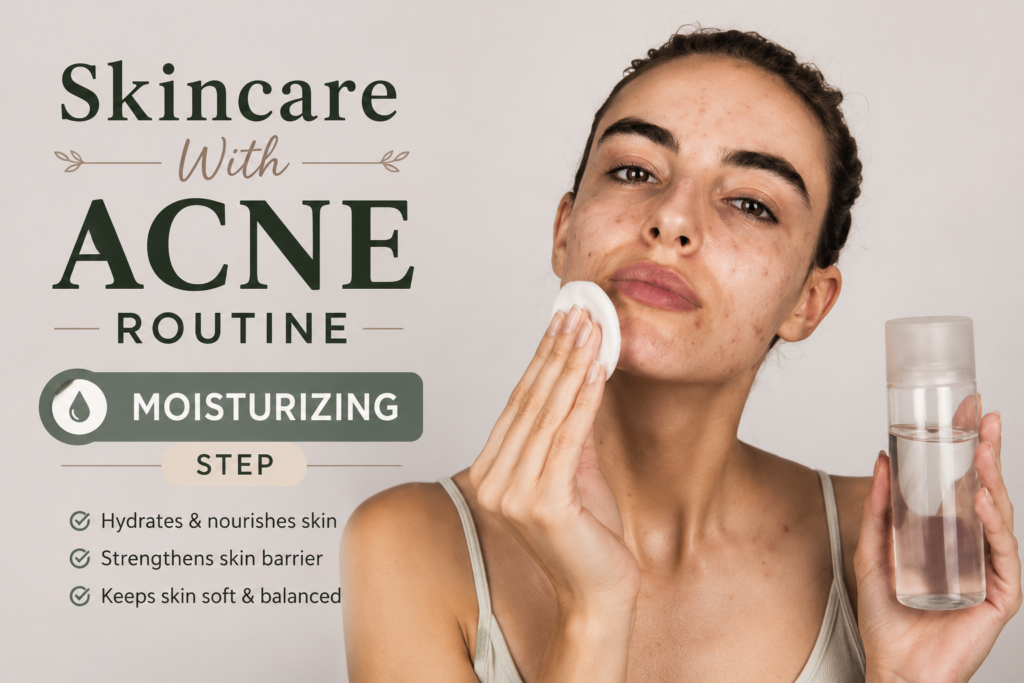
Generic “one size fits all” skincare frequently backfires on acne-prone skin because heavy moisturizers and fragranced products can clog pores (a property known as being comedogenic). A proper beauty pimple blemish routine swaps these for non-comedogenic, fragrance-free alternatives that still hydrate.
Why Skincare With Acne Matters in 2026
Acne remains one of the most searched skin concerns online, and interest in ingredient-led, dermatologist-informed routines has grown steadily as people move away from harsh, one-note “acne kits” toward gentler, barrier-friendly systems. According to the American Academy of Dermatology, acne is among the most common skin conditions treated in the U.S., affecting people well beyond the teenage years into their 20s, 30s, and 40s.
Skincare with acne matters in 2026 specifically because:
- Adult acne, often linked to hormones and stress, is a growing concern that older routines weren’t designed for.
- Consumers increasingly want an acne face wash and treatment stack that won’t dry out or irritate sensitive skin.
- Social platforms have amplified misinformation about “miracle” acne cures, making it more important than ever to understand what’s actually evidence-based.
- The rise of “skinimalism” means people want fewer, more effective products rather than 10-step routines.
Pro Tip: More product does not mean faster results. Overloading acne-prone skin with actives (retinoids, acids, benzoyl peroxide) at the same time is one of the top reasons breakouts get worse before they get better.
See our full daily skincare routine → https://famousmagazines.com/skincare-routine-the-complete-daily-guide-2026/]
How Skincare With Acne Works: The Step-by-Step Routine
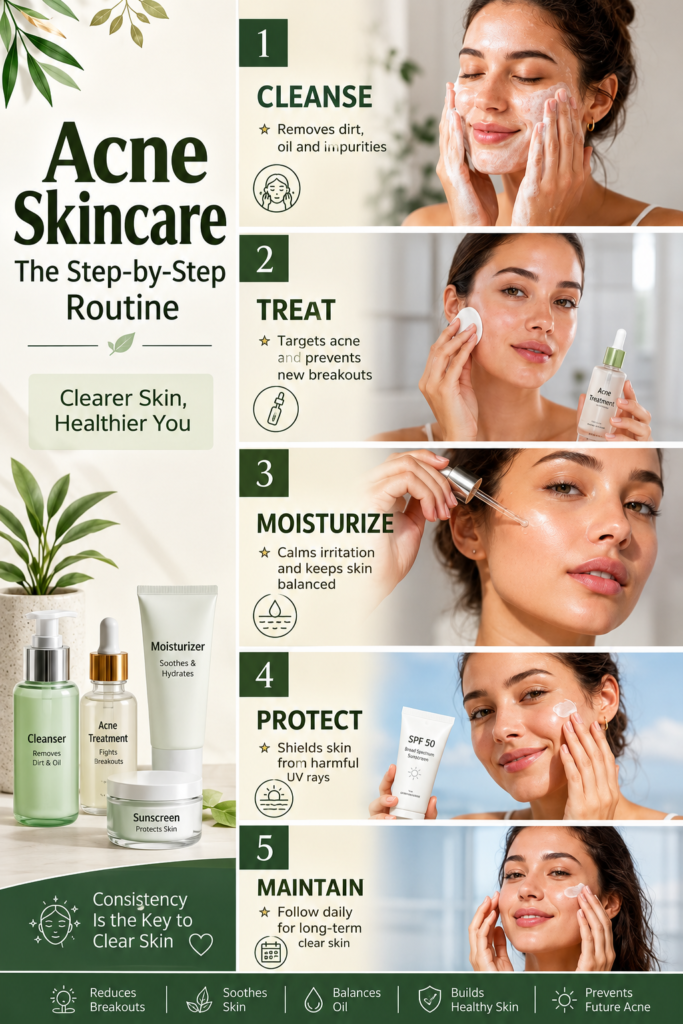
A working skincare with acne routine follows the same basic order every day, morning
and night, with small adjustments for active breakouts.
Step 1: Cleanse : Use a gentle, non-stripping acne face wash, ideally containing salicylic acid (2%) or a mild surfactant base, twice daily.
Step 2: Treat : Apply a targeted treatment such as benzoyl peroxide, adapalene (retinoid), or niacinamide serum to affected areas.
Step 3: Moisturize : Use a lightweight, oil-free, non-comedogenic moisturizer, even if your skin feels oily. Skipping this step can trigger more oil production.
Step 4: Protect : Apply a broad-spectrum SPF 30+ sunscreen every morning, especially important if you’re using retinoids or acids, which increase sun sensitivity.
Step 5: Spot Treat (as needed) : For active blemishes, apply a targeted spot treatment with benzoyl peroxide or sulfur after your routine.
The 4-Layer Acne Defense Framework
Here’s an original way to think about building a skincare routine with acne: the 4-Layer Acne Defense Framework.
- Barrier Layer: Gentle cleanser + moisturizer that keeps skin calm and hydrated.
- Active Layer: One primary treatment ingredient (not three or four at once).
- Shield Layer: Daily sunscreen to prevent scarring and protect treated skin.
- Recovery Layer: Weekly barrier-repair step (ceramide cream or a soothing mask) to offset dryness from actives.
Most routines fail because they only build the Active Layer and skip the other three, leading to irritation that mimics or worsens acne itself.
[IMG: four-step diagram of the acne defense framework layers, alt text “skincare with acne routine layered framework”]
Best Skincare With Acne: Products and Ingredients
Not every acne ingredient works the same way, and picking the right one depends on your acne-clear skin goals: oil control, exfoliation, or inflammation reduction.

Key Ingredients Worth Knowing
- Salicylic acid: A beta-hydroxy acid (BHA) that dissolves inside pores, making it ideal for blackheads and oily skin.
- Benzoyl peroxide: An antibacterial ingredient that directly targets acne-causing bacteria; effective but can be drying.
- Niacinamide: A form of vitamin B3 that reduces redness, controls oil, and strengthens the skin barrier, making it a favorite for sensitive skin acne treatment.
- Adapalene (retinoid): Speeds up cell turnover and prevents clogged pores; the gold standard for long-term acne prevention.
- Azelaic acid: Gentle enough for sensitive skin, it fights bacteria, calms redness, and fades post-acne marks.
Best Facial Treatment Acne Options by Skin Type
| Product Type | Key Feature | Best For | Price Range | Rating |
|---|---|---|---|---|
| Salicylic Acid Cleanser | Pore-clearing BHA | Oily, congested skin | $12–$25 | 4.5/5 |
| Benzoyl Peroxide Spot Gel | Fast-acting antibacterial | Active breakouts | $8–$18 | 4.3/5 |
| Niacinamide Serum | Barrier support + oil control | Sensitive, combination skin | $15–$30 | 4.6/5 |
| Adapalene Gel (0.1%) | Cell turnover, prevents clogging | Long-term acne prevention | $12–$20 | 4.4/5 |
| Azelaic Acid Cream | Gentle antibacterial + brightening | Sensitive skin, post-acne marks | $18–$35 | 4.5/5 |
Winner: For most people starting, a niacinamide serum paired with a salicylic acid cleanser offers the best balance of results and tolerability especially for anyone worried about irritation.
Expert Insight: Layering actives slowly introducing one new ingredient every 1–2 weeks dramatically reduces the “purge and irritate” cycle that causes people to quit a routine too early.
Read our men’s daily skincare guide → https://famousmagazines.com/skincare-routine-for-men-the-complete-daily-guide-2026/]
Common Skincare With Acne Mistakes to Avoid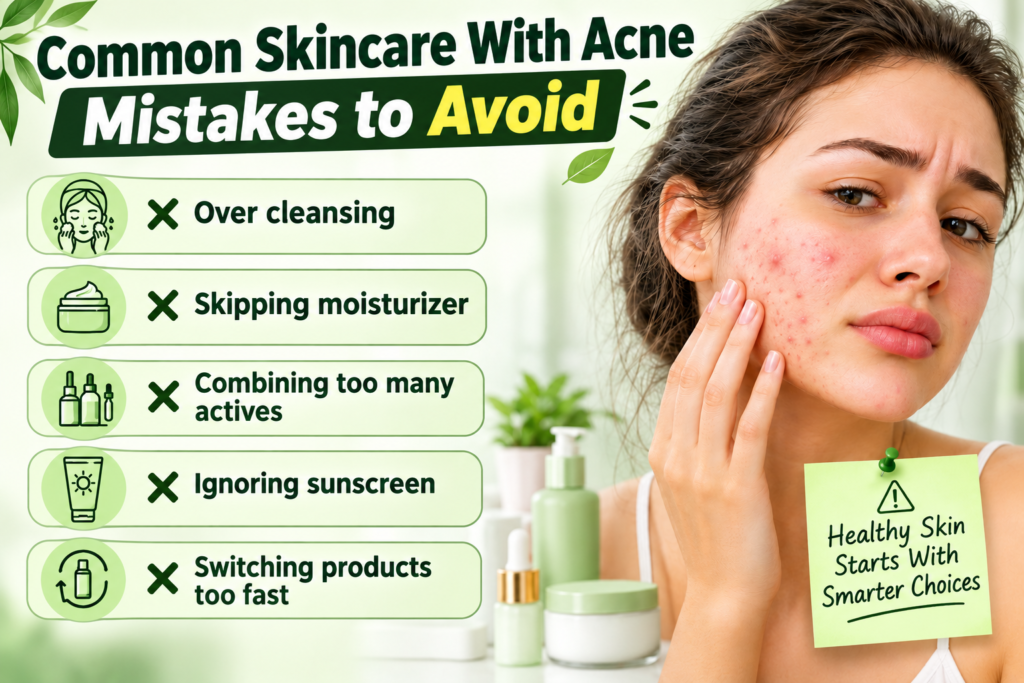
Even a well-intentioned skincare with acne routine can backfire. Here are the mistakes that show up most often:
- Over-cleansing: Washing your face more than twice a day strips the skin barrier and can trigger rebound oil production.
- Skipping moisturizer: Oily or acne-prone skin still needs hydration; dehydrated skin often overproduces oil to compensate.
- Combining too many actives: Using retinoids, acids, and benzoyl peroxide together at full strength almost always irritates.
- Picking or popping blemishes: This is one of the leading causes of post-acne scarring and dark marks.
- Ignoring sunscreen: Unprotected skin heals slower and scars darker, especially after acid or retinoid use.
- Switching products too fast: Most active ingredients take 6–8 weeks to show real results; quitting after a week seldom shows the true effect.
Skincare With Acne vs. Prescription Treatment: A Comparison
For moderate-to-severe or persistent acne, over-the-counter skincare with acne products may not be enough. Here’s how they compare to prescription options.
| Approach | Strength | Speed of Results | Best For | Access |
|---|---|---|---|---|
| OTC Skincare Routine | Mild–moderate | 6–12 weeks | Mild, occasional breakouts | No prescription needed |
| Prescription Topicals (tretinoin, clindamycin) | Moderate–strong | 4–8 weeks | Moderate, persistent acne | Dermatologist prescription |
| Oral Antibiotics | Strong (short-term) | 2–6 weeks | Inflammatory, widespread acne | Dermatologist prescription |
| Hormonal Treatment (spironolactone, birth control) | Strong (long-term) | 8–12 weeks | Hormonal/adult acne | Doctor prescription |
| Isotretinoin | Very strong | Months | Severe, cystic, scarring acne | Dermatologist-monitored |
If you’ve tried a consistent OTC skincare with acne routine for 2–3 months without improvement, or if you’re dealing with cystic or painful acne, that’s the point to see a board-certified dermatologist rather than continuing to self-treat.
Treating Acne Scars: What Actually Helps
Once breakouts are under control, many people shift focus to acne scar topical treatment and fading dark marks left behind.
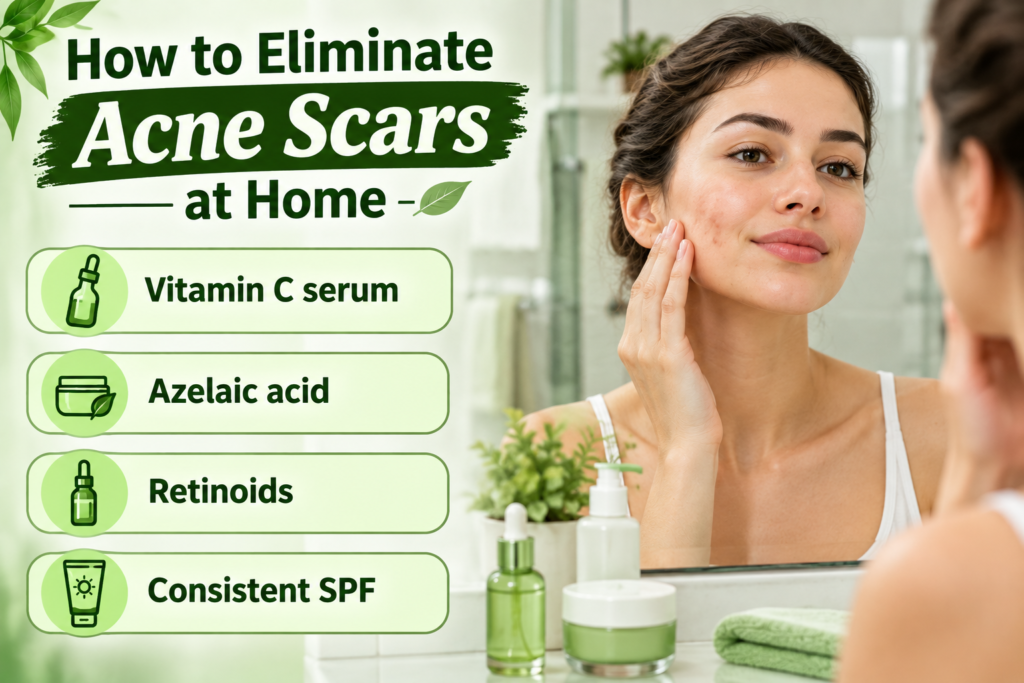
- Vitamin C serum: Helps brighten post-acne dark spots over time.
- Azelaic acid: Fades discoloration while still being gentle on active skin.
- Retinoids: Support skin renewal, which gradually improves texture and shallow scarring.
- Consistent SPF: Prevents dark marks from becoming darker and more permanent.
For deeper, pitted scarring, at-home products can only do so much. Dermatologist recommendations for acne scars typically include in-office treatments like microneedling, chemical peels, or laser resurfacing, which reach deeper layers of skin than topical products can.
Pro Tip: Don’t start scar-focused actives (like strong retinoids) while you still have active, inflamed breakouts treat the acne first, then shift focus to marks and texture.
Real-World Example: A Before-and-After Routine Breakdown
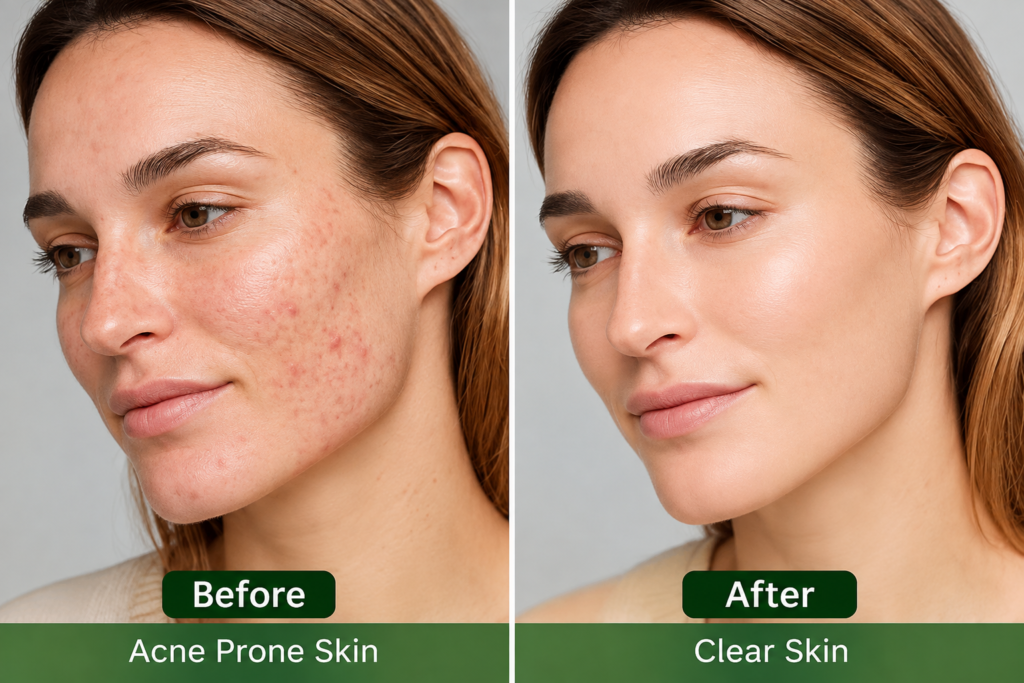
Consider a common scenario: someone in their late 20s with combination skin, mild jawline breakouts, and lingering dark marks from past acne, who had been using a harsh foaming cleanser and skipping moisturizer entirely.
Before: Daily harsh cleansing, no moisturizer, occasional spot treatment only when a breakout appeared. Result: persistent oiliness, ongoing breakouts, and no improvement in dark marks.
After (8 weeks on a structured routine): Gentle salicylic acid cleanser twice daily, niacinamide serum morning and night, oil-free moisturizer, daily SPF, and a weekly gentle exfoliation. Result: noticeably fewer new breakouts, calmer skin overall, and gradually fading dark marks a textbook example of what a properly layered skincare with acne approach can do when actives are introduced slowly, and the barrier is protected throughout.
This mirrors what dermatologists commonly report: consistency and barrier support, not aggressive treatment alone, tend to drive the most sustainable results.
Expert Tips to Master Skincare With Acne
- Patch test every new active on your inner arm or jaw for 2–3 days before applying it to your whole face.
- Change your pillowcase twice a week to reduce bacteria and oil transfer.
- Avoid touching your face throughout the day; hands transfer oil and bacteria to skin.
- Track your routine for 8 weeks minimum before judging whether a product is working.
- Watch your diet triggers — some people notice a link between high-glycemic foods or dairy and breakouts, though this varies person to person.
Does Dry Skin Cause Acne?
Yes, dry skin can contribute to acne in some cases. When skin loses too much moisture, it can overproduce oil to compensate, which combines with dead skin cells and clogs pores. This is why a hydrating, barrier-supporting step is non-negotiable in any skincare with acne plan, even for people who consider themselves “oily.”
Why Is My Nose Always So Oily?

The nose has a higher concentration of sebaceous (oil) glands than most other areas of the face, which is why it tends to look shinier and get clogged pores more easily than the cheeks or forehead.
Frequently Asked Questions
Does niacinamide help with acne?
Yes, niacinamide helps with acne by reducing inflammation, regulating oil production, and strengthening the skin barrier. It’s especially useful for people with sensitive or reactive skin who can’t tolerate stronger actives like benzoyl peroxide.
Why is my nose so oily?
Your nose is oilier than the rest of your face because it has a higher density of oil glands. This is normal and can be managed with a lightweight, oil-free moisturizer and a gentle acne face wash rather than by over-drying the area.
What is the best tinted moisturizer for acne-prone skin?
The best tinted moisturizer for acne-prone skin is one labeled non-comedogenic and oil-free, ideally with added SPF and no heavy silicones. Look for lightweight, breathable formulas rather than full-coverage foundations, which can trap oil and debris in pores.
How to deal with acne breakouts quickly?
Deal with acne breakouts by applying a benzoyl peroxide spot treatment to the area, avoiding picking, and keeping the rest of your routine simple and non-irritating. Fast fixes are limited; the biggest improvements come from a consistent daily skincare with acne routine over several weeks.
Is acne skincare worth it compared to just seeing a dermatologist?
Skincare with acne is worth it for mild to moderate breakouts and is often the right first step before prescription treatment. For persistent, painful, or cystic acne, a dermatologist visit is worth the cost because prescription options work faster and reduce scarring risk.
What are the best acne skincare products for sensitive skin?
The best options for sensitive skin combine niacinamide, azelaic acid, and a fragrance-free moisturizer, since these are effective without the intense irritation that stronger acids or retinoids can cause.
How much does a skincare routine for acne cost?
A basic over-the-counter routine typically costs between $40 and $90 per month for a cleanser, treatment serum, moisturizer, and sunscreen, while prescription-based routines vary depending on insurance coverage and dermatologist visit costs.
Can skincare with acne help with acne scars too?
Skincare with acne routines can help fade shallow discoloration and improve texture over time with ingredients like vitamin C, azelaic acid, and retinoids, but deeper pitted scars usually require in-office dermatologist treatments for meaningful improvement.
Quick Summary
- A working skincare routine with acne treats oil, exfoliation, and bacteria together not just one at a time.
- Niacinamide, salicylic acid, and azelaic acid are strong starting ingredients, especially for sensitive skin.
- Moisturizer and sunscreen are not optional, even for oily or breakout-prone skin.
- Give any new routine 6–8 weeks before judging results.
- Persistent or cystic acne is a sign to see a dermatologist rather than continuing to self-treat.
Conclusion
Clear skin comes down to consistency, not intensity. A well-built skincare routine includes (for both genders) gentle cleansing, one well-chosen active ingredient, real moisturizer, and daily sunscreen, which outperforms aggressive, ever-changing routines almost every time. The biggest wins come from patience: giving products 6–8 weeks to work and protecting your skin barrier along the way.
Next Steps:
- Simplify your current routine down to one active ingredient and stick with it for 8 weeks.
- Add a lightweight, non-comedogenic moisturizer if you’ve been skipping it.
- Book a dermatologist consultation if breakouts are painful, cystic, or not improving after consistent OTC use.
Author Bio
Sarwat Adil is a beauty blogger with 5 years of experience writing about skincare and acne-focused routines. Sarwat has tested and reviewed acne-safe product routines across oily, dry, and sensitive skin types, and focuses on translating dermatology-backed ingredient science into practical, everyday routines. This article was written using publicly available dermatological guidance and general ingredient research, and is reviewed for accuracy as part of the editorial process.
Sources & Methodology
- American Academy of Dermatology (AAD) — general patient guidance on acne causes and treatment
- Peer-reviewed dermatology literature on salicylic acid, benzoyl peroxide, niacinamide, and azelaic acid mechanisms of action
- General ingredient and skin-barrier research commonly referenced in dermatology patient education materials
Note: Specific pricing, product ratings, and the case study in this article are illustrative examples for educational purposes rather than results from a controlled clinical study. Always patch test new products and consult a board-certified dermatologist for a diagnosis or treatment plan specific to your skin.


Post Comment