Sunglasses & Eyewear: 10 Best Styles, Lenses & Buying Tips
Master sunglasses & eyewear with expert tips on UV protection, polarized lenses, face shapes and top styles. Find your perfect pair; read now.
The World Health Organization (WHO) reports that overexposure to ultraviolet radiation may cause up to 20% of cataract cases. Yet most people still pick sunglasses & eyewear by looks alone. Style matters, but your eyes pay the price when a pair looks great and blocks nothing.
This guide fixes that. You get the fashion knowledge a stylist uses and the optical facts an eye-care professional trusts. Models, actors, students, magazine editors, business owners and social media creators all face the same question: which pair earns a place on your face every day?
In this guide you’ll learn:
- How to choose the right sunglasses & eyewear for your lifestyle
- How polarized lenses work, and how they differ from UV protection
- Which styles flatter every face shape
- How to pick sunglasses & eyewear for driving and everyday wear
- Which lens types, brands and frame styles deserve your money
How to Choose the Right Sunglasses & Eyewear
The best pair balances four things: protection, fit, function and style. Rank them in that order. A frame that looks perfect but slides down your nose or lets UV leak in from the side fails the test.
Start With the Four-Point Checklist
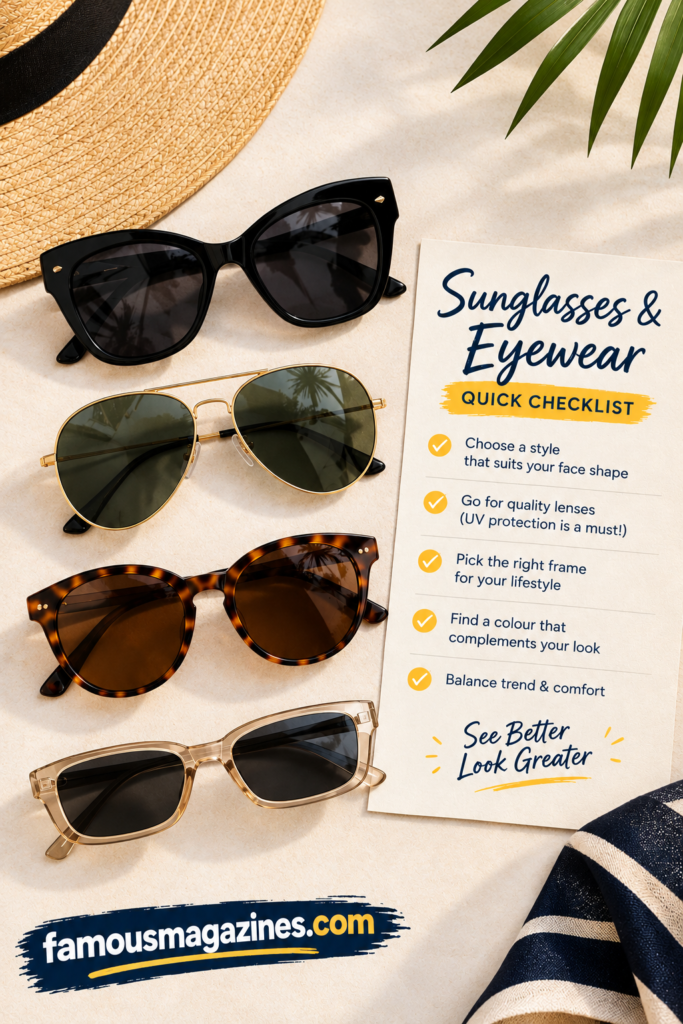
- Protection: Look for a UV400 label or “blocks 100% of UVA and UVB.” The American Academy of Ophthalmology (AAO) advises choosing sunglasses that block 99–100% of both.
- Fit: The frame should sit comfortably on your nose bridge and rest lightly on your temples without pinching.
- Function: Match the lens to your activity. Driving, hiking, fishing and city strolling each demand different tints.
- Style: Choose a silhouette that suits your face and wardrobe.
Know the Main Types of Sunglasses
The types of sunglasses you will meet fall into a few families: lifestyle fashion pairs, sport wraps, driving frames, and prescription sun lenses. Fashion sunglasses prioritize silhouette and color. Sport pairs prioritize grip, coverage and impact resistance. Pick the family first, then narrow down the sunglasses styles inside it.
Understand Sunglass Brands and Price Tiers
The market of sunglasses & eyewear brands splits into three tiers. Mass-market labels deliver trend-driven frames at low prices.
Mid-tier brands add better lens technology and materials. Designer sunglasses and luxury sunglasses for men add craftsmanship, acetate or titanium construction, and brand heritage.
| Tier | Typical Strength | Watch Out For |
|---|---|---|
| Budget | Trend access, low cost | Unverified UV claims, flimsy hinges |
| Mid-range | Quality lenses, durable frames | Fewer runway silhouettes |
| Designer / luxury | Premium materials, status, resale value | Paying for logo over lens quality |
Always verify UV ratings regardless of price. A label with a famous name does not guarantee protection, and a modest pair with a UV400 sticker can outperform it.
What Are Polarized Sunglasses and How Do They Work?
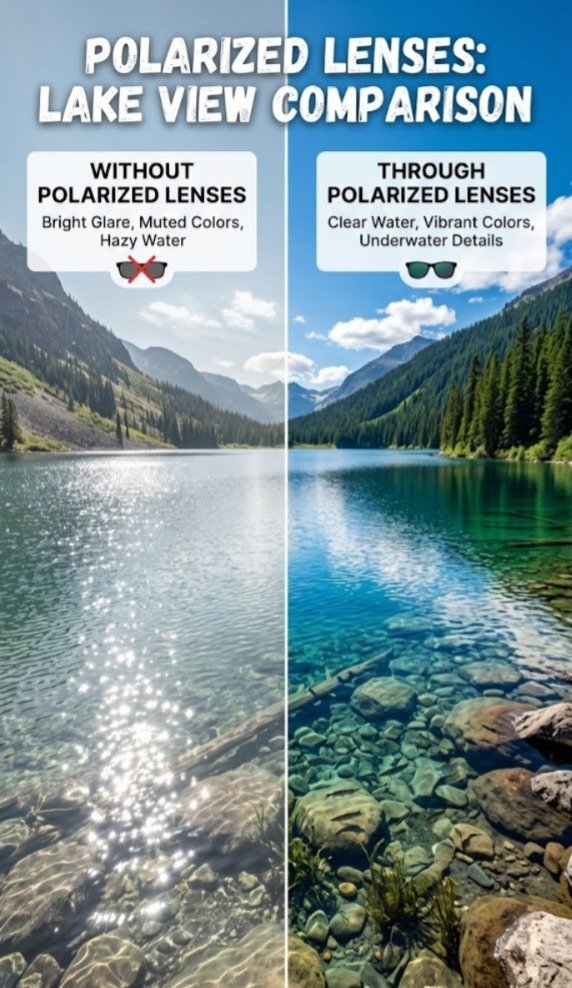
Polarized sunglasses carry a special chemical filter that blocks horizontal light waves. Those waves create glare when light bounces off flat surfaces such as water, wet roads and car hoods.
The Science Behind the Filter
Light from the sun scatters in every direction. When it hits a flat surface, it reflects mostly in the horizontal plane, and your eyes see that as harsh glare. A polarized lens contains vertically aligned molecules that act like tiny blinds. They let vertical light through and block horizontal light.
What You Notice When You Wear Them
Colors look richer. Reflections on water or pavement drop away. Your eyes squint less, so you feel less fatigue on long days outdoors. Anglers use polarized lenses to see below the water surface. Drivers use them to cut dashboard and road glare.
Popular Polarized Picks
Lifestyle labels now treat polarization as standard. Blenders Eyewear Moon Dawg polarized sunglasses, for example, show how a fashion-forward brand packages polarized lenses in a bold, social-media-ready frame. Always check the product page for a UV400 claim, because polarization alone does not stop UV rays.
What Is the Difference Between Polarized and UV Sunglasses?
Polarization cuts glare. UV protection blocks harmful radiation. They solve two separate problems, and a lens can offer one, both or neither.
Two Features,Two Jobs
UV protection comes from a coating or from the lens material itself. It protects your cornea, lens and retina from cumulative damage. Polarization improves visual comfort and clarity. A dark tint does not guarantee either one, which surprises many buyers.
Comparison Table
| Feature | Polarized Lenses | UV-Protective Lenses |
|---|---|---|
| Main job | Reduce glare | Block UVA/UVB radiation |
| Protects eye health | Not by itself | Yes |
| Visible effect | Sharper, less reflective view | None you can see |
| Works on LCD screens | May dim or distort them | Unaffected |
| Label to find | “Polarized” | “UV400” or “100% UV protection” |
The Smart Purchase Rule
Buy lenses that offer both. When budgets force a choice, pick UV400 first. You can live without polarization, but you cannot reverse UV damage.
What Sunglasses Are Best for UV Protection?
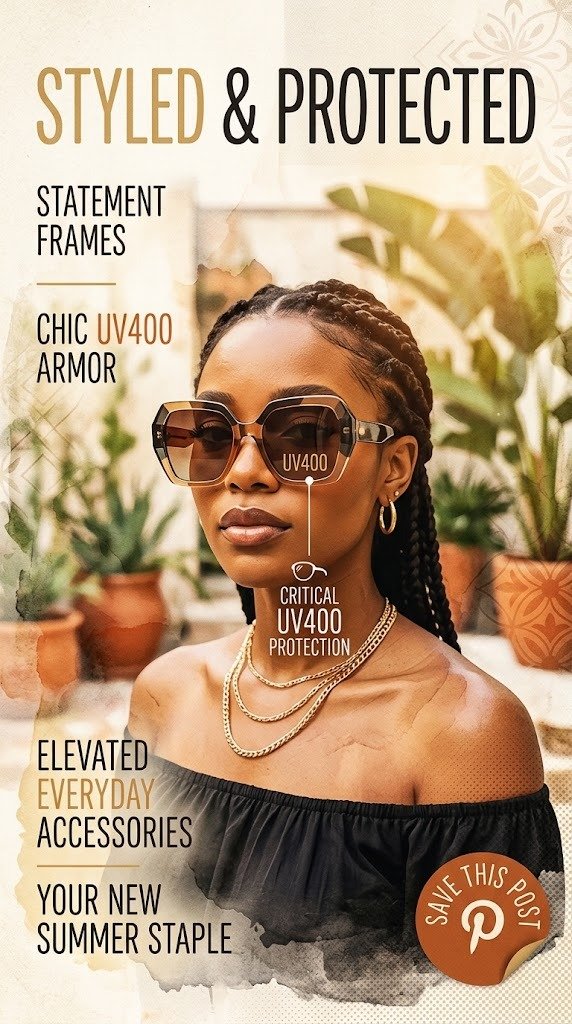
The best sunglasses with UV protection block 100% of UVA and UVB rays and sit close enough to your face to stop light from leaking around the edges.
Why Your Eyes Need Protection
The AAO links long-term UV exposure to cataracts, macular damage and growths on the eye surface. The Skin Cancer Foundation notes that skin cancers also develop on the eyelids and the delicate skin around the eyes. Short bursts of intense exposure can cause photokeratitis, a painful sunburn of the cornea.
What to Look for on the Label
- UV400: blocks wavelengths up to 400 nanometers, covering UVA and UVB
- ANSI Z80.3 or EN ISO 12312-1: shows the lens meets a recognized standard
- Wraparound or large coverage: limits side leakage
A dark lens without UV protection is worse than a clear lens. It dilates your pupil and lets more harmful light reach the retina.
Style Meets Safety
Protection no longer limits style. Oversized sunglasses deliver extra coverage for the eye area. Aviator sunglasses offer wide lenses with a slim profile. Black on black aviator sunglasses give you a sleek, monochrome look that works from boardroom to beach, provided the lens carries a UV400 rating.
How to Choose Sunglasses & Eye wear for Your Face Shape
Balance is the golden rule. Pick frames that contrast with your dominant features so your face looks proportionate rather than exaggerated.
Identify Your Face Shape
Stand in front of a mirror and pull your hair back. Compare your forehead, cheekbones and jawline widths. Equal width and length points to round. A wide jaw points to square. A narrow chin with a wide forehead points to heart. A face longer than it is wide, with softly curved edges, points to oval.
Apply the Contrast Principle
Angular faces look softer in curved frames. Soft, round faces look sharper in angular frames. Frame width should roughly match or slightly exceed your cheekbone width, and your eyebrows should stay visible above the top rim.
Check Fit Before You Fall in Love
Test three points: the bridge should not slip, the temples should not squeeze, and your lashes should clear the lens. Smile. If the frame lifts off your cheeks, try a smaller size.
What Sunglasses Are Best for Different Face Shapes?
Here are the top trendy styles ranked by versatility, with the face shapes each one flatters most. These nine sunglasses styles cover most requests from stylists, editors and wardrobe teams.
Top 9 Sunglasses Styles at a Glance
| # | Style | Best For | Why It Works |
|---|---|---|---|
| 1 | Aviator sunglasses | Square, heart, oval | Teardrop shape softens strong jaws |
| 2 | Round sunglasses | Square, angular | Curves counter sharp lines |
| 3 | Cat-eye sunglasses | Oval, heart, round | Lifts the cheekbones and eyes |
| 4 | Square sunglasses | Round, oval | Adds structure and definition |
| 5 | Oversized sunglasses | Most shapes | Maximum coverage and glamour |
| 6 | Retro sunglasses | Oval, heart | Vintage shapes add personality |
| 7 | Wayfarer | Oval, round | Balanced, universal frame |
| 8 | Rectangle | Round, oval | Elongates and slims |
| 9 | Wraparound | Most shapes | Sport coverage and security |
Styles in Detail
Cat-eye sunglasses sweep upward at the outer corners and add instant glamour.
Round sunglasses, also called circle sunglasses, bring a creative, vintage edge. Shoppers search for round shades men’s and round shades women’s in equal measure, so both versions stay popular on social media.
Square sunglasses bring a bold, architectural line that suits softer faces.
Retro sunglasses borrow shapes from the 1950s through the 1970s and keep returning to runways.
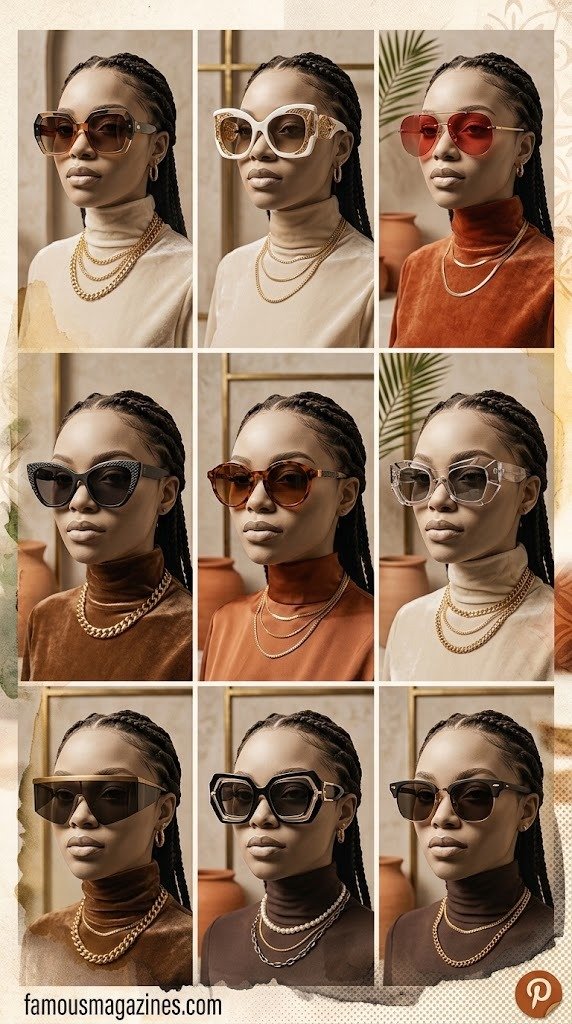
Actors and models often pick fashion sunglasses that photograph well under flash. Business owners lean toward understated aviators or square frames. Students want durable, affordable pairs. Creators on social platforms favor oversized and cat-eye frames that read clearly on camera.
How to Choose Sunglasses for Driving
Driving demands clear color perception, reduced glare and a wide field of view. The wrong lens can hide traffic lights or brake lights, so choose carefully.
Pick the Right Tint
Grey, brown and green tints keep colors accurate. Grey keeps the truest color balance. Brown boosts contrast on cloudy days. Avoid very dark, mirrored or blue-purple tints that distort signals.
Choose the Right Darkness Category
Standard sunglass categories run from 0 to 4. Category 2 and 3 lenses suit daytime driving. Category 4 lenses block so much light that regulators in many regions, including the UK and EU, label them unsuitable for driving. Never wear sunglasses at night.
Check Frame and Lens Features
- Polarization: reduces road, hood and wet-surface glare. Some drivers notice a faint dimming on digital dashboards.
- Slim temples: keep your peripheral view clear.
- Anti-reflective back coating: stops light from bouncing off the inner surface into your eyes.
- Photochromic caution: these lenses darken in response to UV, and many windshields block UV, so they may not darken enough inside a car.

What Are the Different Types of Sunglasses Lenses?
Lens technology determines how well your sunglasses perform. Knowing the material and the treatment helps you spend wisely.
Lens Materials
- Polycarbonate: lightweight and impact-resistant, ideal for sport and children
- Glass: excellent optical clarity and scratch resistance, but heavier
- CR-39 plastic: good optics at moderate weight
- Trivex and high-index: thin, light options for prescription sun lenses
Lens Treatments and Tints
| Lens Type | Main Benefit | Best Use |
|---|---|---|
| Polarized | Cuts glare | Driving, water, snow |
| Photochromic | Adjusts tint to light | Variable daily conditions |
| Mirrored | Reflects bright light away | Snow, beach, high altitude |
| Gradient | Dark top, lighter bottom | Driving, reading a map or phone |
| Tinted (grey/brown/green) | Color accuracy and contrast | General outdoor use |
| Prescription sun lenses | Vision correction plus shade | Anyone who wears glasses |
Add-Ons Worth Buying
Scratch-resistant coating protects your investment. Anti-reflective coating on the inside cuts back-glare. Hydrophobic coating sheds water and fingerprints.
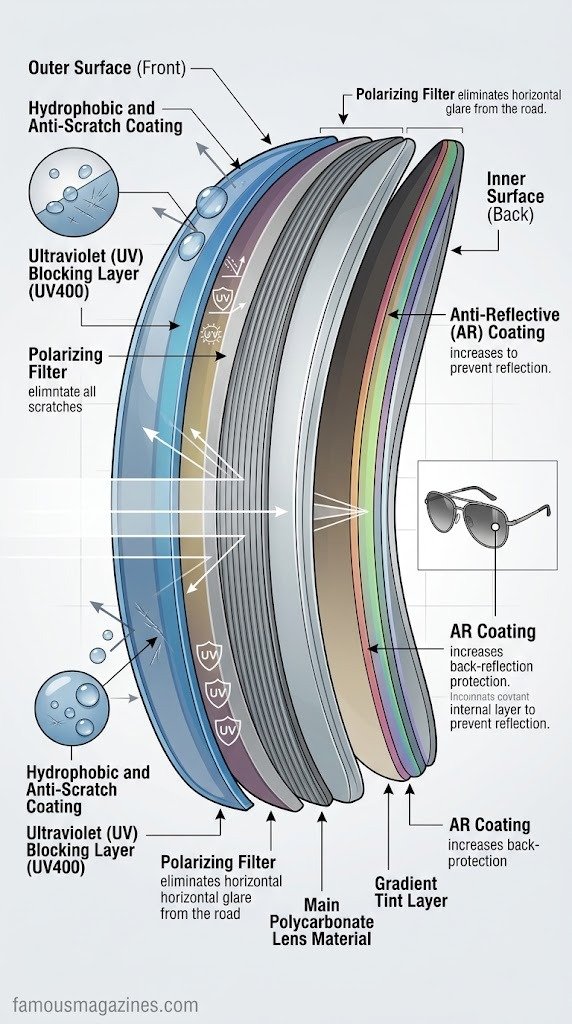
How Do Polarized Sunglasses Protect Your Eyes?
Polarized lenses protect your eyes from glare, not from UV rays. That glare reduction still delivers real, measurable benefits for comfort and safety.
Less Strain and Squinting
Glare forces your eyes to squint and your brow muscles to tighten. Polarized lenses cut that effort, so you feel less fatigue and fewer headaches after hours in bright light.
Better Visibility on Water, Snow and Roads
Glare hides hazards. A polarized filter helps you spot ice patches, wet road markings and underwater obstacles that glare would otherwise mask. That visibility makes driving, boating and skiing safer.
Pair Polarization With UV400
The complete protection formula is simple: polarization for glare plus UV400 for radiation. Buy a pair that carries both claims on the tag.
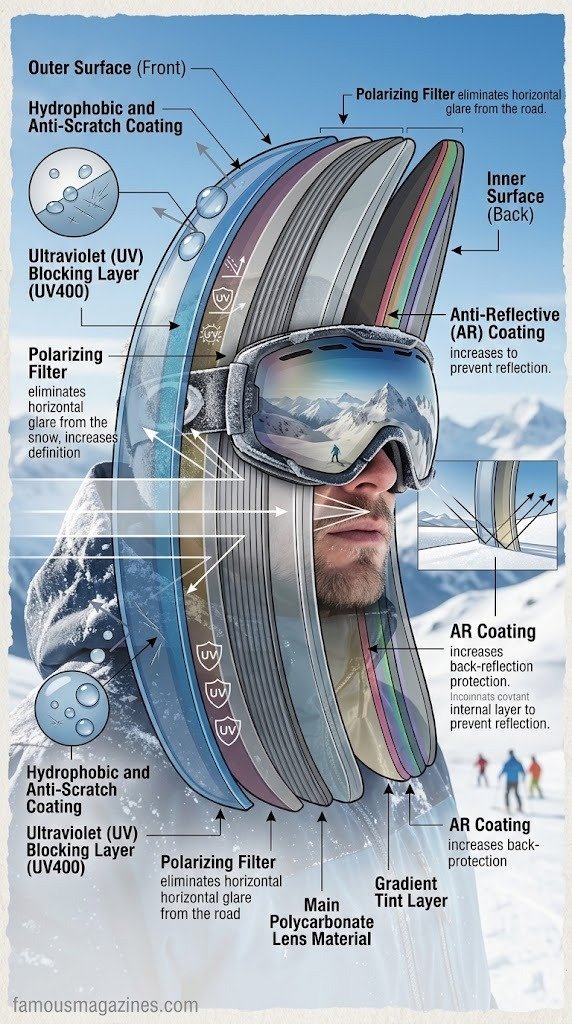
How to Choose the Right Sunglasses & Eyewear for Everyday Use
Daily eyewear must work for hours, across lighting conditions and outfits. Comfort and versatility beat novelty.
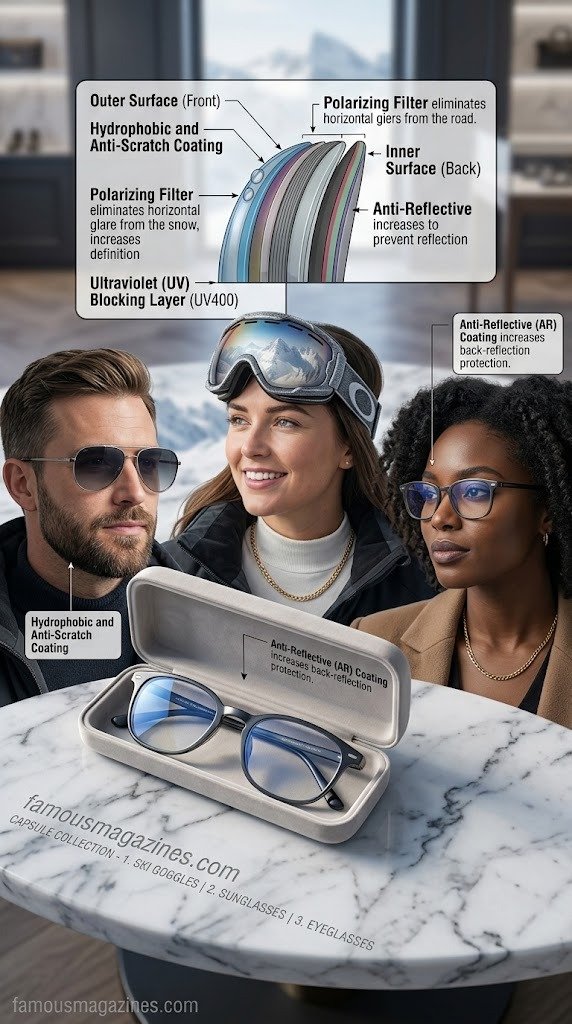
Build a Small Capsule Collection
Own three pairs: a neutral everyday frame, a statement pair for events, and a sport or driving pair. A neutral tortoiseshell or black frame covers most outfits. Luxury sunglasses for men in classic black acetate or brushed metal anchor a refined wardrobe.
Stylish Eyeglasses for Women and Designer Frames
Stylish eyeglasses for women now range from oversized squares to delicate metal ovals. Female designer glasses from heritage houses add craftsmanship and recognizable design details. Glasses styles that trend now include thin metal frames, bold acetate and translucent colors.
Granny Frames: The Comeback of Old Lady Spectacles
So-called old lady spectacles, with their rounded lenses and wire or pearly frames, have moved from caricature to fashion statement. Stylists now pair them with tailored coats and minimal makeup for a deliberately vintage look. If you want that retro appeal, choose lightweight metal or thin acetate versions in modern colors.
Care and Maintenance
Clean lenses with a microfiber cloth and lens spray. Store pairs in a hard case. Never rest them lens-down or leave them on a car dashboard in the heat. Replace pairs with scratched lenses, because scratches scatter light and strain your eyes.
FAQ: Sunglasses & Eyewear
How do I choose sunglasses for my face shape?
Choose frames that contrast with your face. Angular faces suit round or cat-eye frames, and soft faces suit square or rectangular frames. Match frame width to your cheekbones, keep eyebrows visible, and make sure the bridge sits securely. Try several styles in front of a mirror before you buy.
What sunglasses are best for different face shapes?
Aviators flatter square and heart-shaped faces. Round frames soften angular jawlines. Square and rectangular frames add structure to round faces. Cat-eye frames lift oval and heart-shaped faces. Oversized pairs and wraparounds work on most shapes. Pick the shape that contrasts with your strongest features.
How do I choose sunglasses for driving?
Choose grey, brown or green lenses in category 2 or 3. Add polarization to cut glare, and pick slim temples to protect your peripheral view. Avoid category 4 lenses, mirrored tints and photochromic lenses that may not darken behind a windshield. Never wear sunglasses at night.
What are the different types of sunglasses lenses?
The main types are polarized, photochromic, mirrored, gradient, tinted and prescription lenses. Materials include polycarbonate, glass, CR-39 and Trivex. Polarized lenses cut glare, photochromic lenses adjust to light, and mirrored lenses reflect bright sun. Always confirm that any type also blocks 100% of UV.
How do polarized sunglasses protect your eyes?
Polarized sunglasses filter horizontal glare from water, roads and snow. That filter reduces squinting, eye fatigue and hidden-hazard risk. They do not block UV by themselves, so look for UV400 protection on the label in addition to polarization for complete eye protection.
How do I choose the right eyewear for everyday use?
Prioritize comfort, fit and versatility. Choose a neutral frame such as black or tortoiseshell for daily wear, add a statement pair for events, and keep a sport or driving pair. Make sure sunglasses carry UV400 protection, and choose scratch-resistant, anti-reflective coatings on your eyeglasses.
What is the difference between polarized and UV sunglasses?
Polarized lenses reduce glare, while UV lenses block harmful ultraviolet radiation. One feature does not include the other. The safest choice combines both, but if you must choose one, prioritize UV400 protection because UV damage accumulates over time and eyes cannot repair it.
Conclusion
The right sunglasses & eyewear make you look sharper and see better. Start with protection, then add fit, function and style. Keep these three takeaways in mind:
- Protection comes first. Insist on UV400, and add polarization for glare.
- Face shape guides style. Choose frames that contrast with your strongest features.
- Lens and purpose must match. Pick the tint, category and coating that fit your activity, especially driving.
Ready to upgrade your look? Browse our curated picks, check the UV label on every pair, and choose sunglasses & eyewear that protect your eyes as well as they flatter your face.


Post Comment