Taylor Swift Biography: Her Full Life Story & Career (2026)
Explore the complete Taylor Swift biography: early life, career beginnings, music evolution, and impact. Read the definitive Swift life story today.
Few names in modern music carry as much weight as Taylor Swift. A Taylor Swift biography isn’t just a timeline of albums and awards; it’s the story of a kid from a Pennsylvania Christmas tree farm who reshaped how the world thinks about songwriting, ownership, and fame itself. From her earliest days singing at local fairs to headlining the highest-grossing tour in history, Swift’s path has been unusually well-documented, and unusually well-earned.
In this guide, you’ll learn where Taylor Swift was born and how her childhood shaped her, how old she was when she started singing and released her debut, the real story behind her name, her height, her family, her genre evolution from country to pop to folk, her personal life and marriage, and the cultural impact that’s made her one of the most studied artists of her generation. Whether you’re a longtime fan or just catching up, this is the complete picture.
Who Is Taylor Swift? Quick Facts Overview

Before diving deep, here’s a snapshot comparison of Taylor Swift’s core biographical details versus common public misconceptions that competing biography pages rarely clarify directly.
| Fact | Verified Detail | Common Misconception |
|---|---|---|
| Real name | Taylor Alison Swift | Some assume “Taylor” is a stage name |
| Birthday | December 13, 1989 | Often confused with a different December date |
| Birthplace | West Reading, Pennsylvania | Frequently misreported as Nashville |
| Height | Approximately 5 feet 11 inches (180 cm) | Often underestimated in tabloids |
| Genre origin | Country music | Many assume she started in pop |
| College | Did not attend a traditional four-year college | Sometimes assumed she has a music degree |
| Marital status | Married to Travis Kelce (2026) | Still frequently listed as “engaged” on outdated pages |
| Children | None publicly confirmed as of 2026 | Recurring tabloid rumors persist |
This table alone answers several of the most-searched questions people have before they even finish reading a full Taylor Swift biography, but the details behind each fact are where the real story lives.
Taylor Swift Early Life and Background

Where Was Taylor Swift Born?
Taylor Alison Swift was born on December 13, 1989, in West Reading, Pennsylvania. She spent her early childhood on her family’s Christmas tree farm in the nearby town of Wyomissing, a detail that shows up again and again in her lyrics and interviews as a formative image of open space and imagination.
Taylor Swift Father and Family Background
Taylor Swift’s father, Scott Kingsley Swift, worked as a financial advisor, while her mother, Andrea Gardner Swift (née Finlay), was a homemaker who had previously worked in fund marketing. Taylor has one younger brother, Austin Swift, who has since pursued acting. Her grandmother, Marjorie Finlay, was a professional opera singer, a lineage Taylor has credited as part of her earliest musical inspiration, even naming a song after her grandmother later in her career.
Early Interests and First Performances
Swift showed an early pull toward performance. She took vocal and acting lessons starting around age nine, appeared in local musical theater, and by age eleven was already auditioning and performing at public events, including singing the national anthem before a Philadelphia 76ers game. Around age twelve, after a chance guitar lesson from a family friend who repaired computers, she learned three chords and wrote her first song. That early spark of songwriting rather than just performing is what set her apart from other young vocalists chasing a talent-show career.
Did Taylor Swift Go to College?
This is one of the more searched questions about her early life, and the answer is straightforward: Taylor Swift did not attend a traditional four-year college. She was homeschooled for part of her later teenage years specifically to accommodate her touring and recording schedule, after her family relocated to Hendersonville, Tennessee, near Nashville, so she could pursue country music professionally. She has since received several honorary doctorates from universities recognizing her songwriting and cultural contributions, but she did not pursue a conventional undergraduate degree.
Taylor Swift Career Beginnings

How Old Was Taylor Swift When She Started Singing?
Taylor Swift’s public performing career effectively began around age ten and eleven, when she started competing in local singing contests and performing at fairs, festivals, and karaoke-style showcases around Pennsylvania. By eleven, she was traveling to Nashville with her mother to hand-deliver demo tapes to record labels, an early sign of the relentless work ethic that would define her later career.
The Move to Nashville
At around age fourteen, Swift’s family made a defining decision: they relocated to the Nashville area so she could be closer to the country music industry she’d set her sights on. She became one of the youngest songwriters signed to a major Nashville publishing house, working regularly with veteran songwriter Liz Rose during after-school writing sessions. This period is often glossed over in shorter biography write-ups, but it’s arguably the most important stretch of her development; she was learning professional song construction years before most artists ever set foot in a writing room.
Signing With Big Machine Records
In 2005, at a showcase in Nashville’s famous Bluebird Cafe, Swift caught the attention of music executive Scott Borchetta, who was in the process of launching a new independent label, Big Machine Records. She became one of the label’s first signed artists, and her father purchased a small equity stake in the company a business detail that later became relevant during the public dispute over ownership of her back catalog.
How Old Was Taylor When She Released Her Debut?
Taylor Swift released her self-titled debut album, Taylor Swift, in 2006, when she was sixteen years old. The album leaned firmly into country music and produced several hit singles that established her as a genuine commercial force rather than a novelty teen act. Unlike many teenage artists of the era, she co-wrote or fully wrote nearly every track herself a pattern she has maintained across her entire catalog.
Taylor Swift Music Genres and Evolution
One of the most distinctive parts of Taylor Swift’s career is how openly she has moved between genres, using each album as a deliberate reinvention rather than a gradual drift.
From Country Roots to Pop Crossover
Her earliest albums were rooted firmly in country music, drawing influence from artists like Patsy Cline and Dolly Parton. By her fourth studio album, she had begun blending pop structures into her country songwriting, and by her fifth album she had fully crossed into mainstream pop a transition that was controversial among some country purists at the time but proved commercially transformative.
The Synth-Pop and Alternative Years
In the following years, Swift pushed further into synth-pop and moodier, more atmospheric production, experimenting with darker lyrical themes and electronic textures. During the pandemic era, she pivoted again, this time toward indie folk and alternative songwriting, collaborating with producers known for understated, acoustic-driven work. That folk period is often cited by critics as a turning point where lyrical craft, rather than genre or production, became the clear center of her artistic identity.
Recent Sonic Directions
Her most recent studio albums have continued this pattern of reinvention, moving through moody synth-pop and, most recently, softer rock-influenced textures, reinforcing a career-long habit of never staying in one lane long enough to be boxed in by it.
Genre Evolution Comparison Table
| Era (Approximate) | Primary Genre | Notable Shift |
|---|---|---|
| Debut era | Country | Teen singer-songwriter breakout |
| Mid-career | Country-pop | First mainstream pop crossover singles |
| Pop era | Pure pop | Full genre reinvention, arena-scale production |
| Reputation era | Electro-pop | Darker themes, denser production |
| Folk/indie era | Alternative folk | Stripped-back, literary songwriting |
| Synth-pop return | Synth-pop | Introspective, dreamlike production |
| Most recent era | Soft rock influences | Warmer, band-driven instrumentation |
This kind of genre-hopping is rare at Swift’s commercial scale; most pop artists settle into a signature sound and stay there. Her willingness to disrupt her own formula, repeatedly, is a major reason critics treat her catalog as a body of work rather than a string of singles.
Taylor Swift’s Songwriting Style
Autobiographical Storytelling
Swift’s defining trait as a songwriter is her commitment to narrative detail. Rather than writing in vague emotional generalities, she builds songs around specific images, timestamps, and small sensory details a technique that makes her lyrics feel like diary entries rather than generic pop hooks.
Writing Beyond Her Own Life
While much of her catalog draws from personal experience, Swift has also written narrative songs from other perspectives entirely, including character studies inspired by historical figures. This range, moving fluidly between deeply personal confession and third-person storytelling, is part of why songwriting critics and academics have taken her work seriously enough to study it in university courses.
Collaboration and Craft
Throughout her career, Swift has worked closely with a rotating group of producers and co-writers, but she’s consistently maintained either sole or primary songwriting credit on her material. That level of creative control, sustained across more than a decade at the top of the charts, is unusual in an industry where hit songs are frequently the product of large writing teams.
Taylor Swift Live Performances and Touring Legacy
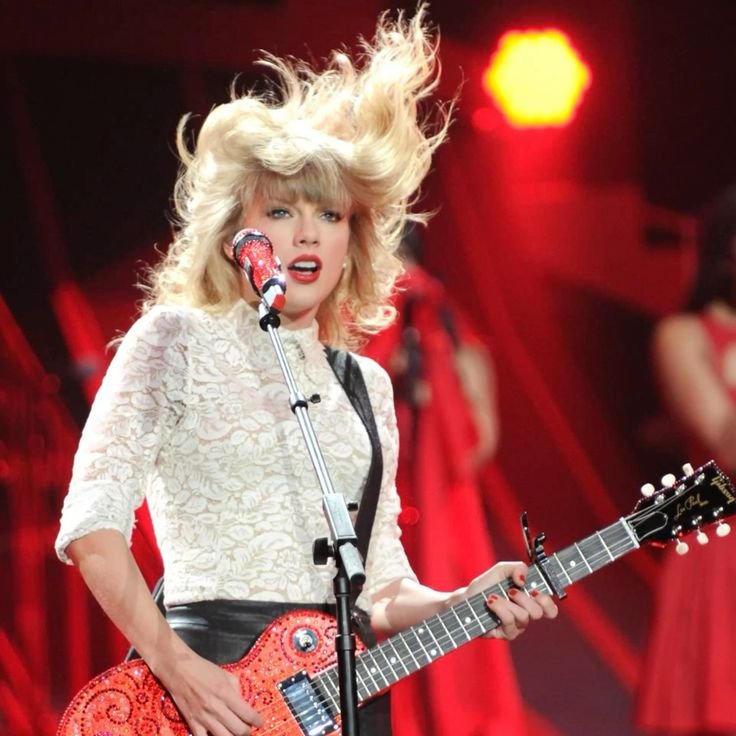
Early Tours to Stadium Domination
Swift’s live career progressed from opening slots and small country venues to headlining her own arena and stadium tours within just a few years of her debut. Each subsequent tour scaled up in production complexity, reflecting her albums’ shift from acoustic-leaning country to full pop spectacle.
The Eras Tour Phenomenon
Her most recent multi-year tour became a genuine cultural and economic event, running to sold-out stadiums across multiple continents and structured as a journey through every distinct musical era of her catalog, performed in three-hour-plus sets.
It became the highest-grossing concert tour in history, and its accompanying concert film became the highest-grossing concert film ever released.
Economists and city officials in several tour stops publicly credited the tour’s local stops with measurable boosts to hotel, restaurant, and retail spending, a level of macroeconomic impact seldom associated with a single music tour.
What Sets Her Live Shows Apart
Unlike many stadium acts that rely primarily on visual spectacle, Swift’s shows center on vocal stamina and full-catalog range, performing songs spanning nearly two decades of genre shifts in a single night. That combination of scale and personal narrative continuity is a major reason the tour resonated as deeply as it did with multi-generational audiences.
Taylor Swift’s Personal Life
Family Life
Swift has remained close to her parents and brother throughout her career, often crediting her parents’ decision to relocate the family to Tennessee as the single most important sacrifice that enabled her career. Her mother’s past battle with cancer, which Swift has spoken about publicly, also shaped several songs on her more recent, emotionally direct albums.
Did Taylor Swift Ever Marry?
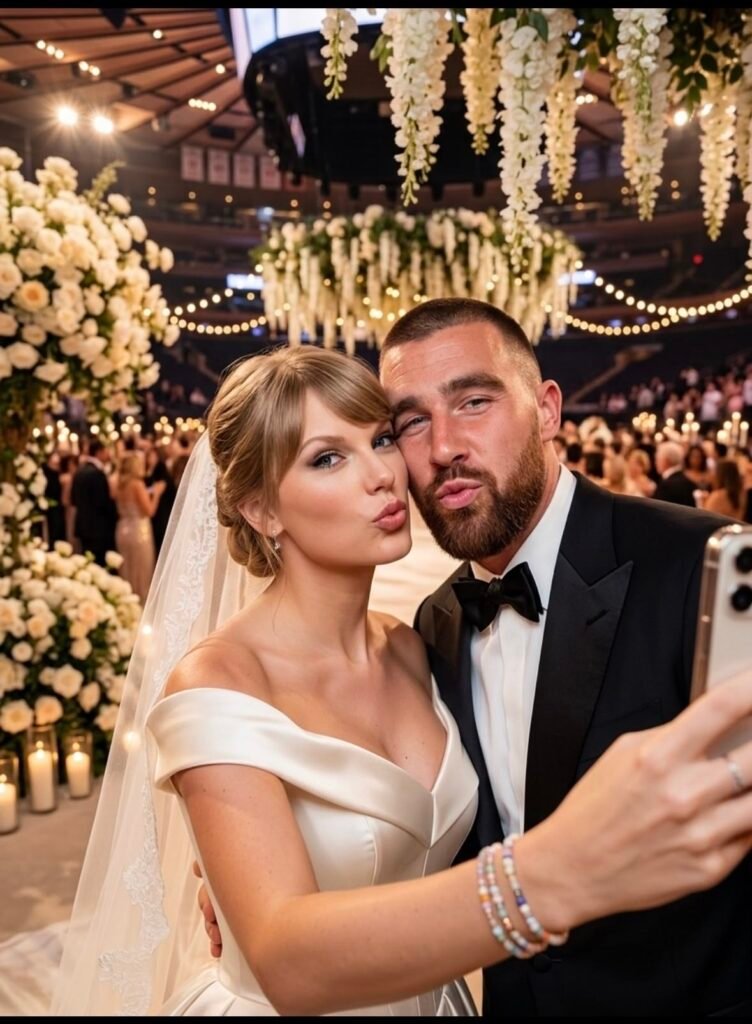
Yes. After a widely publicized relationship with NFL player Travis Kelce that began in 2023, the couple became engaged in August 2025 and married in a private-but-widely-covered ceremony at Madison Square Garden in New York City in July 2026. It marked her first public marriage.
Did Taylor Swift Have a Baby?
As of this writing, there is no confirmed public information that Taylor Swift has had a child. Speculation around this topic circulates frequently online, but no verified announcement exists. Readers should treat unsourced tabloid claims on this subject with skepticism.
Height, Style, and Public Image

Taylor Swift stands at approximately 5 feet 11 inches tall, a physical presence that has become part of her stage identity, particularly during elaborately choreographed arena and stadium performances. Her personal style, often built around bold red lipstick, cat-eye makeup, and era-specific fashion choices, has become its own subject of cultural commentary, with each album cycle bringing a distinct visual identity to match the music.
What is Taylor Swift’s fashion style like during her concerts?
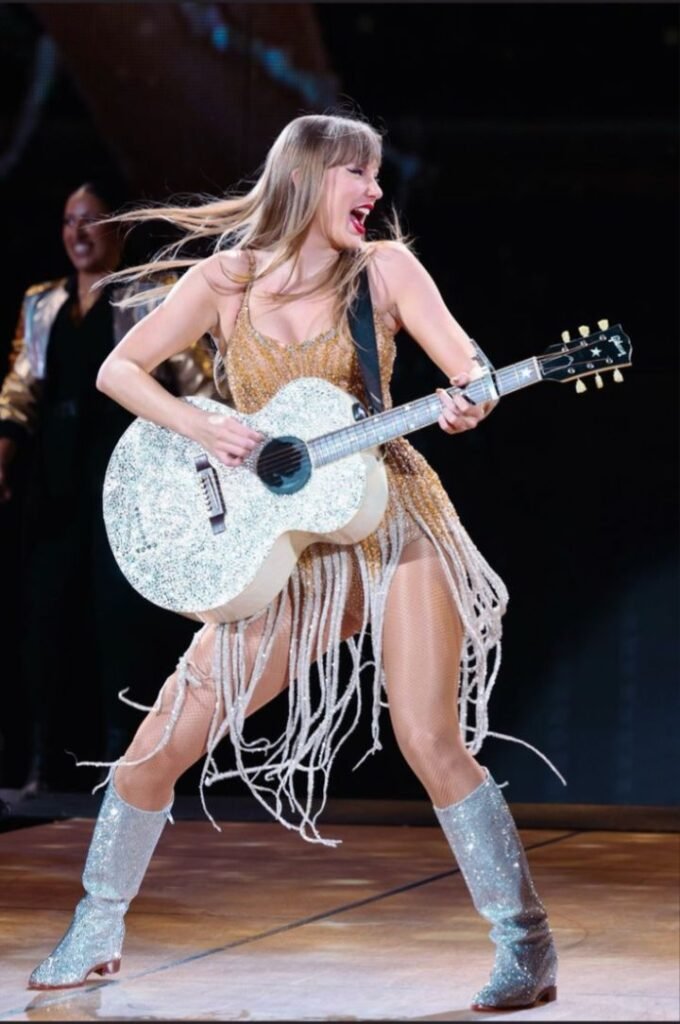
- Era-coded costume changes – each set of songs gets its own outfit tied to that album’s aesthetic, from country sundresses for her debut era to dark, moody looks for Reputation.
- Sparkle-heavy bodysuits for opening numbers – she typically kicks off shows in a custom sequined or crystal-embellished bodysuit paired with statement heels, setting a high-glam tone early.
- High-fashion designer wardrobe – her stage looks are custom pieces from major houses like Versace, Roberto Cavalli, Vivienne Westwood, Zuhair Murad, Oscar de la Renta, and Alberta Ferretti, rather than off-the-rack fashion.
- Fringe, sequins, and movement-friendly fabric – heavily embellished or fringed pieces are a recurring choice, since they catch stage lighting and move dramatically during choreography.
- Soft, romantic pieces for folk-leaning sets – for her more acoustic, introspective segments, she shifts to flowy, ethereal dresses in muted creams, greys, and whites for a “cottagecore” feel.
- Accessorized reinvention over the course of one show – rather than one static look, she layers on blazers, capes, or jackets over a base outfit as the set transitions, letting a single silhouette evolve across a segment.
Taylor Swift Impact and Influence
Reclaiming Ownership of Her Music
One of the most significant business stories of Swift’s career involves a public dispute over ownership of the master recordings of her first six albums, which were sold without her direct involvement. In response, she began re-recording those albums in their entirety, branded as “Taylor’s Version” releases, allowing her to regain commercial and creative control over that portion of her catalog. The move was widely covered as a landmark moment for artist rights in the modern streaming era, and other artists have since cited it as inspiration for renegotiating their own recording contracts.
Awards and Industry Recognition
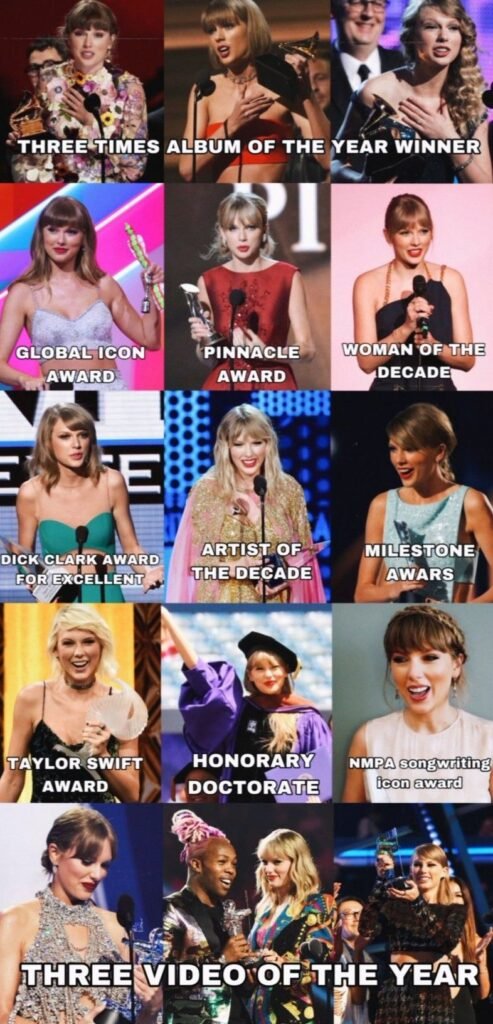
Swift has won more Grammy Awards for Album of the Year than any other artist in the award’s history, alongside dozens of other major industry honors across pop, country, and songwriting categories. She has also been recognized by major news outlets as one of the most influential public figures of the decade, reflecting an impact that extends well beyond music sales alone.
Economic and Cultural Footprint
Beyond album sales and streaming numbers, Swift’s business decisions, including direct-to-fan ticketing changes, album release strategy, and brand partnerships, have repeatedly shifted industry norms. Her fanbase’s spending power has been studied by economists as a measurable factor in regional tourism and retail activity during tour stops, a phenomenon some analysts have informally nicknamed the “Swift effect.”
A Generational Songwriter
Perhaps most notably, Swift has been credited with reshaping how younger songwriters approach specificity and vulnerability in pop lyrics, influencing a generation of artists who cite her diary-style storytelling as a direct inspiration for their own songwriting approach.
Any skincare regimen that Taylor Swift follows?
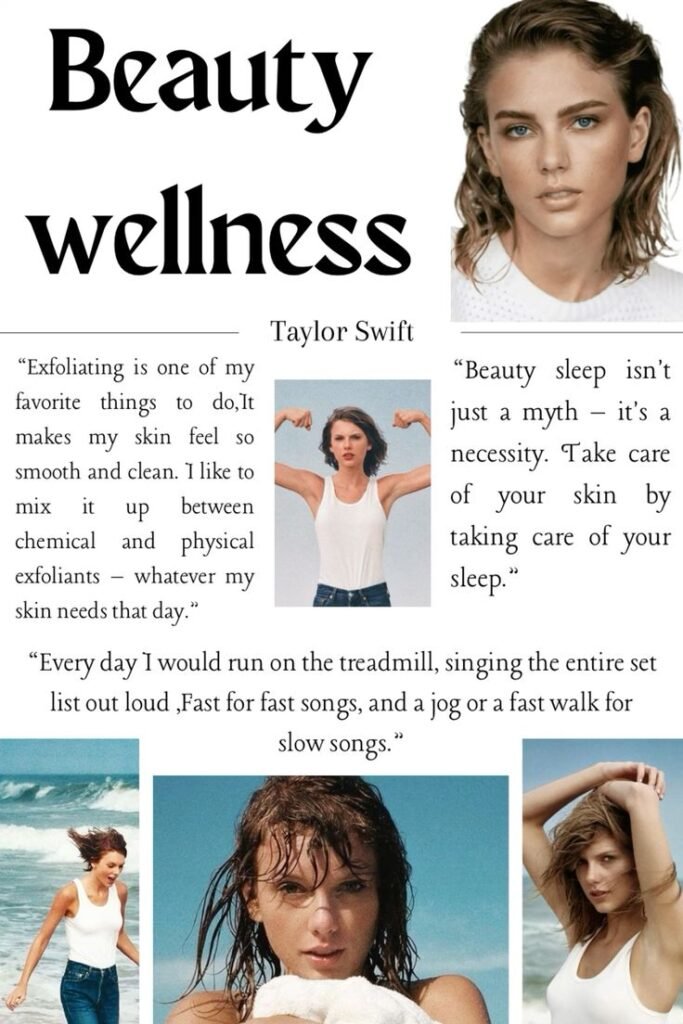
Taylor Swift hasn’t laid out a formal, publicly confirmed skincare routine, but she’s given fans several genuine glimpses, mostly through candid moments like the trailer for her Eras Tour docuseries, which showed products lined up by her bathtub during her post-show wind-down ritual. Here’s what’s actually been confirmed versus what’s more general reporting:
Products she’s been seen using:
- A double-cleanse approach, using a cream-based cleanser (spotted: Dr. Barbara Sturm’s Super Anti-Aging Cleansing Cream) to dissolve makeup, followed by a purifying cleanser (Tata Harper) to clear out pores
- An anti-aging body cream from Dr. Barbara Sturm, applied post-shower as part of her wind-down routine
- Christophe Robin haircare (shampoo and conditioner), spotted in the same bathtub lineup
General habits and philosophy she’s mentioned in interviews:
- Prioritizes removing all makeup thoroughly at the end of the day, especially after heavy stage makeup, to let her skin recover
- Says she cycles through different makeup looks over the years but almost always returns to a bold red lip as her signature
- Has mentioned taking supplements like L-theanine (for stress) and magnesium (for energy and muscle recovery) as part of her broader wellness habits, alongside staying hydrated
Worth noting: she has never published or endorsed an official “here’s my full routine” list; most of what circulates online is inferred from paparazzi/BTS glimpses or written by beauty sites speculating about her possible product choices. I’d treat anything beyond the docuseries-confirmed items above as unverified guesswork rather than her actual regimen.
Frequently Asked Questions
When is Taylor Swift’s birthday?
Taylor Swift was born on December 13, 1989, making her a Sagittarius. Her birthday is one of the most searched dates among fans each December, often accompanied by trending tributes across social media.
What was Taylor Swift’s real name?
Her full given name is Taylor Alison Swift. “Taylor” has always been her legal first name, not a stage name, and she has performed under her real name throughout her entire career.
What is Taylor Swift’s height and weight?
Taylor Swift is approximately 5 feet 11 inches (180 cm) tall. Public figures’ weight is not something reliable or relevant biographical sources report, and speculating on it isn’t meaningful to understanding her career.
Did Taylor Swift go to college?
No, she did not attend a traditional four-year college. She was homeschooled during her later teenage years to support her music career and has since received honorary degrees recognizing her artistic contributions.
How old was Taylor Swift when she started singing?
She began performing publicly around age ten and eleven, competing in local contests and singing at community events before pursuing a professional career in her early teens.
Did Taylor Swift ever marry?
Yes. She married NFL player Travis Kelce in July 2026 at Madison Square Garden, following an engagement announced in August 2025.
Did Taylor Swift have a baby?
There is no verified public confirmation of Taylor Swift having a child as of this writing. Claims to the contrary circulating online are unconfirmed.
What music genres has Taylor Swift worked in?
She began in country music, transitioned into mainstream pop, experimented with electro-pop and alternative folk, and most recently incorporated soft rock influences, one of the most genre-diverse catalogs of any major pop artist.
Taylor Swift’s fashion sense during concerts?
Conclusion
Taylor Swift’s story is unusual not because of any single achievement, but because of how consistently she has reinvented herself while keeping personal, detail-driven songwriting at the center of everything. Three takeaways stand out from this deep dive into her life and career:
- Her early, deliberate career choices — from moving to Nashville as a young teenager to prioritizing songwriting credit from day one — set the foundation for the creative control she holds today.
- Her genre evolution, from country roots through pop, electro-pop, folk, and beyond, reflects an artist treating reinvention as a creative strategy rather than a risk.
- Her business and cultural impact, from reclaiming her masters to reshaping touring economics, has influenced the music industry well beyond her own catalog.
If you’re researching Taylor Swift’s biography for a project, an article, or simply out of fan curiosity, bookmark this guide; it’s built to stay accurate as her story continues to unfold.


Post Comment