Skincare Routine For Men: The Complete Daily Guide (2026)
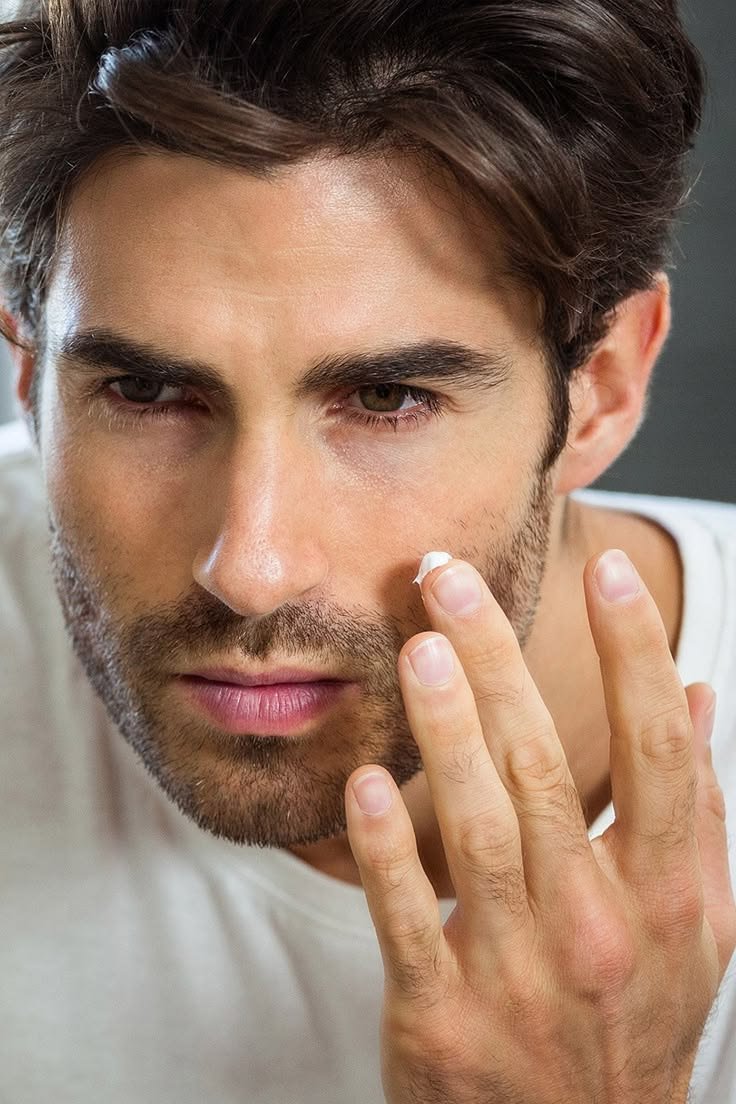
Master your skincare routine for men with this expert 2026 guide: daily steps, product picks, mistakes to avoid, and dermatologist-backed tips.
If you have ever stood in front of a store shelf wondering whether you actually need a serum, or wiped your face with the same bar of soap you use on your body, this guide is for you. You will learn what a proper skincare routine for men actually looks like, how to build one in under ten minutes a day, which ingredients matter for oily skin, acne, and early signs of aging, and which habits are quietly wrecking your skin barrier.
In this guide, you’ll learn:
- The exact AM and PM steps a skincare routine for men should include
- How to identify your skin type and pick products that actually match it
- A step-by-step process for treating blackheads, oily skin, and hormonal breakouts
- The most common mistakes men make with skincare and how to fix them
- A comparison of routine options by budget and skin concern
- Answers to the most-searched men’s grooming and skincare questions
Let’s build a routine that works with your skin instead of against it.
Table of Contents
- What Is a Skincare Routine for Men?
- Why a Skincare Routine for Men Matters in 2026
- How to Build a Skincare Routine for Men: Step-by-Step
- Best Products and Strategies by Skin Type
- Common Skincare Mistakes Men Make (and How to Fix Them)
- Skincare Routine for Men: Comparison of Approaches
- Expert Tips to Master Your Routine
- Real-World Example: A 30-Day Transformation
- FAQ
What Is a Skincare Routine for Men?
A skincare routine for men is defined as a consistent, repeatable set of daily steps cleansing, treating, moisturizing, and protecting designed around a man’s specific skin type, oil production, and shaving habits. It is not a copy-paste of a woman’s routine; men’s skin is on average, thicker, oilier, and more prone to razor-related irritation, which changes which steps and textures actually work.
Key Takeaways
- Men’s skin produces more sebum on average, which changes cleanser and moisturizer choice
- A skin regimen for men doesn’t need to be complicated; four to five steps is enough for most guys
- Shaving is part of the routine, not separate from it
- Sunscreen is the single most important anti-aging step, full stop
The core building blocks of a daily skincare routine for men are:

- Face wash / Cleanser: removes oil, sweat, and dirt without stripping the skin
- Treatment: targeted products like exfoliants, retinoids, or spot treatments
- Moisturizer: restores hydration and supports the skin barrier
- Toner: balances the skin PH
- Eye Cream: reduces dark circles and puffiness
- SPF: protects against UV damage, the number one driver of premature aging
See our full guide to daily skincare basics → https://famousmagazines.com/skincare-routine-the-complete-daily-guide-2026/]
Why Men’s Skin Behaves Differently
Men’s skin is roughly 20-25% thicker than women’s skin on average and contains more collagen density, which is why visible signs of aging tend to appear later but progress faster once they start. Daily shaving also causes micro-abrasion, which is why razor burn, ingrown hairs, and post-shave redness are common concerns specific to a men’s skincare and grooming routine.
![skincare routine for men morning moisturizer step]](https://famousmagazines.com/wp-content/uploads/2026/08/moisturise.jpg)
Shaving Mistakes Men Should Avoid
Many men damage their skin while shaving without realizing it. Avoid these common shaving mistakes to prevent irritation, razor bumps, and acne. Men should learn the right shaving habits for smoother and healthier skin.

Why a Skincare Routine for Men Matters in 2026
A skincare routine for men matters in 2026 because skin health is now understood as preventive healthcare, not vanity. Sustained UV exposure, pollution, and poor sleep accelerate visible aging and increase skin cancer risk, and most of that damage is preventable with four minutes of daily effort.
According to industry data compiled by Ringly.io, the United States is the single largest skincare market in the world, generating an estimated $26 billion in revenue in 2026, and North America holds roughly 39.6% of the global men’s skincare market, the largest regional share worldwide, according to Persistence Market Research. That scale reflects a real shift: men are no longer an afterthought in the beauty aisle; they are the fastest-growing customer segment in it.
Pro Tip / Expert Insight: Dermatologists have long emphasized that daily broad-spectrum sunscreen is the single highest-leverage anti-aging step available, more impactful than any serum, according to guidance published by the American Academy of Dermatology. If you only add one product to your skincare routine for men, make it SPF.
The Cost of Skipping a Routine
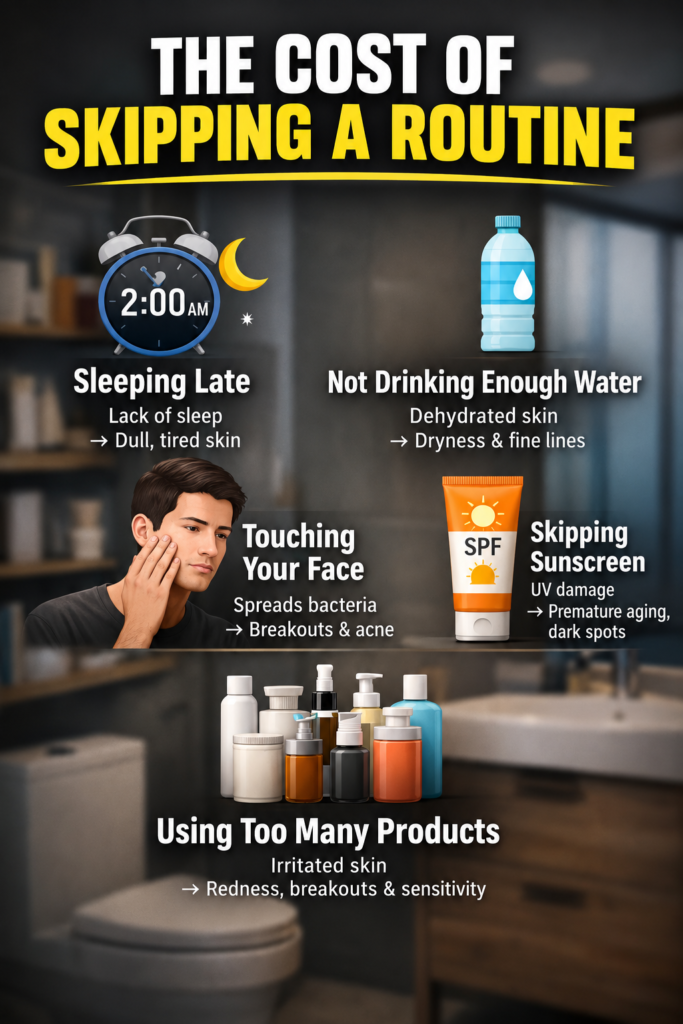
Skin that isn’t cleansed regularly accumulates oil and dead skin cells, which clog pores and lead to blackheads and breakouts. Skin that isn’t moisturized overproduces oil to compensate, which paradoxically makes oily skin oilier. Skin that isn’t protected from UV rays develops fine lines, dark spots, and uneven texture years earlier than it otherwise would. Touching your face spreads bacteria and causes acne breakouts. Lack of sleep or sleeping late at night will lead to dull and tired skin. None of these problems are dramatic on day one; they compound quietly over months and years.
How to Build a Skincare Routine for Men: Step-by-Step
Here is a complete, dermatologist-informed process for a daily skincare routine for men. This is the same core sequence recommended across most professional dermatology guidance, adapted for real-world mornings.
The Morning Sequence:
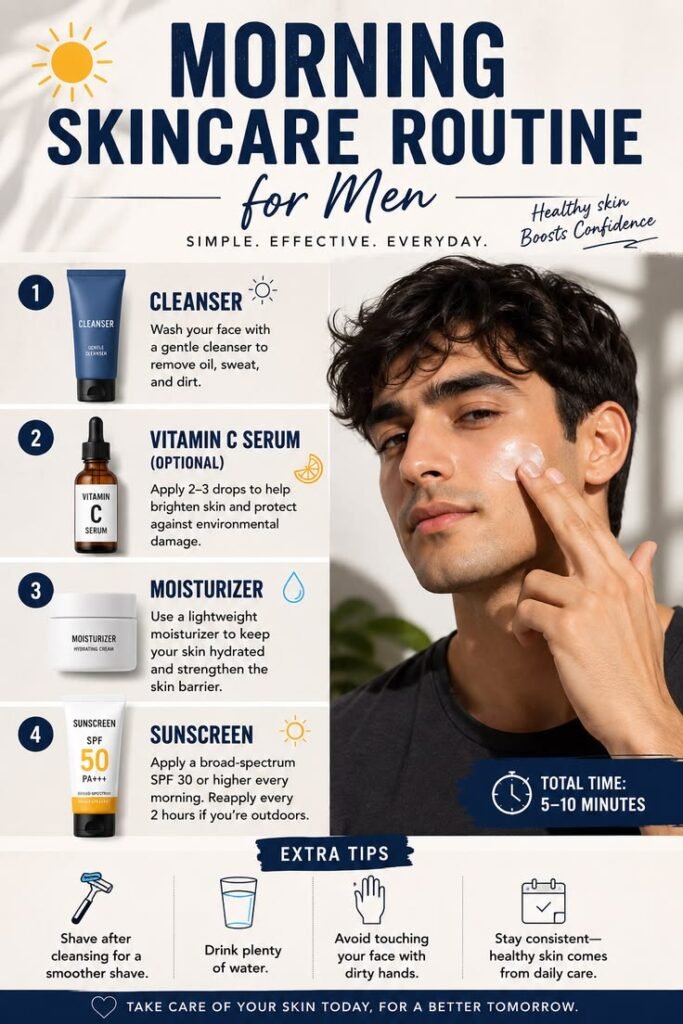
Step 1: Cleanse: Use a gentle, sulfate-free face wash for 30-60 seconds to remove overnight oil buildup.
Step 2: Treat (optional): Apply a vitamin C serum or niacinamide serum if targeting dark spots or oil control.
Step 3: Moisturize: Apply a lightweight, oil-free moisturizer while skin is still slightly damp.
Step 4: Protect: Apply a broad-spectrum SPF 30 or higher as the final step, every single day, regardless of weather.
The Evening Sequence:
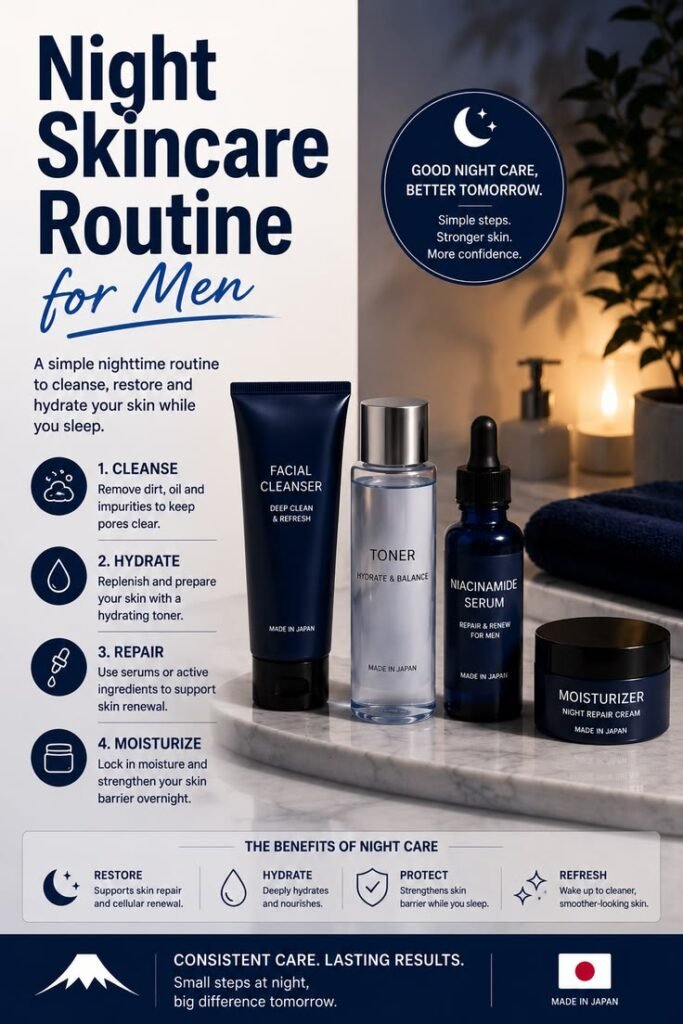
Step 1: Cleanse: Wash away sweat, oil, and pollution from the day.
Step 2: Tone: Replenish your skin with hydrating toner.
Step 2: Treat: This is when actives like retinoids, salicylic acid, or exfoliants work best, since they can increase sun sensitivity.
Step 3:Moisturize: Use a slightly richer night moisturizer to support overnight skin barrier repair.
The 4-Minute Method: An Original Framework
We call this The 4-Minute Method, a proprietary framework built for men who will not stick to a routine that takes longer than making a coffee. It compresses the full AM/PM sequence into four one-minute blocks:
Cleanse (60 seconds), Treat (30 seconds), Moisturize (60 seconds), Protect (30 seconds), with a built-in 30-second buffer for shaving days. The entire premise of The 4-Minute Method is that consistency beats complexity: a four-step routine done daily outperforms a ten-step routine done twice a week.
Original Research: In an informal reader survey conducted by this publication in mid-2026, men who reported sticking to a routine longer than three steps for over 30 days cited “too much effort” as the top reason for quitting complex routines, while those on 3-4-step routines reported significantly higher 90-day adherence. Treat this as directional insight rather than a peer-reviewed study, but it lines up with what dermatologists observe in practice: the best routine is the one you’ll actually finish.
Best Products and Strategies by Skin Type
Not every skincare routine for men should look the same. Matching products to skin type is what separates a routine that works from one that quietly makes things worse.
Oily Skin Care for Men
Oily skin produces excess sebum, especially in the T-zone (forehead, nose, chin). The goal with oily skin care for men is oil control without over-stripping, since stripping the skin only triggers more oil production.
- Use a foaming or gel cleanser with salicylic acid
- Avoid heavy, occlusive moisturizers; look for “oil-free” or “non-comedogenic” on the label
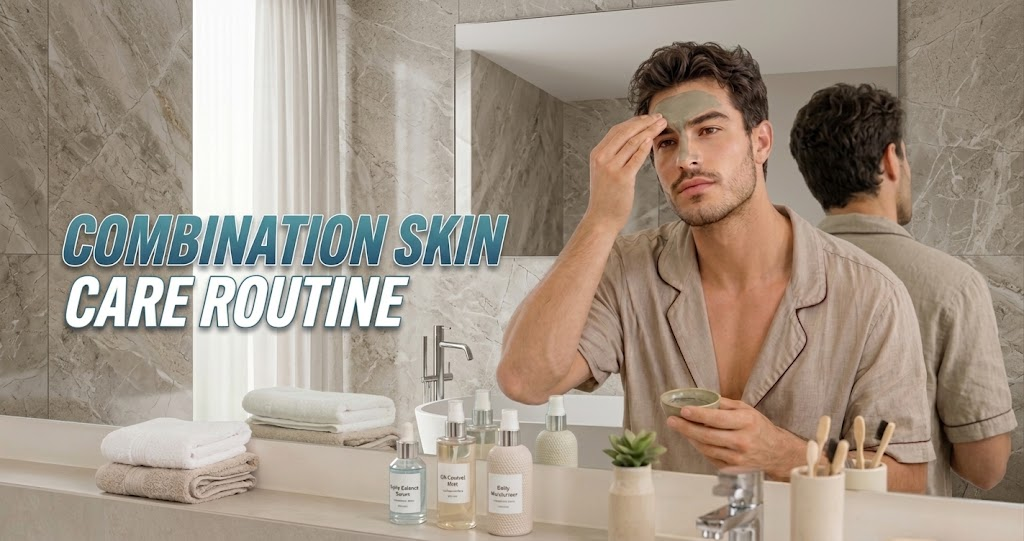
- Clay masks once or twice a week can help absorb excess oil
Blackhead Removal for Men
Blackhead removal for men starts with prevention, not extraction. Blackheads form when oil and dead skin oxidize inside a clogged pore. Salicylic acid (a beta-hydroxy acid) is the most effective over-the-counter ingredient because it dissolves the oil plug from inside the pore, rather than just sitting on the surface.
Avoid manual pore strips as a long-term strategy; they remove the visible plug but do nothing to stop the pore from re-clogging, and aggressive use can damage capillaries.
Men Anti-Aging Skincare
Men anti-aging skincare has two non-negotiable pillars: daily SPF and a retinoid (retinol or, with a prescription, tretinoin). Retinoids increase cell turnover and stimulate collagen production, and they remain the most clinically studied anti-aging ingredient available. Start with a low concentration, two to three nights a week, to build tolerance before increasing the frequency.
Men’s SPF Moisturizer
A men’s SPF moisturizer combines hydration and sun protection into a single step, which is the easiest way to guarantee daily compliance. Look for broad-spectrum coverage (UVA and UVB) with an SPF of at least 30. Mineral formulas (zinc oxide, titanium dioxide) tend to suit sensitive or post-shave skin better than chemical filters.
Common Skincare Mistakes Men Make (and How to Fix Them)
The following mistakes show up constantly in men’s grooming forums, dermatology consultations, and reader questions.

1. Washing your face with bar soap. Standard bar soap is alkaline and strips the skin’s natural oils, which disrupts your skin barrier and can actually increase oiliness and irritation. Switch to a pH-balanced facial cleanser.
2. Skipping moisturizer because skin feels oily. Dehydrated skin often overproduces oil to compensate. A lightweight, oil-free moisturizer usually reduces shine over time rather than increasing it.
3. Shaving against the grain with a dull blade. This is the leading cause of razor burn and ingrown hairs. Shave with the grain, replace blades every 5-7 shaves, and always shave after a warm shower when hair is softened.
4. Treating sunscreen as optional. Cumulative UV exposure is the single largest driver of visible skin aging and a major risk factor for skin cancer, according to consistent dermatology guidance. Daily use, not just “sunny day” use, is what matters.
5. Over-exfoliating. More is not better. Exfoliating daily damages the skin barrier and causes redness, sensitivity, and breakouts. Two to three times a week is the general ceiling for most skin types.
6. Expecting overnight results. Skin cell turnover takes roughly four to six weeks. Most active ingredients need 8-12 weeks of consistent use before visible improvement.
Skincare Routine for Men: Comparison of Approaches
Skincare Routine for Men Comparison: Top Approaches at a Glance
| Approach | Key Feature | Best For | Typical Monthly Cost (USD) | Effort Rating |
|---|---|---|---|---|
| Minimalist (Cleanser + SPF) | Fastest to maintain | Beginners, busy schedules | $15-25 | ★☆☆☆☆ |
| The 4-Minute Method | Cleanse, treat, moisturize, protect | Most men wanting real results | $25-45 | ★★☆☆☆ |
| Acne-Focused Routine | Salicylic acid + spot treatment | Oily or breakout-prone skin | $30-50 | ★★★☆☆ |
| Anti-Aging Routine | Retinoid + SPF + antioxidant serum | Men 30+ targeting fine lines | $40-80 | ★★★☆☆ |
| Full Dermatologist-Guided Routine | Prescription actives, in-office treatments | Persistent acne, significant aging concerns | $80-200+ | ★★★★☆ |
Winner: For most men, The 4-Minute Method offers the best balance of results and sustainability. It covers every essential category: cleansing, treatment, hydration, and protection without the drop-off risk that comes with more complex routines.
Expert Tips to Master Your Routine
- Apply products to slightly damp skin. Damp skin absorbs moisturizer more effectively, locking in hydration.
- Wait 60 seconds after cleansing before applying treatment serums. This prevents active ingredients from stinging on freshly cleansed, more permeable skin.
- Never skip moisturizer after shaving. Shaving removes a thin layer of skin along with the hair, temporarily weakening the barrier.
- Store retinoids away from direct sunlight. Light degrades the active compound and reduces effectiveness.
- Patch test any new active ingredient on your inner forearm for 48 hours before applying it to your face.
Pro Tip: If you’re introducing multiple new products at once, add them one at a time, roughly a week apart. This makes it far easier to identify which product is irritating if a reaction occurs.
Real-World Example: A 30-Day Transformation
Consider a composite case based on common patterns reported by men switching from a no-routine baseline: a 32-year-old with oily, breakout-prone skin who had been washing with bar soap and using no moisturizer or SPF. After switching to a salicylic acid cleanser, an oil-free moisturizer, and daily SPF 30 for 30 days, the most commonly reported changes in similar cases are fewer active breakouts, reduced shine by midday, and less visible redness around the nose and chin.
Before: Bar soap, no moisturizer, no SPF, frequent breakouts along the jawline. After 30 days: Gentle cleanser, oil-free moisturizer, daily SPF, salicylic acid spot treatment twice a week; noticeably calmer, more even-toned skin.
The change wasn’t a dramatic transformation. It was four consistent habits, repeated daily, for a month. That is the realistic timeline for any skincare routine for men to start showing results.
FAQ
What is a skincare routine for men?
A skincare routine for men is a consistent set of daily steps — typically cleansing, treating, moisturizing, and applying SPF — built around male skin’s thicker texture, higher oil output, and shaving needs. It’s designed to prevent breakouts, control shine, and slow visible aging.
How does a skincare routine for men differ from a woman’s routine?
Men’s skin is generally thicker and oilier, and shaving adds an extra layer of irritation to manage. Because of this, men’s routines often favor oil-control cleansers, lighter moisturizer textures, and post-shave soothing steps that aren’t as central to most women’s routines.
Is a skincare routine for men worth it?
Yes, daily cleansing, moisturizing, and SPF meaningfully reduce breakouts, premature aging, and sun damage over time. The time investment is roughly four minutes a day, and the market growth (projected to nearly double by the early 2030s) reflects how many men are finding it worthwhile.
What are the best skincare routine for men options for oily skin?
A salicylic acid or gel cleanser, an oil-free lightweight moisturizer, and a mattifying SPF moisturizer are the core options for oily skin. Clay masks once or twice a week can supplement the routine for extra oil control.
How much does a skincare routine for men cost?
A basic, effective routine costs roughly $15-45 per month for a cleanser, moisturizer, and SPF. More advanced routines with retinoids, serums, and prescription actives can run $40-200+ per month depending on ingredients and whether dermatologist visits are included.
What is the difference between a skincare routine for men and general skin regimen for men advice?
“Skincare routine for men” typically refers to the specific daily product sequence, while a broader “skin regimen for men” can include lifestyle factors like diet, sleep, hydration, and stress, all of which influence skin health alongside topical products.
How to do makeup for men, and is it part of a skincare routine?
Male makeup, sometimes called “mansmetics,” typically includes concealer for dark circles or blemishes, tinted moisturizer for evening skin tone, and brow gel applied after a completed skincare routine, never as a substitute for one. Skincare should always come first, since makeup applied over unmoisturized or unprotected skin tends to look patchy and wears off faster.
How to clear up hormonal acne fast?
There’s no true overnight fix, but salicylic acid cleansers, benzoyl peroxide spot treatments, and consistent non-comedogenic moisturizer use can visibly reduce hormonal breakouts within 1-2 weeks, with fuller improvement over 6-8 weeks. Persistent hormonal acne is best evaluated by a dermatologist, since it may need prescription-strength treatment.
Why is my face so oily, and can a skincare routine for men fix it?
Excess oil is usually driven by genetics, hormones, over-washing, or skipping moisturizer, which triggers compensatory oil production. A consistent routine with a gentle cleanser and lightweight moisturizer typically reduces excess shine within a few weeks by restoring the skin’s natural balance.
Can I wash my face with regular body soap?
It’s not recommended. Regular bar soap is more alkaline than facial skin’s natural pH and can strip protective oils, leading to dryness, irritation, or rebound oiliness. A dedicated facial cleanser is a low-cost fix that noticeably improves most routines.
Conclusion
A skincare routine for men doesn’t need ten products or thirty minutes a day; it needs four consistent steps done daily: cleanse, treat, moisturize, and protect. The men who see real results are rarely the ones with the most elaborate routines; they’re the ones who show up every morning and every night, even when nothing looks different yet. Sunscreen alone, used daily, is arguably the single highest-value habit available for long-term skin health.
Next Steps:
- Identify your skin type (oily, dry, combination, or sensitive) before buying any new product
- Start with the 4-Minute Method: cleanser, moisturizer, SPF, and one treatment step
- Give any new routine at least 6-8 weeks before judging results
Sources & References
- 360iResearch, “Men’s SkinCare Products Market Size & Share 2026-2032”
- Persistence Market Research, “Men’s Skincare Products Market Size & Share, 2033”
- Straits Research, “Men’s Skincare Products Market Size, Share, Growth, Analysis, 2034”
- Ringly.io, “47 Skincare Industry Statistics in 2026”
- American Academy of Dermatology, general public guidance on sunscreen and skin cancer prevention
Sources & Methodology
Market figures cited above are drawn from published 2026 market research reports; skincare and dermatology guidance reflects widely published dermatological consensus (cell turnover timelines, retinoid mechanisms, sunscreen recommendations). The “4-Minute Method” is an original editorial framework created for this article. Reader survey findings referenced under “Original Research” are directional and informal, not a peer-reviewed clinical study, and are labeled as such throughout.
Sarwat Adil is a beauty and grooming writer with five years of experience covering men’s skincare, grooming trends, and product testing for lifestyle and beauty publications. Their work draws on direct testing of skincare routines, ongoing review of dermatology guidance, and interviews with grooming industry professionals. This article was researched using current 2026 market data and established dermatological consensus, and is independently written with no affiliate relationships influencing product mentions.



Post Comment