French Nails: 9 Stunning 2026 Designs + Pro Tips
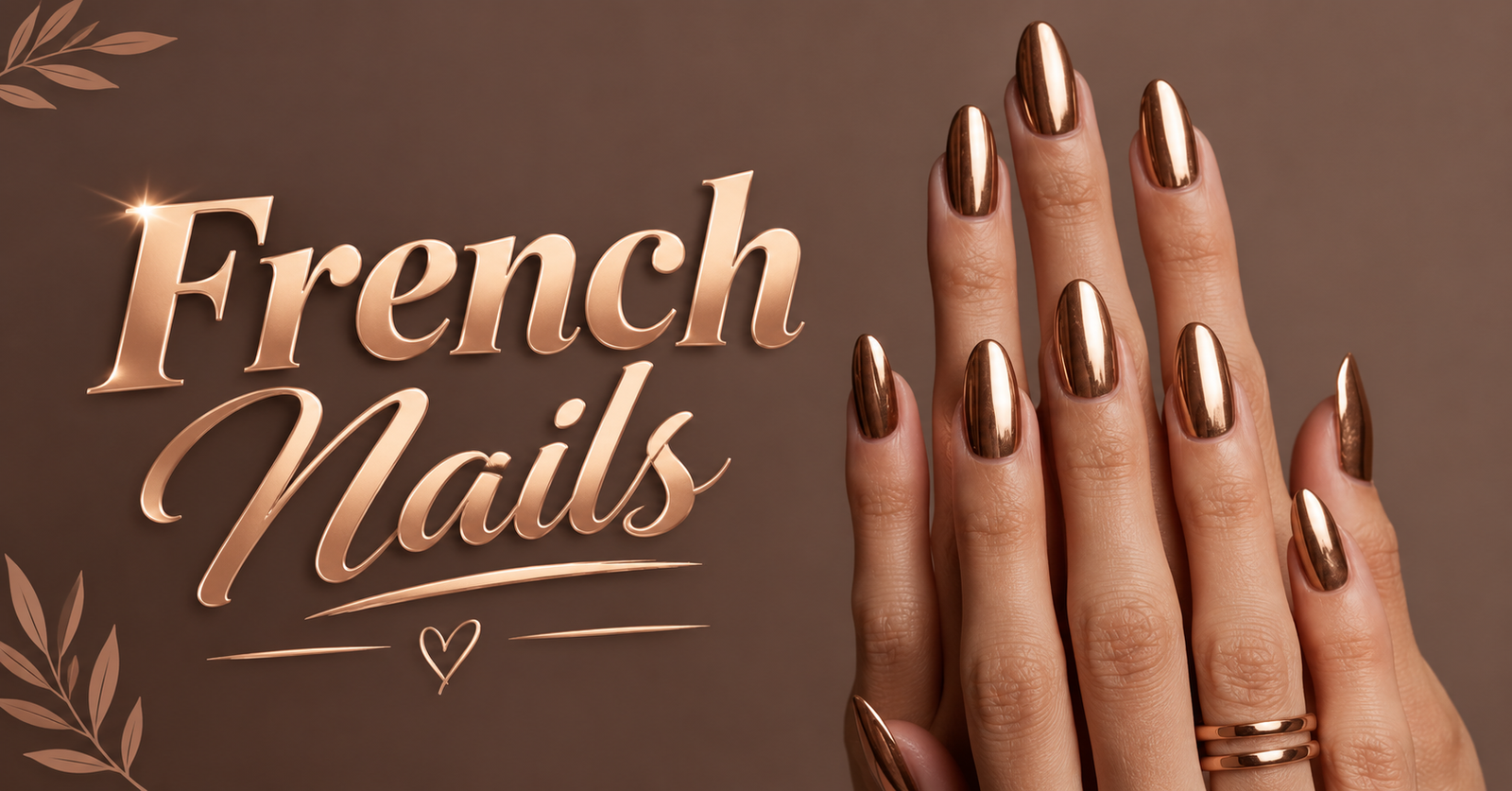
French nails are back and bolder in 2026. Discover 9 expert-ranked designs, shape guides, gel vs. acrylic data, and at-home tutorials.
Roughly 68% of global beauty salon visits now include a nail service, and manicures alone drive close to 42% of salon demand, according to Business Research Insights. Inside that demand, one look outperforms every passing trend: French nails. The style survived neon, ombré, chrome, and the entire “quiet luxury” cycle, and in 2026 it returns louder, thinner, glossier, and far more customisable than the thick white tip your mother wore.
The reason is simple. A French tip works as a canvas rather than a statement. It flatters every skin tone, matches every outfit, and scales from a five-minute at-home press-on set to a three-hour encapsulated gel masterpiece.
Today you will get to know which nine French nails design variations actually trend in 2026, how to match a French tip to your exact nail shape, how gel, acrylic, press-on, and natural applications compare on cost and longevity, a step-by-step French nails tutorial you can follow at home, and the one ingredient change that quietly reshaped the gel industry this year.
What Are French Nails and Why Are They So Popular?
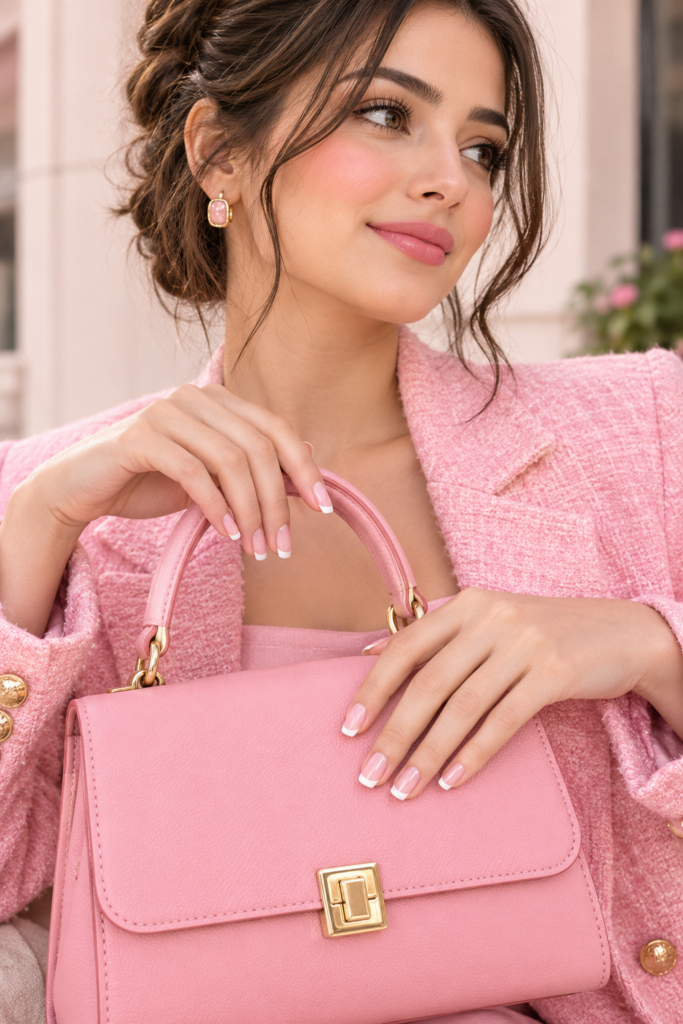
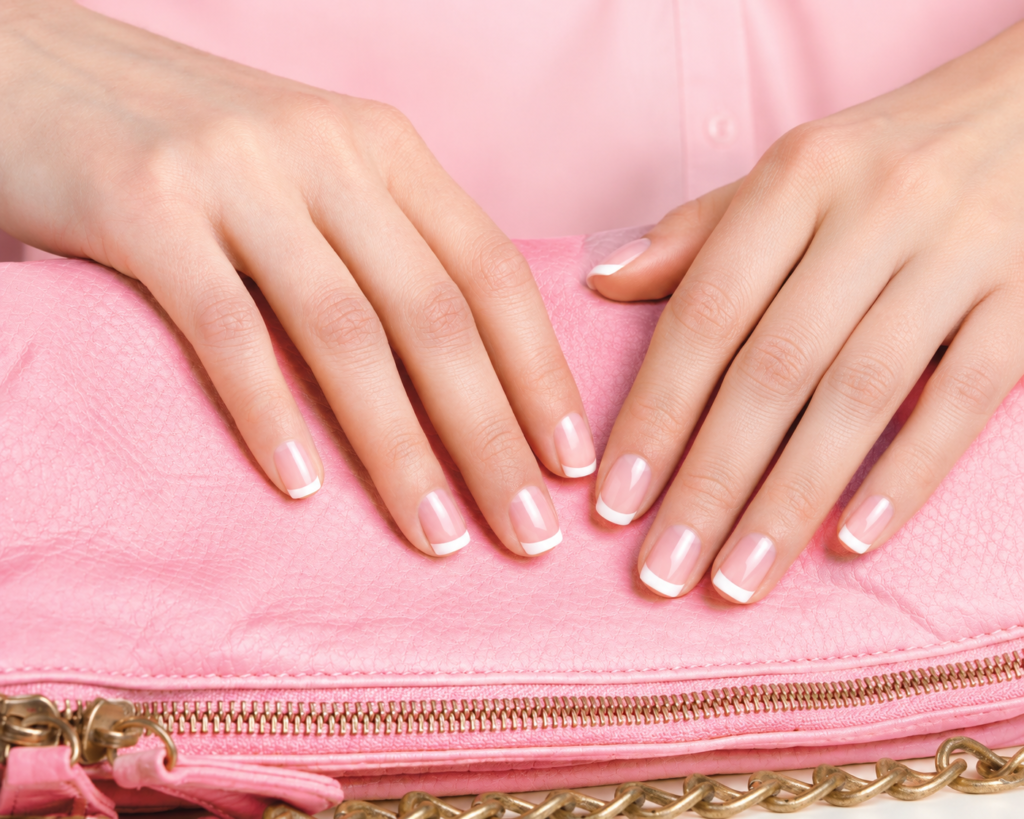
French nails are a two-tone manicure that pairs a sheer nude, pink, or milky base with a contrasting painted tip along the free edge of the nail. The base mimics the natural nail plate, while the tip exaggerates length and cleanliness, creating a groomed look that photographs well and clashes with nothing.
The 1975 Hollywood Origin Story (Not French at All)
The origin of French nails traces to Los Angeles, not Paris. ORLY founder Jeff Pink created the look in 1975 after film directors complained that repainting actresses’ nails for every costume change wasted expensive shooting time.
Pink paired a flesh-toned base with an opaque white edge and sold it as the Natural Look Nail Kit. He only rebranded it “French” after the look travelled to Paris runways and he flew home convinced it needed a more glamorous name. Cher and Barbra Streisand wearing the look on late-night television pushed it from film sets into mainstream salons.
That history matters commercially: the style was engineered for versatility from day one, which explains why it never fully exits the trend cycle.
Why Demand Keeps Climbing in 2026
Three forces converge. First, the professional market keeps expanding the global nail salon market sits near USD 70.4 billion in 2026 and is forecast to reach USD 122.7 billion by 2035, per Business Research Insights.
Second, gel adoption now runs at roughly 63% of salon nail work, which makes crisp, long-wearing tips achievable for average clients.
Third, the DIY category exploded: the UV nail gel segment alone is projected to grow at a 7.1% CAGR through 2034, according to Fortune Business Insights, with the at-home user segment identified as the fastest-growing channel.
Put plainly: more people than ever can produce a salon-grade French tip on their own kitchen table.
French Manicure vs American Manicure vs Baby Boomer
Shoppers confuse these three constantly, and competitor articles rarely separate them properly.
- French manicure: sheer pink or nude base, crisp opaque tip with a defined smile line.
- American manicure: same construction, but the tip blends in soft off-white or cream, producing a lower-contrast, more “your nails but better” finish.
- Baby boomer (ombré French): the white tip melts into the nude base with no visible line, created by sponging or airbrushing during application.
Top 9 French Nails Ideas for 2026
The 2026 French tip trades symmetry for expression: thinner lines, reflective finishes, and applied texture now define the category. These nine French nail design variations rank by current salon demand and social saturation.
1. Micro French Tips
A hairline tip, sometimes under two millimetres. Who What Wear flags the narrower line as the single change that modernises a classic mani for 2026. It suits short nails especially well because it adds definition without visually shortening the plate.
2. Glass and Chrome French
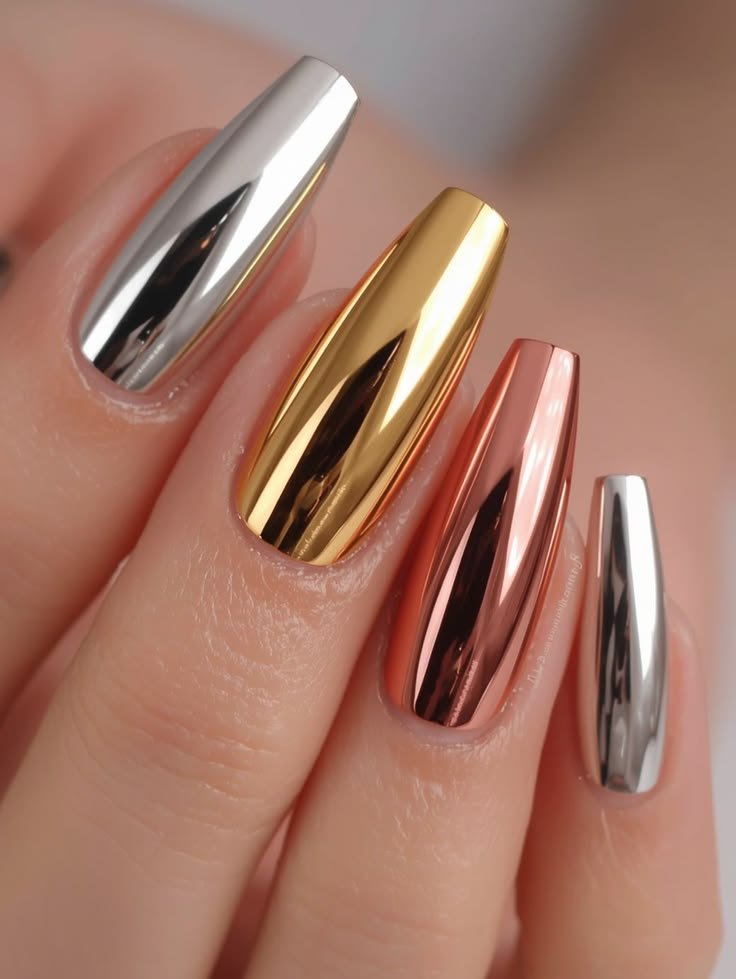
Byrdie names glass French tips a leading 2026 manicure trend: slim, high-gloss tips finished with chrome powder or a cat-eye sheen over a milky base. It reads futuristic in person and luminous in photographs, which is why editorial shoots favour it.
3. Double-Line French
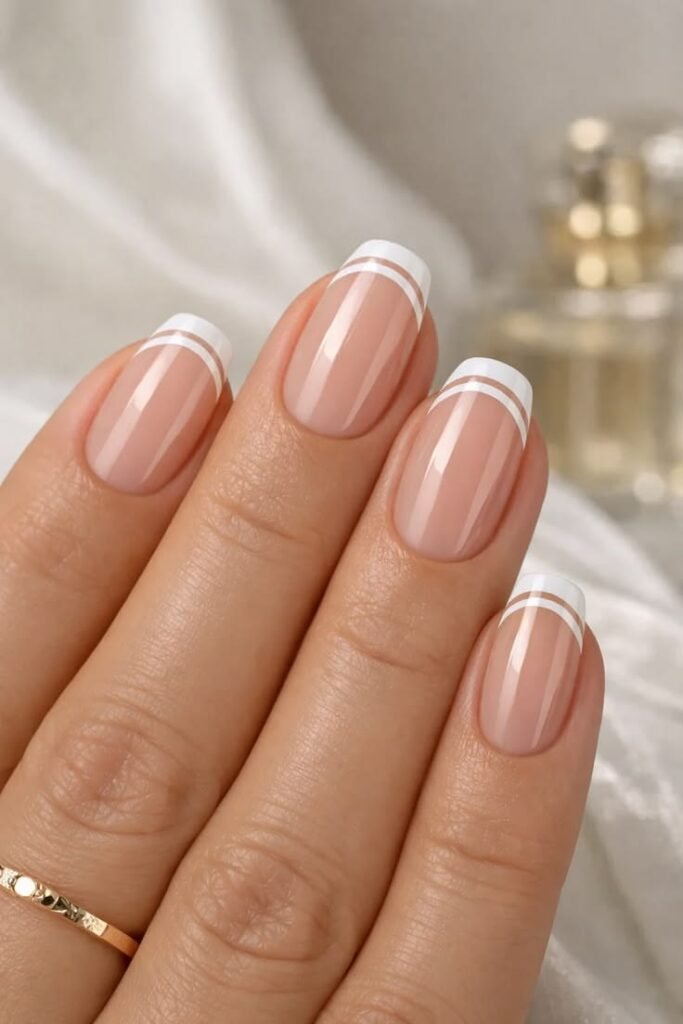
Two ultra-thin parallel lines trace the free edge instead of one solid block. The effect is minimalist and disproportionately expensive-looking for the effort involved.
4. Colour-Blocked and Striped Tips
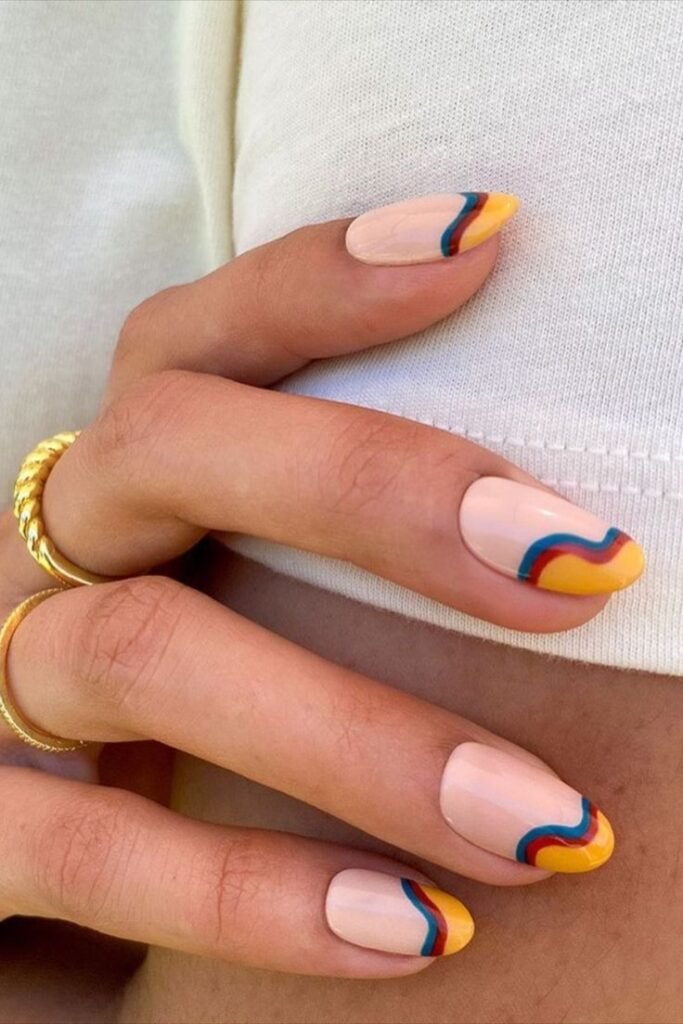
Two or three saturated shades split across the tip. Cobalt, tomato red and butter yellow dominate 2026 palettes, and striped French tips specifically appear in current trend forecasts.
5. Red French Tips
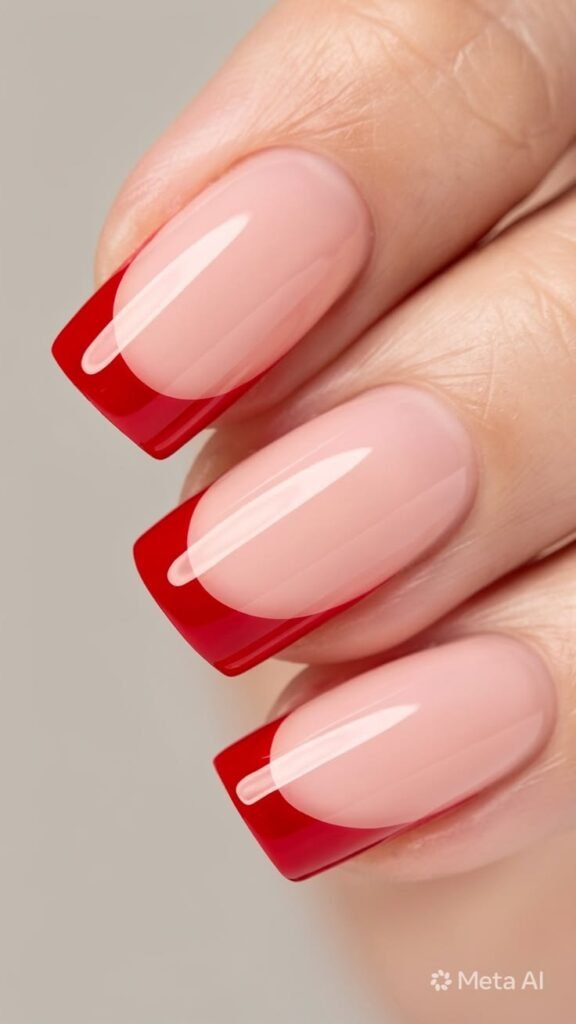
French nails red is the highest-converting colour swap of the year: a true-red tip over a sheer nude base delivers instant drama while keeping the shape classic. Cherry, brick and oxblood each shift the mood without changing the technique.
6. Pearl and 3D Embellished French
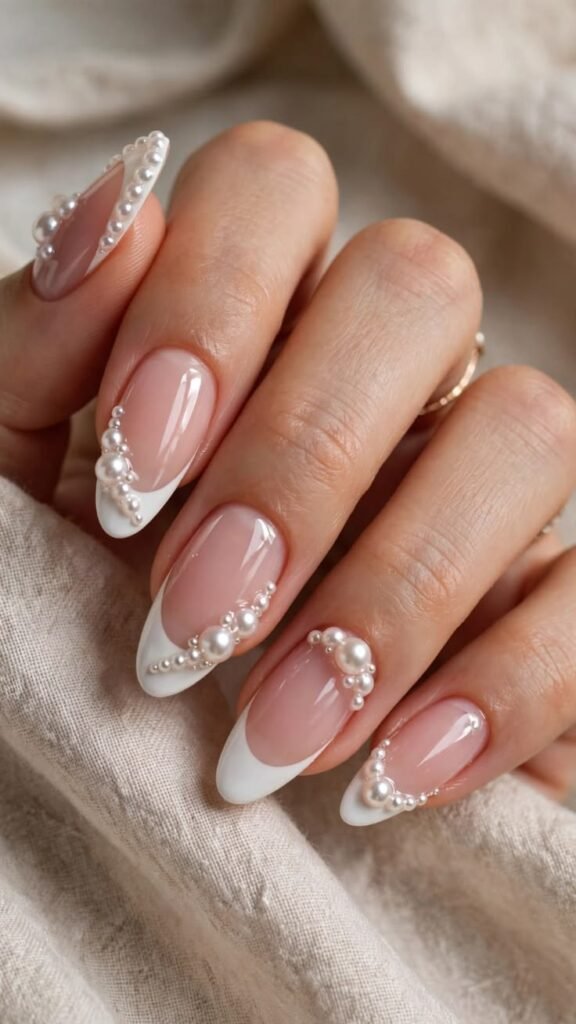
Micro-pearls, bows or metallic beads sit at the smile line. Restraint decides the outcome — two or three accent nails, never ten.
7. Encapsulated French
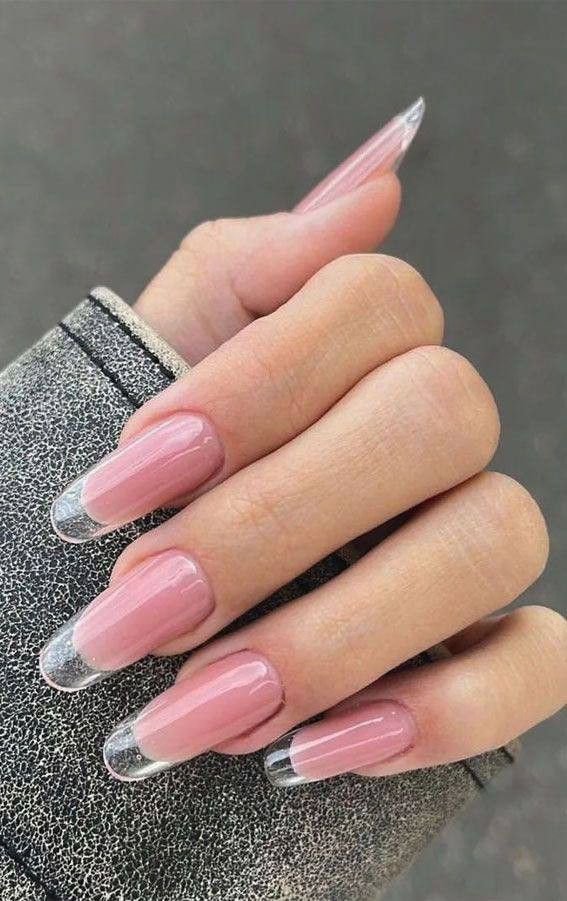
Glitter, foil flakes or dried florals are sealed between gel layers at the tip. This is a technician-level finish that requires builder gel, and it is the strongest argument for booking a salon rather than DIY.
8. Animal-Print Tips
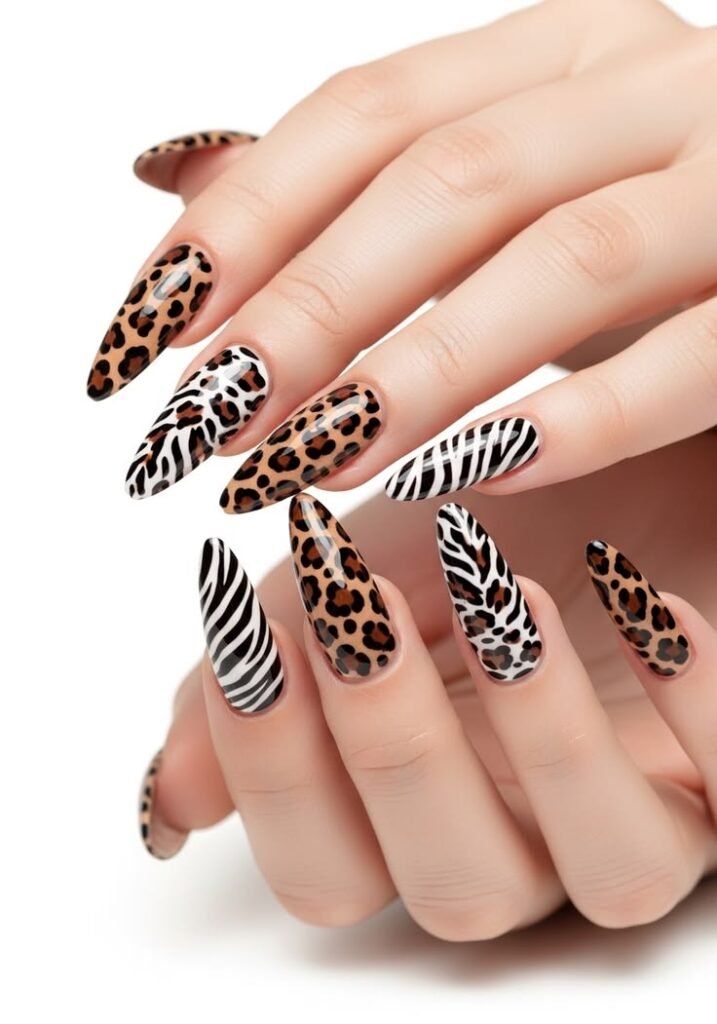
Leopard and cow print applied only to the tip zone. Animal print ranks among 2026’s headline manicure trends, and confining it to the free edge keeps it wearable for office settings.
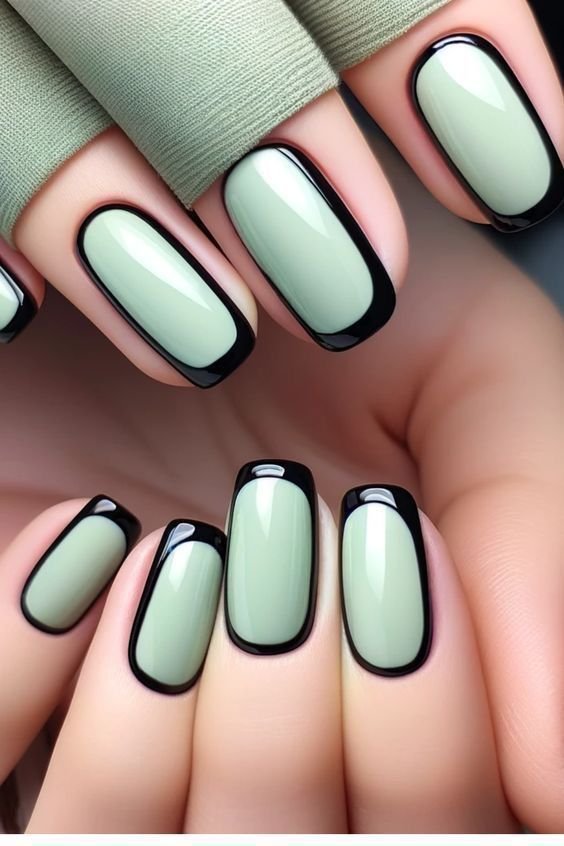
The colour moves to the cuticle (half-moon) instead of the tip, or the tip is painted on the underside of the nail so it flashes only when the hand moves. Both read as insider trends rather than mainstream ones, ideal for French nails inspo content that needs to feel ahead of the curve.
Best French Nails Ideas for Every Nail Shape
Nail shape controls how wide the tip should be and where the smile line should sit. Applying the same 3mm tip to every shape is the most common at-home mistake, and it is why DIY sets often look heavier than salon work.
French Nails Almond Shape
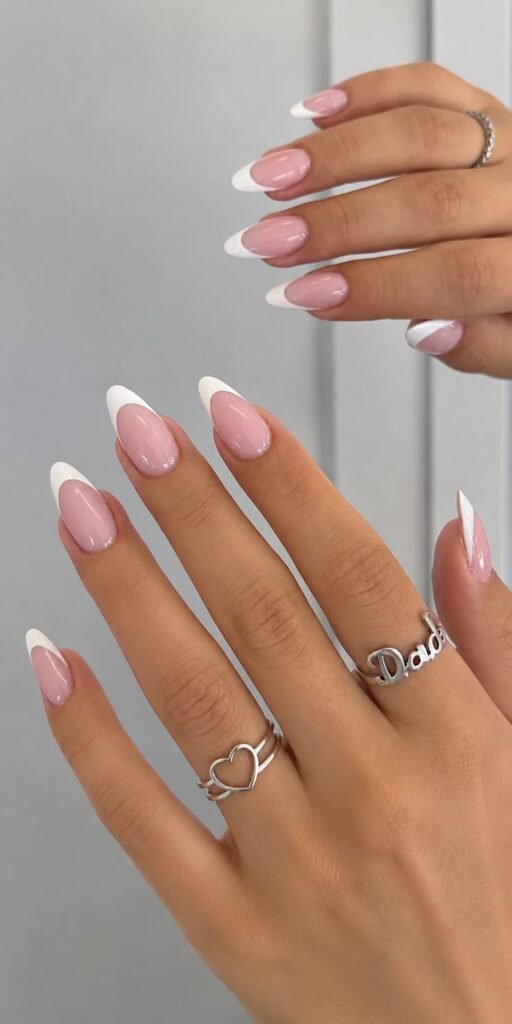
Almond nails taper to a soft point, so the smile line must curve deeper at the sides to follow the taper. A French nails almond set carries chrome, pearl, and ombré finishes better than any other shape because the tapering surface catches light along its length. Keep the tip to 2–3mm on medium length.
French Nails: Square and Squoval
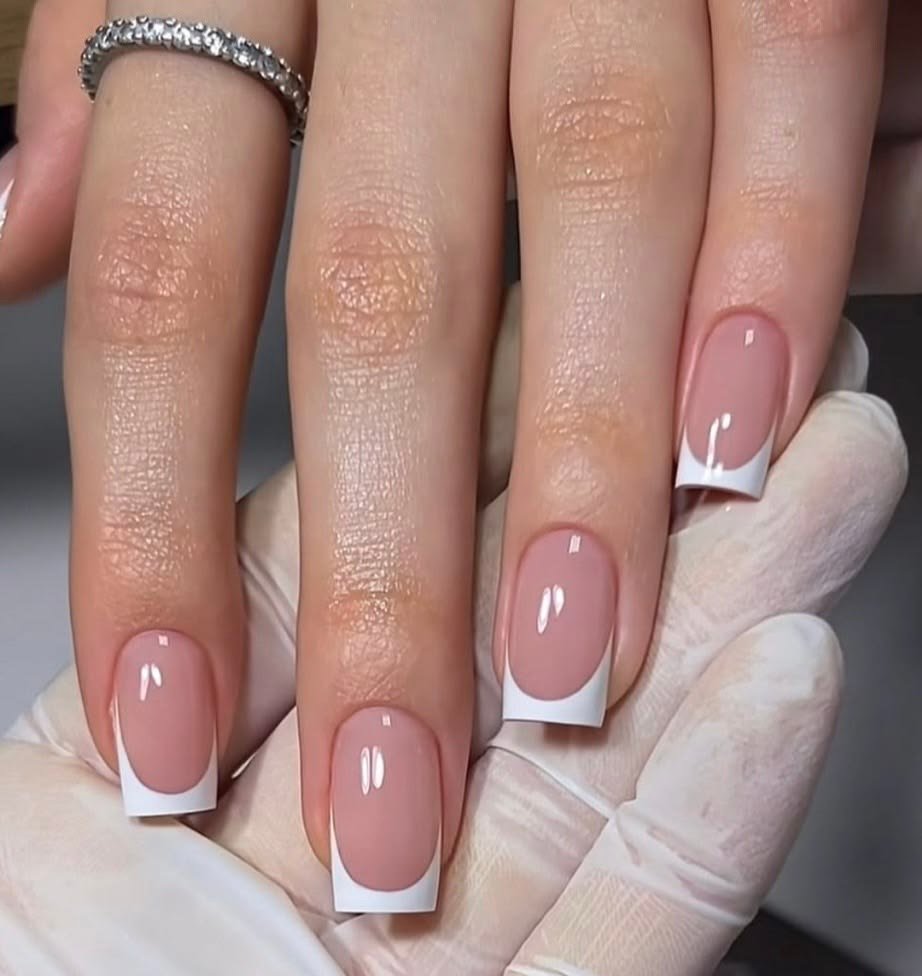
Square edges demand a straight, parallel smile line; any curve fights the geometry. French nails square sets suit colour-blocking, stripes and graphic tips. If you find a full square severe, a squoval (square with softened corners) delivers the same clean line with fewer snags.
French Nails Short: Simple and Stylish Ideas
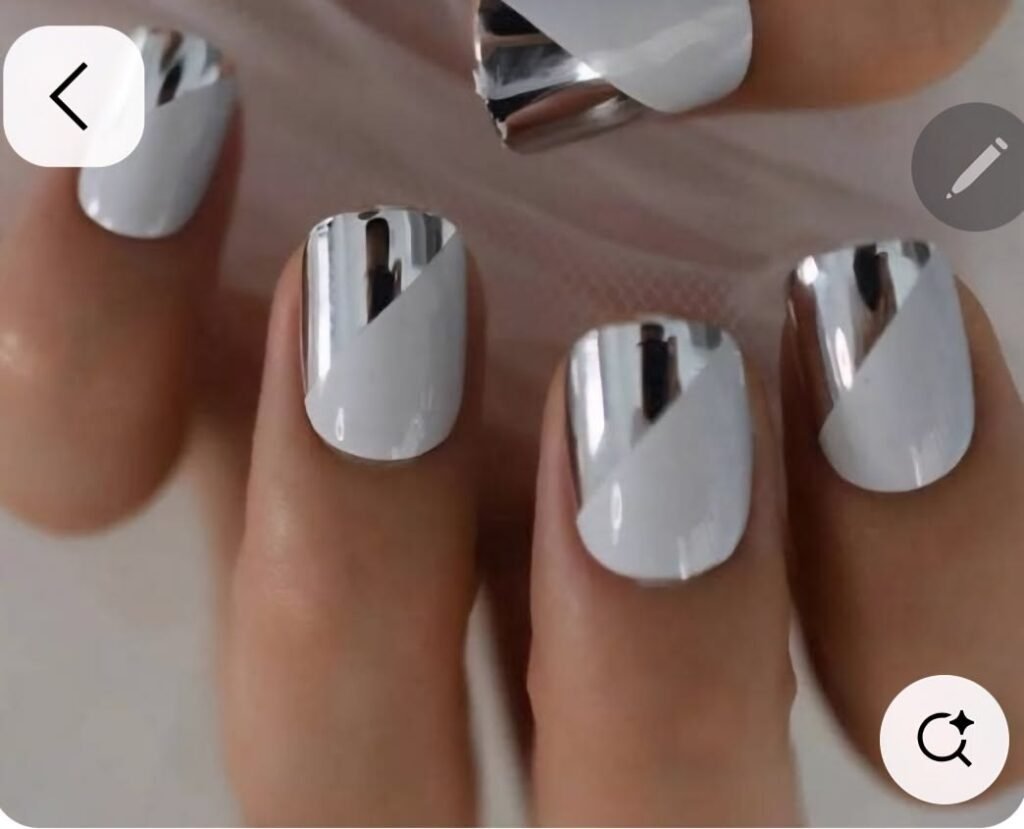
French nails short sets work best with micro tips, a single thin line, or a colour tip in a bright shade that draws the eye outward. Skip anything above 2mm and skip heavy 3D work, which visually consumes the limited plate. A milky base rather than a clear one also lengthens the appearance of the nail.
French Nails for Long Nails: Coffin and Stiletto
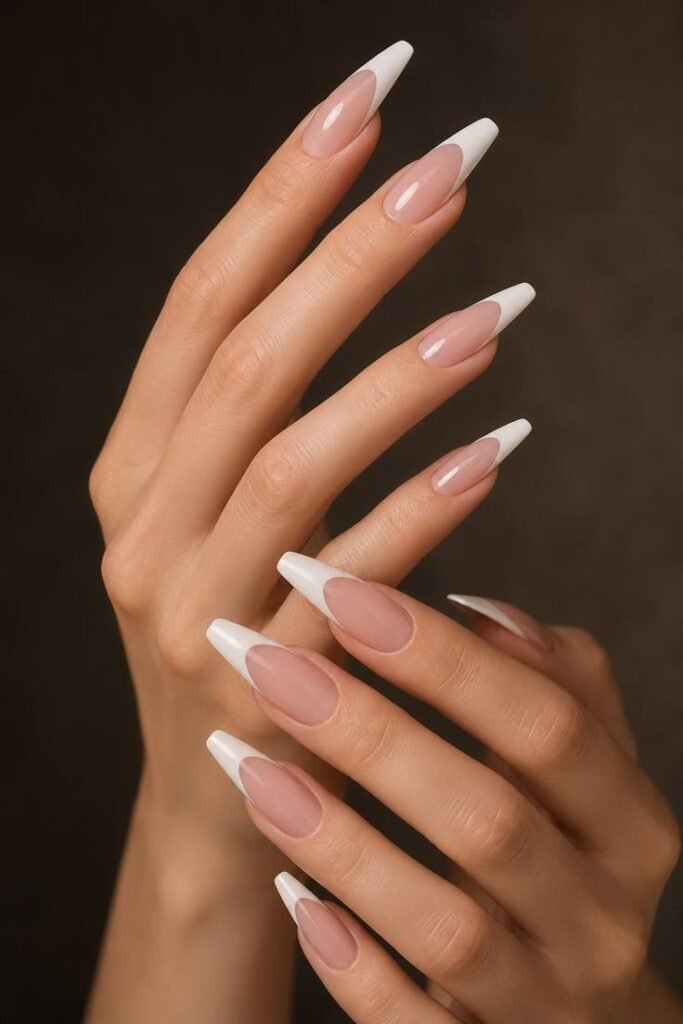
Long coffin and stiletto shapes support the maximalist end of the category, encapsulated glitter, deep V-tips, and dual-colour chevrons. The extra surface also lets you widen the tip to 4–5mm without the set looking top-heavy.
| Nail shape | Ideal tip width | Smile line | Best-suited 2026 designs | Difficulty at home |
|---|---|---|---|---|
| Short square | 1–2 mm | Straight | Micro French, double line | Easy |
| Squoval | 2 mm | Slight curve | Classic white, red tip | Easy |
| Oval | 2–3 mm | Rounded | Baby boomer, pastel tips | Moderate |
| Almond | 2–3 mm | Deep curve | Chrome, pearl, ombré | Moderate |
| Coffin | 4–5 mm | Straight or V | Encapsulated, animal print | Hard |
| Stiletto | 4–6 mm | Deep V | Chevron, dual colour | Hard |
You can read https://famousmagazines.com/trendy-nails-2026-the-complete-style-guide/
Gel, Acrylic, Press-On or Natural: Which French Nails Method Wins?
The application method determines cost, wear time, and nail health far more than the design does. Here is how the four routes compare on the metrics that actually influence a purchase decision.
Gel French Tip Nails
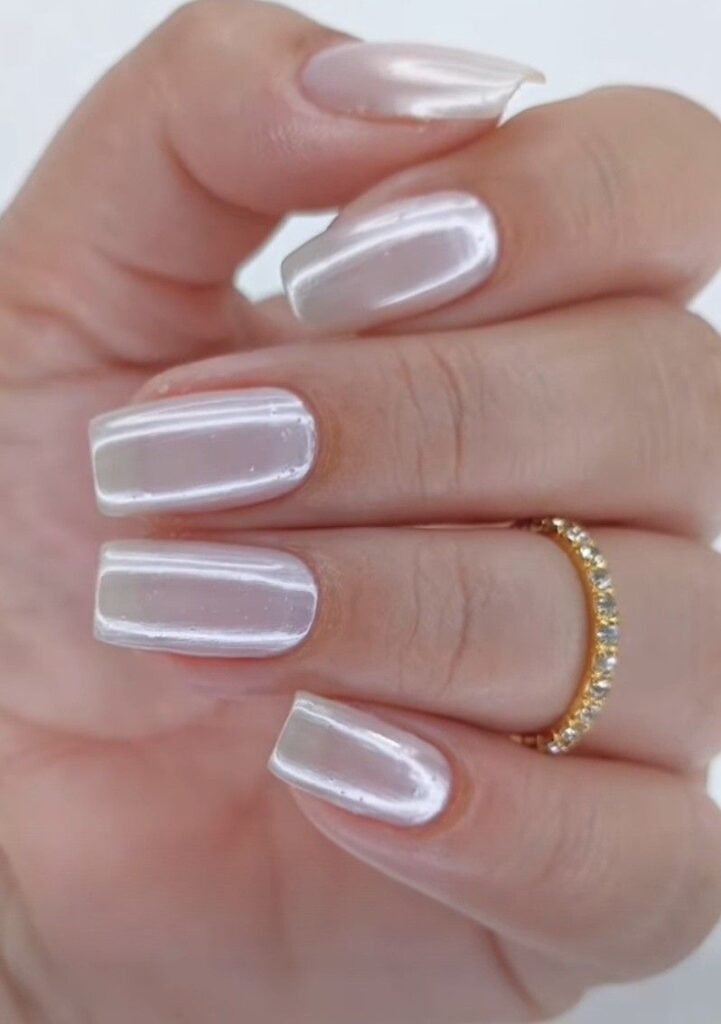
Gel French tip nails cure under a UV or LED lamp and hold a crisp smile line better than lacquer because the product stays workable until you cure it. Expect two to three weeks of wear.
Structured gel overlays add strength to a weak natural nail without extensions, and this sub-category shows some of the strongest growth in professional nail services.
French Nails Acrylic
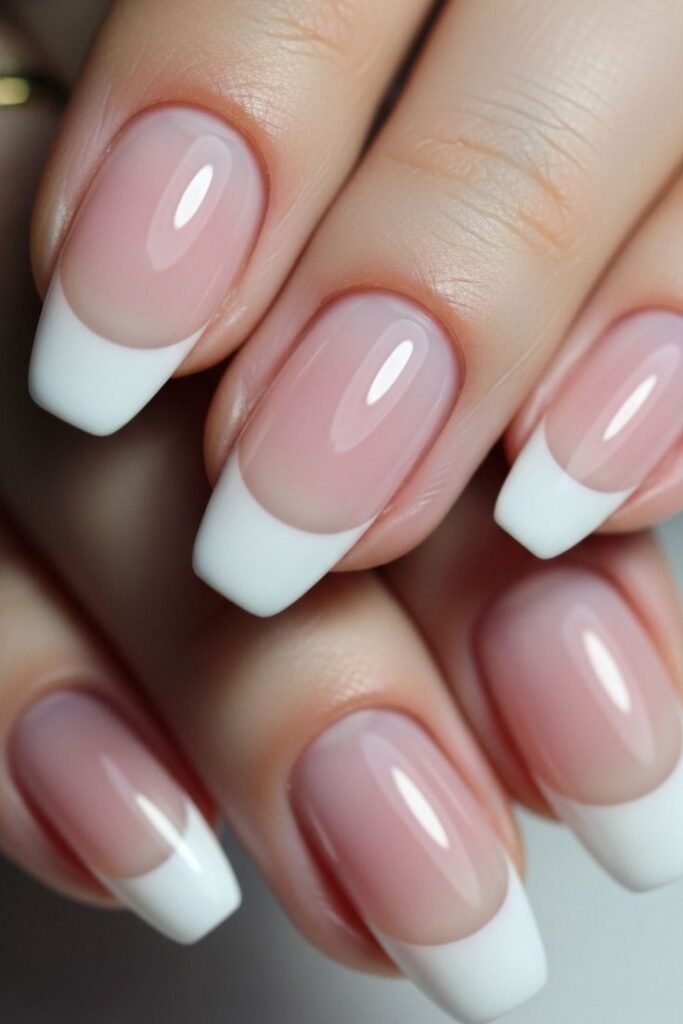
French nails acrylic sets use a liquid-and-powder system to build length and strength, and they remain the most durable option for anyone who works with their hands.
Acrylic holds long coffin and stiletto shapes that gel alone cannot support. The trade-off is the mandatory infill cycle every two to three weeks and a more aggressive removal process.
French Nails Press On
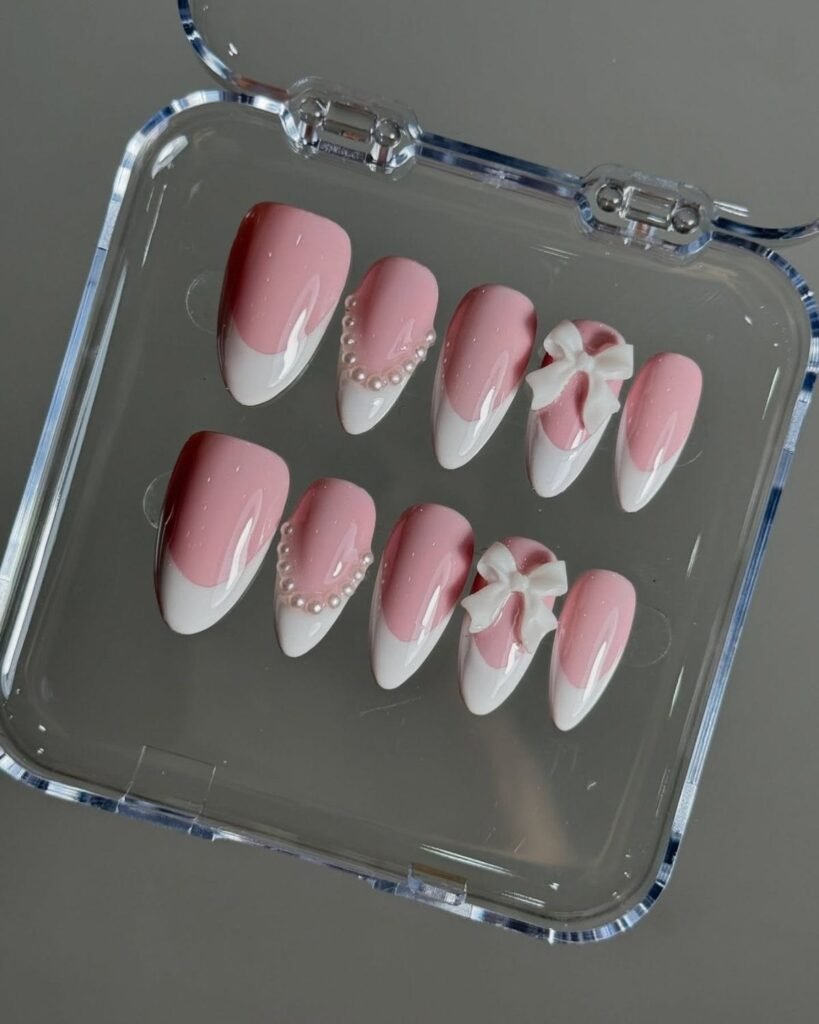
French nails press-on sets are the fastest-growing route, and the reason is time: a full French set applies in ten minutes with no curing equipment. Fashion shows have relied on press-ons for years precisely because models need looks changed between exits. Modern reusable sets, applied with tabs rather than glue, cause no measurable damage.
French Nails on Natural Nails
French nails on natural nails means regular polish over your own plate: cheapest, gentlest, and shortest-lived at three to five days. It is the right choice for anyone recovering nail health after a long enhancement run.
| Method | Wear time | Typical salon cost (US) | At-home cost | Time required | Nail health impact |
|---|---|---|---|---|---|
| Regular polish (natural) | 3–5 days | $25–$40 | $12–$20 | 30 min | Minimal |
| Gel French | 2–3 weeks | $45–$75 | $40–$90 kit | 60–75 min | Low if removed correctly |
| Acrylic French | 3–4 weeks + infills | $60–$120 | Not recommended | 90–150 min | Moderate; thinning risk |
| Press-on French | 3–14 days | n/a | $8–$30 per set | 10–15 min | Minimal with tabs |
| Builder gel overlay | 3–4 weeks | $70–$100 | $50–$80 kit | 90 min | Low; adds strength |
French Nails Tutorial: How to Do French Nails at Home
A clean at-home French manicure depends on prep and line control, not on expensive polish. Follow this sequence and expect a salon-comparable result by your third attempt.
What You Need
- Glass or fine-grit file plus a buffer
- Cuticle pusher and cuticle oil
- Sheer nude, milky pink or beige base shade
- Opaque white or accent tip colour
- A short detail brush (2–3mm) or French guide stickers
- Quick-dry or gel top coat, plus a UV/LED lamp for gel
Step-by-Step Method
- Shape first, paint second. File all ten nails to the identical shape and length. Uneven free edges are the number-one reason home French sets look wrong.
- Dehydrate the plate. Wipe each nail with alcohol to strip oil so the base grips.
- Apply two thin base coats of your sheer shade. Thin beats thick — thick coats flood the cuticle line.
- Draw the smile line from the side walls inward. Start at one sidewall, sweep toward the centre, then repeat from the opposite side. This produces a symmetrical curve; painting straight across does not.
- Correct with a clean-up brush dipped in acetone before the layer sets.
- Seal with top coat over the free edge — cap the tip by running the brush along the nail’s edge. This single move adds days of wear.
French Nails With Stamp: The Fastest Shortcut
French nails with stamp plates remove freehand skill from the equation entirely. Apply polish to the engraved smile-line pattern on the plate, scrape off the excess, lift the design with a silicone stamper, and roll it onto the dry base. A ten-nail set takes about fifteen minutes and produces ten identical lines — something freehand rarely achieves. Stamping polish is thicker than regular polish and is required for the transfer to work.
French Nails: Colours and Designs Beyond Classic White
Colour is the cheapest way to modernise a French tip, because the technique stays identical. Swapping the tip shade alone generates dozens of distinct looks from one skill set.
The 2026 Palette
- Cobalt and electric blue: the season’s statement shade, strongest on square tips.
- Tomato and cherry red: the most searched colour variant, universally flattering.
- Butter yellow and pistachio: soft, spring-forward pastels for micro tips.
- Chrome silver and pearl: the finish-led trend driving editorial nail art.
- Black micro tips: minimal, graphic, and the easiest route to an edgy look on short nails.
- Sheer milky white: the “clean girl” default that replaces stark opaque white.
Texture and Finish Variations
Matte top coat over a glossy tip creates contrast without adding colour. Velvet and cat-eye magnetic gels produce a moving light streak inside the tip.
Tortoiseshell and glazed-donut finishes both migrate from full-nail applications into tip-only versions, which keeps them office-appropriate.
French Nails for Every Occasion: From Casual to Glam
Match tip width and finish to the setting, and one technique covers your entire calendar.
Wedding French Nails
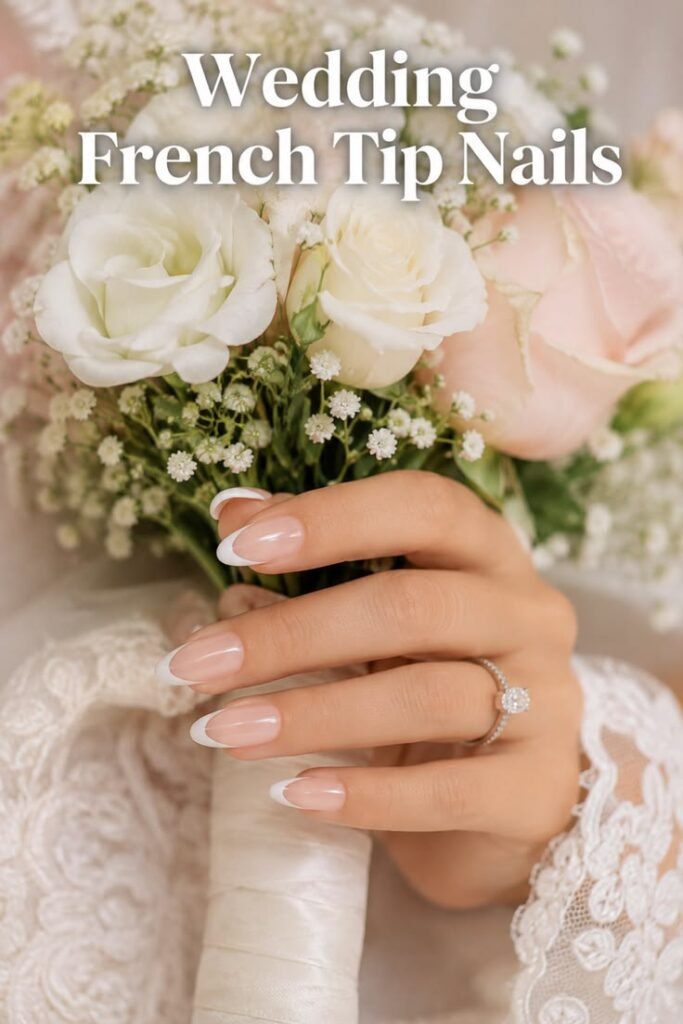
Wedding French nails remain the category’s highest-value use case. A classic, simple set complements a bride without competing with the dress, the advice Jeff Pink himself still gives.
Current bridal variations add a single accent nail with pearl detail, or a soft ivory tip rather than bright white, which photographs warmer against most gown fabrics. Book a trial four weeks before the date and schedule the final set two days out.
Office and Everyday
Micro tips in nude or soft white on short, squoval nails. Nothing longer than 3mm past the fingertip keeps typing comfortable.
Red Carpet, Editorial and Stage
Actresses, models and performers need looks that change between exits and read from distance. Press-on French sets solve both problems, which is exactly why backstage teams rely on them during fashion week. For camera work, chrome and glass finishes hold up under lighting where matte finishes flatten.
Festival and Party
Encapsulated glitter tips, colour-blocked chevrons and 3D charms — the maximalist end of the 2026 cycle, where charms and mixed metals are explicitly trending.
French Pedicure and French Nails on Toes
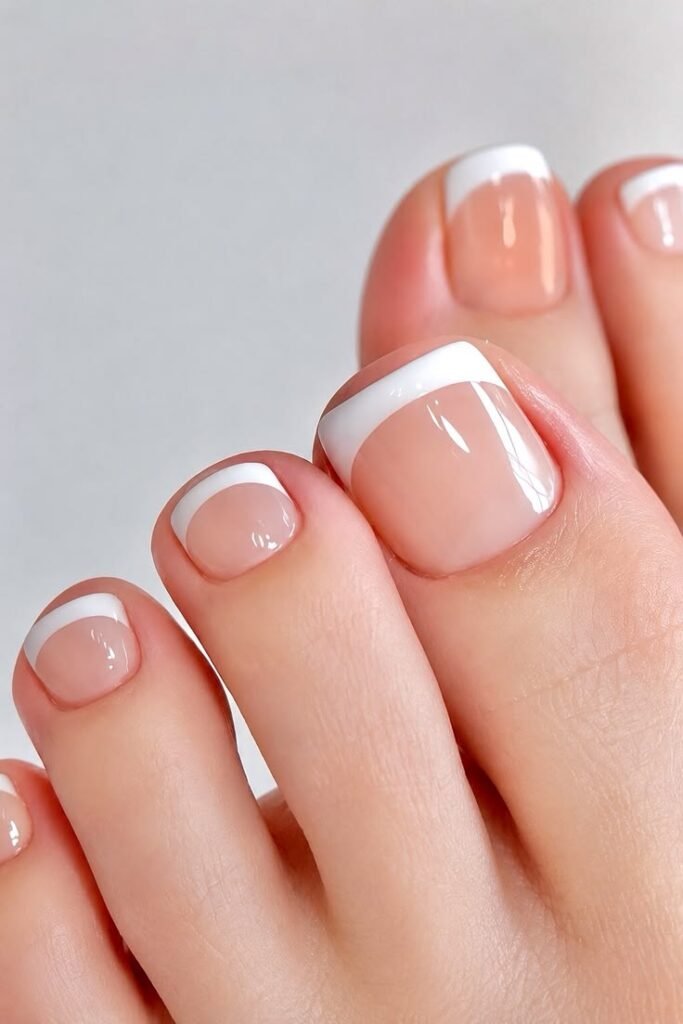
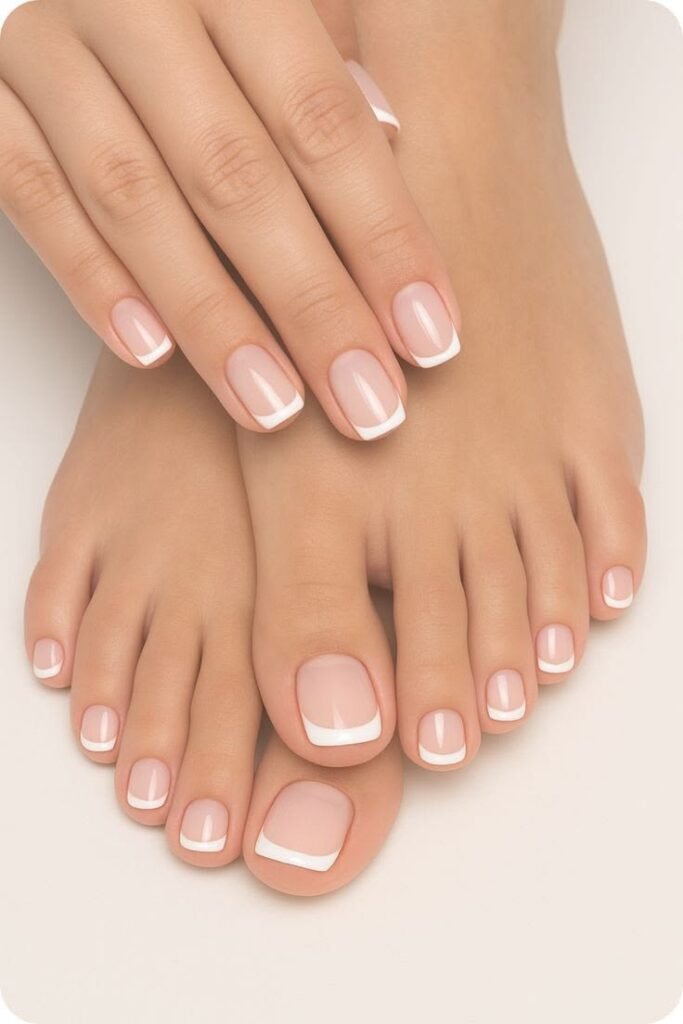
A French pedicure applies the same two-tone logic to toenails, with a straighter and wider smile line. Toenails sit flatter than fingernails, so a curved line distorts; keep it parallel to the free edge.
Getting the Proportions Right
Tips on toes should run 1.5–2.5mm. The big toe carries the design; the smaller toes need only the base shade or a whisper of tip, since a full tip on a small nail reads as a solid block of colour.
French Toenail Designs With Flowers
A white tip with a small hand-painted daisy, plumeria or cherry-blossom accent on the big toe is the most-saved summer pedicure design. Use a dotting tool: three to five petal dots around a contrasting centre dot, sealed under top coat. Green leaf accents suit a nude base; white flowers suit a sheer pink base. Keep floral detail to one or two toes.
![French nails :French pedicure with white tips and small hand-painted white flower accent on the big toenail]](https://famousmagazines.com/wp-content/uploads/2026/09/French-pedicure-with-white-tips-683x1024.jpg)
How to Make French Nails Last Longer at Home
Wear time depends on edge sealing, hydration, and heat management, not on the number of top coats. These habits extend most sets by four to seven days.
Daily Maintenance Rules
- Cap the free edge at every top-coat application, and reapply top coat every third day on natural-nail sets.
- Oil the cuticles twice daily. Flexible nails chip less than dry, brittle ones.
- Wear gloves for dishes and cleaning. Hot water and detergent lift gel from the edge faster than any other single factor.
- Stop using nails as tools. Most tip chips originate at the free edge, exactly where the design sits.
Removal Without Damage
Never peel gel. Peeling removes layers of the nail plate with it. File the top coat, soak cotton in acetone, wrap in foil for ten to fifteen minutes, then push the softened product off gently. Follow with cuticle oil and a keratin treatment. Damage is caused by bad removal, not by gel itself — a distinction most articles collapse.
Regional Note for Hot and Humid Climates
In high-humidity markets, oil production increases and adhesion drops. Dehydrate the plate twice before applying base, and favour builder gel or acrylic over lacquer for sets that must last a full fortnight.
FAQ: People Also Ask
What is the latest trend in French nails?
Micro French tips and glass or chrome finishes lead 2026. Fashion editors identify the narrower tip line as the key modernising change, while Byrdie ranks glass French tips among the year’s top manicure trends. Colour-blocked stripes, pearl embellishments and inverted half-moon French also gained significant traction this year.
What are French style nails?
French style nails combine a sheer nude, pink or milky base with a contrasting painted tip along the free edge. The base mimics the natural nail while the tip defines length. Modern versions vary the tip in width, colour, finish and placement, but the two-tone structure stays constant across every variation.
Are French manicures still in style in 2026?
Yes — emphatically. The French manicure has survived every trend cycle since 1975 and currently appears across runway, red carpet and social platforms in updated forms. Its 2026 popularity is driven by customisation: thinner lines, chrome and glass finishes, coloured tips and 3D detail have replaced the uniform thick white tip.
What is the hottest nail trend right now?
Maximalism with reimagined classics. Charms, mixed metals, animal print and futuristic finishes define 2026, layered onto familiar structures like the French tip. Glass French tips sit at the intersection of both forces, which explains their dominance — a minimal shape delivered in a high-shine, light-reflective finish.
How long do French nails last?
Wear time depends on the method. Regular polish on natural nails lasts three to five days, gel lasts two to three weeks, acrylic lasts three to four weeks with infills, and press-on sets last three to fourteen days. Sealing the free edge and wearing gloves during housework extends all four.
What is the origin of French nails?
ORLY founder Jeff Pink created the look in Los Angeles in 1975 to save Hollywood film crews time between costume changes. He originally sold it as the Natural Look Nail Kit and renamed it the French manicure only after the style appeared on Paris runways. The design is American in origin, not French.
What are gel French tip nails?
Gel French tip nails use UV or LED-cured gel polish instead of air-dried lacquer to create the base and tip. The gel stays workable until cured, which produces sharper smile lines, and it delivers two to three weeks of chip-free wear. Removal requires acetone soaking, never peeling.
Can you do French nails on short natural nails?
Yes. Short nails suit French tips well when you keep the tip under 2mm and use a milky base rather than a clear one. A micro French tip or a single thin line adds definition without shortening the nail visually. Avoid thick tips and heavy 3D detail on limited surface area.
Conclusion
French nails earned their fifty-year run by doing one thing better than any competing style: adapting. The 2026 version proves the point again, trading the uniform white block for micro lines, chrome, colour and texture while keeping the structure that made it universal.
Three key takeaways
- Match the tip to the shape. Almond needs a deep curve, square needs a straight line, short nails need under 2mm.
- Choose the method by lifestyle, not by trend. Gel for two-to-three-week wear, acrylic for strength and length, press-on for speed, natural polish for nail recovery.
- Check your gel formula. The EU’s TPO ban reset the category in 2025, and the UK is expected to follow by 2027.
Pick one design from the nine above, match it to your nail shape using the specification table, and book or DIY your set this week. Then tell us which French nails variation you chose: the micro tip or the chrome.



Post Comment